

 Phoenix 24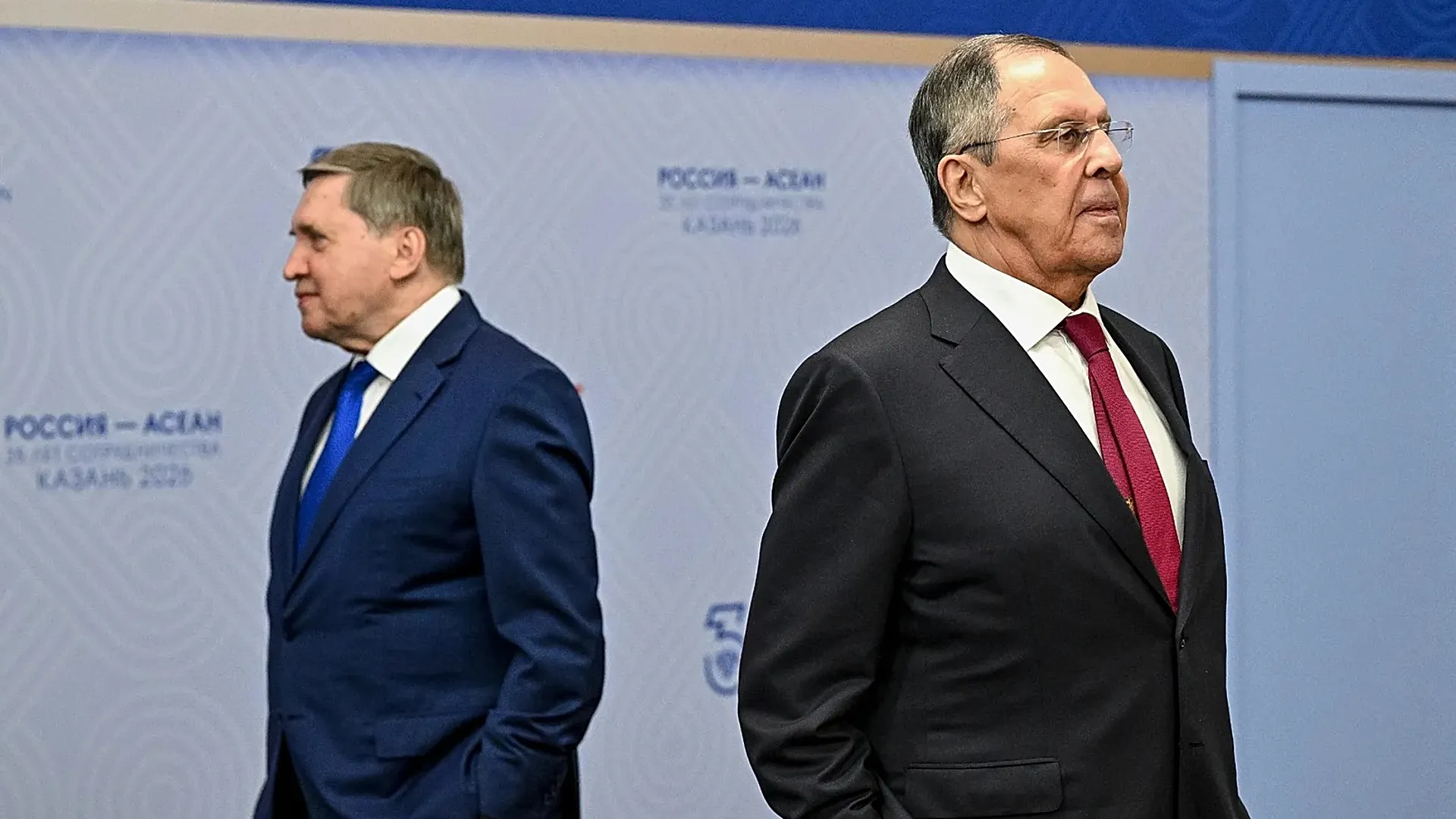
Moscow blames Western support for Ukraine as peace efforts stall.
MOSCOW, Russia | June 2026
Russia has described Europe as a growing threat to international peace while simultaneously declaring that it remains prepared to open dialogue with the European Union. Foreign Minister Sergey Lavrov accused European governments of prolonging the war in Ukraine through military assistance to Kyiv. Presidential adviser Yuri Ushakov reinforced that message by saying Moscow would consider discussions with Brussels. The combination reflects a familiar Kremlin strategy of condemning European policy while preserving diplomatic channels that could eventually serve Russian interests.
Lavrov told foreign diplomats that Europe’s military support for Ukraine was transforming the continent into a major danger to global security. His argument placed responsibility for continued fighting on the governments supplying weapons, ammunition and financial assistance to Kyiv. European leaders reject that interpretation and maintain that their support helps Ukraine defend itself against Russia’s full-scale invasion. The disagreement remains central to every attempt at peace negotiations.
The Russian foreign minister also criticized the United States, saying Washington no longer behaves as an objective mediator. He argued that increased sanctions pressure demonstrates that the American government has abandoned neutrality. Moscow has repeatedly portrayed economic restrictions as evidence that Western countries are direct participants in the conflict. The United States and its allies respond that sanctions are intended to impose costs for the invasion and limit Russia’s military capabilities.
American-led efforts to negotiate an end to the war have largely stalled. Earlier discussions generated expectations that Washington might establish a framework acceptable to both Moscow and Kyiv, but major territorial and security disputes remain unresolved. The United States has also directed considerable diplomatic attention toward conflicts in the Middle East. That shift has created additional uncertainty over who might lead future negotiations concerning Ukraine.
Ushakov said Russia was willing to engage with the European Union despite its hostile assessment of European policy. His remarks followed recent attempts by European Council President António Costa to determine whether conditions existed for renewed diplomatic contact with the Kremlin. European officials concluded that meaningful negotiations were not currently viable. Even so, the existence of preliminary communication showed that some leaders want to test whether dialogue can reduce the risk of further escalation.
Costa faced criticism for opening a channel with Moscow because several European governments fear that premature engagement could weaken Ukraine’s negotiating position. Countries closest to Russia argue that the Kremlin uses talks to gain time, divide allies and seek recognition of territorial changes achieved through force. Other governments believe communication should remain possible even when a settlement appears distant. The dispute reveals different European assessments of how diplomacy should function during an ongoing war.
Russia accuses Brussels of undermining understandings it says were reached during the 2025 summit between President Donald Trump and Vladimir Putin in Alaska. Moscow refers to these alleged principles as the Anchorage formula. Russian officials claim they involved freezing the front line and reducing Western military assistance to Ukraine. American officials have never publicly recognized such a formal agreement.
The Alaska meeting ended without a ceasefire or a binding settlement. Its legacy has nevertheless become part of Russia’s diplomatic narrative because Moscow presents the summit as evidence that Washington once understood its security demands. By accusing Europe of obstructing those understandings, the Kremlin attempts to separate European governments from the United States. That strategy may become more important if differences emerge within the Western alliance.
Territory remains the most difficult obstacle. Russia demands that Ukrainian forces withdraw from areas of the Donbas that Moscow claims but does not fully control. Ukraine rejects any requirement to surrender territory that its military continues to defend. Kyiv argues that accepting such conditions would reward aggression and create the basis for future attacks.
Russia has occupied Crimea since 2014 and expanded its control across parts of eastern and southern Ukraine after launching the full-scale invasion in 2022. Moscow now treats several occupied regions as part of the Russian Federation, despite the absence of broad international recognition. Ukraine insists that its territorial integrity must be restored. Neither position currently provides much room for compromise.
European military assistance is designed partly to prevent Russia from gaining additional leverage before negotiations begin. Kyiv’s supporters believe Ukraine requires sufficient weapons and economic support to avoid being forced into an unfavorable settlement. Moscow sees the same assistance as evidence that Europe prefers war to diplomacy. Both sides therefore interpret identical actions through completely different strategic frameworks.
Lavrov’s accusation that Europe threatens peace also serves a domestic purpose. It reinforces the Russian government’s portrayal of the war as a broader confrontation with the West rather than a conflict created by Moscow’s decision to invade Ukraine. This framing helps justify continued mobilization, military expenditure and restrictions inside Russia. It also reduces attention on the original causes of the war.
The offer of dialogue allows Moscow to present itself as open to diplomacy without changing its conditions. Russian officials can argue that negotiations are possible if Europe abandons military support for Ukraine and accepts the security principles demanded by the Kremlin. European governments are unlikely to accept that framework because it would weaken Kyiv before any agreement is reached. The apparent openness therefore remains constrained by incompatible expectations.
For Brussels, communication with Russia involves both potential value and considerable risk. Direct contact could clarify intentions, reduce misunderstandings and prepare the ground for eventual negotiations. It could also be used by Moscow to create divisions among EU members or bypass Ukraine. Any European initiative will therefore require coordination with Kyiv and a clear understanding of what discussions are intended to achieve.
The latest statements do not signal an immediate diplomatic breakthrough. They reveal instead a contest over who should be blamed for the absence of peace. Russia points to Western weapons and sanctions, while Europe emphasizes the continuation of Russian military operations and territorial demands. Until those underlying issues change, dialogue is likely to remain exploratory rather than decisive.
Moscow’s message contains a deliberate contradiction: Europe is described as a threat, but also as a necessary diplomatic partner. That contradiction reflects the reality that Russia cannot permanently avoid engagement with the continent most directly affected by the war. Europe likewise cannot ignore a nuclear power occupying Ukrainian territory. The relationship will remain hostile, but the possibility of communication is unlikely to disappear completely.
Dialogue becomes credible only when responsibility accompanies negotiation. / El diálogo se vuelve creíble únicamente cuando la responsabilidad acompaña a la negociación.