

 Phoenix 24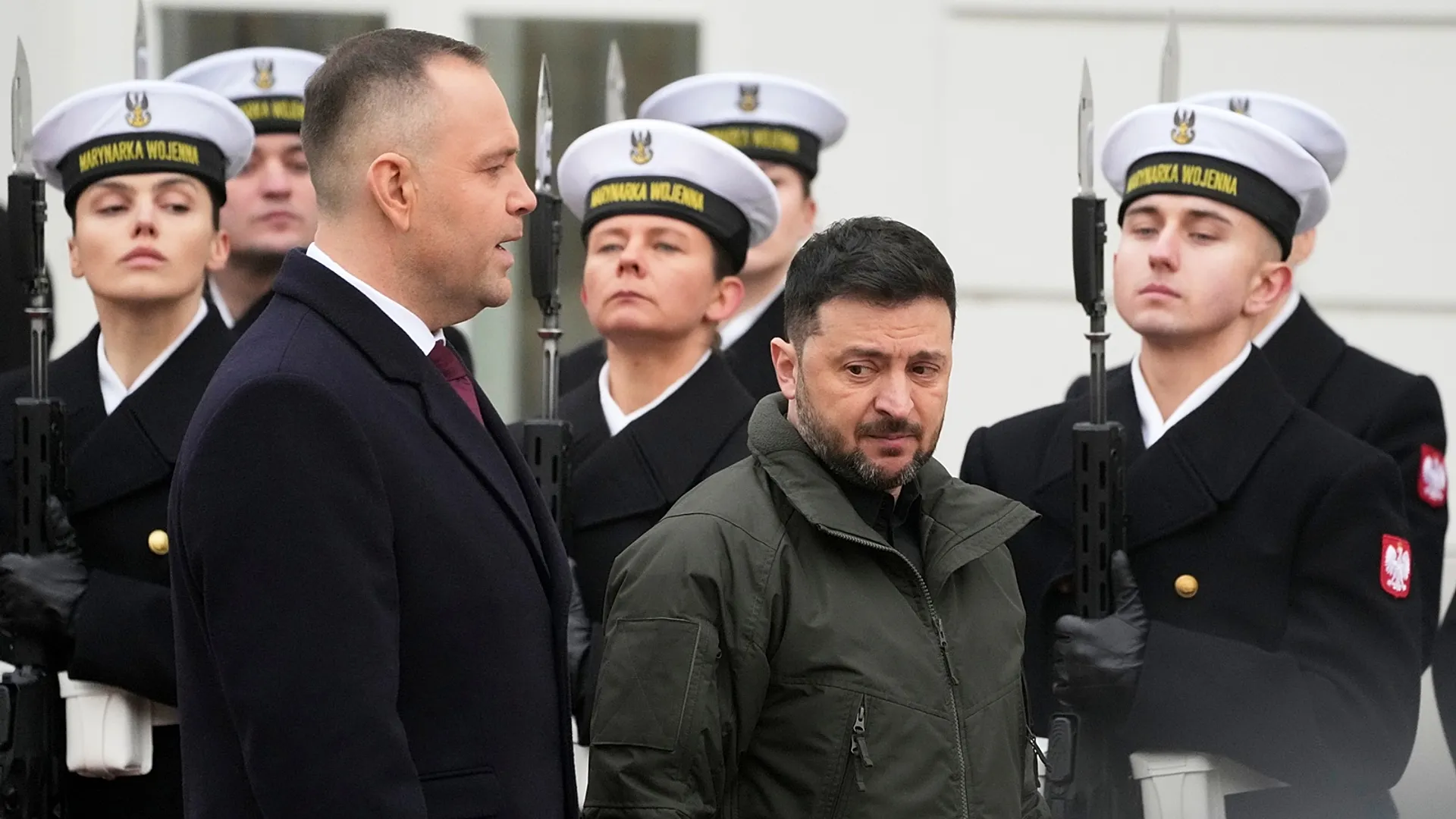
Historical memory now threatens unity before a major recovery conference.
BRUSSELS, Belgium | June 2026
The European Commission has warned that the escalating dispute between Poland and Ukraine is weakening the unity needed to confront Russia and support Kyiv during the war. Brussels said political divisions between a European Union member state and Ukraine create an advantage for the aggressor. The warning followed a public confrontation between Polish President Karol Nawrocki and Ukrainian President Volodymyr Zelenskyy over the legacy of the Ukrainian Insurgent Army. The controversy has already affected preparations for an international conference focused on Ukraine’s reconstruction.
European Commission spokesperson Paula Pinho said the past five years had demonstrated that unity remains Europe’s most powerful instrument in responding to Russia’s invasion. Any dispute that undermines cooperation between Warsaw and Kyiv, she argued, makes the strategic situation easier for Moscow. The Commission offered to assist both governments in preventing the disagreement from disrupting broader European objectives. Its intervention reflects concern that a historical conflict is beginning to produce immediate diplomatic consequences.
The dispute began after Zelenskyy authorized an honorary title for a Ukrainian special operations unit commemorating the “Heroes of the UPA.” The Ukrainian Insurgent Army emerged during the Second World War and is remembered by many Ukrainians for resisting Soviet domination and pursuing national independence. In Poland, however, the organization is closely associated with massacres committed against Polish civilians in Volhynia and Eastern Galicia. The Polish Parliament has classified those killings as genocide.
These contrasting national memories make the issue especially difficult to manage. Ukraine’s current political culture frequently honors movements that fought against Moscow, particularly as the country defends itself from another Russian invasion. Poland views the same historical symbols through the suffering of communities attacked during the 1940s. What one side presents as resistance, the other may understand as the glorification of perpetrators.
Nawrocki responded by revoking the Order of the White Eagle previously awarded to Zelenskyy. The decoration is Poland’s highest state honor and was given to the Ukrainian leader in 2023 during a period of exceptional cooperation between the two countries. The Polish president said recipients must respect the values and historical memory underlying the award. He described the decision as a warning that certain boundaries should not be crossed.
Zelenskyy then returned the decoration rather than waiting for the formal withdrawal process to conclude. A photograph appeared to show the award prepared for delivery back to Warsaw. Several Ukrainian officials and former leaders also surrendered Polish honors in solidarity. Their response transformed a disagreement over one military unit’s name into a broader diplomatic confrontation.
Polish Prime Minister Donald Tusk has attempted to reduce the tension. He described the escalation as a strategic mistake that would impose political and reputational costs on both countries. Tusk frequently clashes with Nawrocki, whose nationalist political orientation differs from that of the government. The dispute has therefore also exposed divisions inside Poland over how historical memory should influence present relations with Ukraine.
The timing is particularly damaging because Poland is preparing to host the Ukraine Recovery Conference in Gdańsk. The meeting is intended to bring together governments, companies and international institutions to discuss reconstruction, energy, investment and economic cooperation. Zelenskyy had been expected to attend but will now remain absent. Ukrainian Prime Minister Yuliia Svyrydenko is scheduled to lead Kyiv’s delegation instead.
The European Commission confirmed that President Ursula von der Leyen still plans to participate. Brussels wants the conference to proceed without becoming dominated by the bilateral dispute. European officials are prepared to support conversations between Warsaw and Kyiv before and during the event. Their immediate objective is to protect practical cooperation even if the historical disagreement remains unresolved.
Poland has been one of Ukraine’s most important supporters since Russia launched its full-scale invasion in 2022. It received millions of refugees, transferred weapons and became a critical transportation corridor for Western military and humanitarian assistance. Geographic proximity and shared concern about Russian expansion created a powerful strategic partnership. The current dispute threatens to weaken public support for that relationship at a sensitive moment.
Relations had already become more complicated because of agricultural imports, border protests and fatigue surrounding the prolonged war. Polish farmers and transport operators have objected to Ukrainian competition, while political parties have increasingly used migration and historical issues in domestic campaigns. These pressures do not eliminate Poland’s security interest in supporting Ukraine, but they make cooperation more vulnerable to symbolic disputes. Russia benefits whenever those tensions dominate public debate.
Moscow has repeatedly used historical disagreements to divide Ukraine from neighboring countries. Russian propaganda portrays Ukrainian nationalism as extremist and seeks to amplify disputes involving wartime memory. A confrontation over the UPA therefore provides material that can be directed at both Polish and Ukrainian audiences. It allows the Kremlin to argue that Ukraine’s closest supporters cannot maintain unity.
Brussels is not asking either country to abandon its historical position. Instead, it is warning that the conflict must be managed without damaging the strategic partnership required by the present war. Historical reconciliation requires research, exhumations, acknowledgment of victims and sustained political dialogue. Awards and retaliatory gestures may satisfy domestic audiences temporarily, but they rarely resolve disputes rooted in collective trauma.
Poland and Ukraine had recently made progress on the recovery and identification of victims from wartime massacres. Those efforts demonstrated that cooperation was possible even when historical interpretations remained different. The current confrontation risks reversing that progress by turning memory into an instrument of immediate political competition. Restoring direct communication will be essential if both sides want to prevent lasting damage.
The European Union has faced similar difficulties when disputes between member states and Ukraine intersect with wider policy. Earlier tensions involving Hungary and the Druzhba oil pipeline forced Brussels to mediate cautiously. The Commission must defend the interests of its members while preserving support for Ukraine. That balance becomes harder when bilateral disputes are connected to nationalism and historical identity.
The conflict between Warsaw and Kyiv will not automatically end their military and economic cooperation. Both governments understand that Russia remains the principal security threat in the region. Yet trust can erode gradually through repeated public confrontations. The absence of Zelenskyy from the Gdańsk conference shows that the consequences are already extending beyond symbolic gestures.
Brussels’ message is therefore directed at both sides: historical memory deserves respect, but strategic unity cannot be treated as expendable. Poland and Ukraine have stronger interests in cooperation than in escalation. Their ability to separate remembrance from retaliation will determine whether the dispute remains temporary. For Europe, every fracture inside the coalition supporting Kyiv creates room for Russia to gain influence without changing the battlefield.
Unity weakens when historical wounds become instruments of present conflict. / La unidad se debilita cuando las heridas históricas se convierten en instrumentos del conflicto actual.