

 Phoenix 24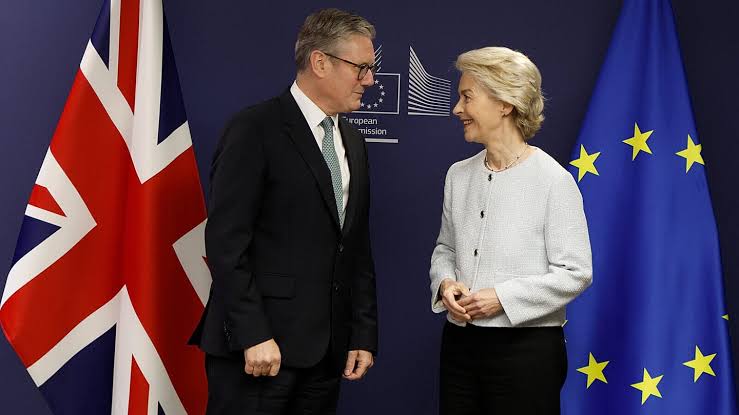
Leadership uncertainty threatens the next stage of Britain’s European reset.
BRUSSELS, Belgium | June 2026
The European Union is reconsidering whether to proceed with a summit with the United Kingdom scheduled for July 22 after British Prime Minister Keir Starmer announced his resignation. European Commission spokesperson Paula Pinho said Brussels was reviewing the timing with European Council President António Costa and the British government. The meeting had been intended to accelerate cooperation on trade, energy, security and youth mobility. Starmer’s departure has now introduced uncertainty over who would represent London and whether the incoming government will preserve his negotiating commitments.
The summit date had been confirmed only days earlier following discussions between Starmer, European Commission President Ursula von der Leyen and Costa during the Group of Seven meeting in France. It was expected to become the second formal EU-UK summit since Britain left the bloc. Starmer regarded the event as an important step in rebuilding relations damaged by years of confrontation after Brexit. European officials now question whether holding it five days after a possible change of prime minister would be politically and diplomatically practical.
Starmer said he would remain in office until the Labour Party selected his successor, allowing what he described as an orderly transfer of power. The leadership process could conclude by the middle of July if only one candidate secures sufficient support. Andy Burnham, who recently returned to Parliament after winning the Makerfield by-election, has emerged as the clear favorite. Former Health Secretary Wes Streeting strengthened that position by abandoning his own expected campaign and endorsing Burnham.
If the transition proceeds rapidly, Burnham could become prime minister around July 17. That would leave him only a few days to prepare for negotiations involving complex technical agreements and politically sensitive compromises. European officials have limited experience dealing with him on international policy. Postponing the summit would give both sides additional time to clarify the new government’s priorities and negotiating authority.
Starmer made repairing Britain’s relationship with the EU one of the central objectives of his premiership after Labour’s landslide election victory in July 2024. His government sought closer cooperation without reversing Brexit or returning to the single market and customs union. That position required sector-by-sector agreements rather than full economic reintegration. The approach produced a gradual reset but also created prolonged negotiations over standards, regulation and access.
The July summit was expected to advance several initiatives already under discussion. London and Brussels were working toward agreements on food and agricultural standards that could reduce border inspections and improve trade. They were also exploring closer integration between electricity markets and possible cooperation involving carbon emissions systems. Youth mobility remained one of the most politically sensitive issues because it could allow younger Europeans and Britons to live, study or work more easily across borders.
The sudden leadership change creates questions about whether those negotiations will continue on the same terms. Burnham has said he does not intend to reopen the political battles surrounding Brexit, suggesting that he may preserve the broader reset. However, he has previously expressed support for the United Kingdom eventually rejoining the European Union. His long-term views may therefore be more integrationist than the formal position maintained by Starmer.
European governments will be watching whether a Burnham administration requests additional concessions or offers greater flexibility. Some officials may see the transition as an opportunity to expand the scope of the relationship. Others may prefer to protect agreements already reached and avoid reopening difficult discussions. The uncertainty makes a symbolic summit less useful unless the incoming prime minister can clearly commit the government to specific outcomes.
Starmer’s resignation followed months of pressure inside the Labour Party and declining public support. Local election losses weakened his authority, while Burnham’s return to the House of Commons created a credible internal challenger. The prime minister concluded that he was no longer the appropriate person to lead Labour into the next general election. His departure comes less than two years after the party ended 14 years of Conservative government.
European leaders responded with praise for Starmer’s contribution to regional security and diplomatic stability. Von der Leyen credited him with strengthening cooperation between Britain and Europe, particularly in support of Ukraine. His government aligned closely with European partners on defense and maintained a central role in discussions concerning the continent’s security architecture. Those relationships helped rebuild political trust even when economic negotiations remained incomplete.
The EU has emphasized that bilateral relations will remain strong regardless of the identity of the next British prime minister. Britain remains a major trading partner, military power and diplomatic actor whose cooperation is essential on sanctions, intelligence and European defense. The leadership transition is therefore unlikely to reverse the broader need for coordination. The immediate issue concerns timing and political preparation rather than a collapse in the relationship.
Postponing the summit could nevertheless delay agreements with direct economic consequences. Businesses on both sides want reduced administrative barriers, more predictable energy cooperation and clearer rules for cross-border activity. Universities and younger citizens are also waiting for decisions on mobility programs. Political uncertainty in London may slow progress at a moment when both economies are seeking stronger growth.
Proceeding with the original date would carry its own risks. A newly appointed prime minister may not have completed cabinet appointments or received detailed briefings on every negotiating file. European leaders could be reluctant to announce agreements without knowing whether the new administration can implement them. A summit held primarily for symbolic continuity might produce fewer concrete results than one organized later with stronger preparation.
The decision will depend on the speed of Labour’s leadership process and the signals provided by Burnham or any alternative candidate. Brussels will want confirmation that the British government remains committed to the reset and that its negotiators retain political authority. London will want to demonstrate stability while avoiding the appearance that European institutions are determining its domestic timetable. Both sides have incentives to preserve momentum without forcing an unproductive meeting.
Starmer’s exit highlights the vulnerability of international agreements to domestic political change. Negotiations that appeared close to completion can become uncertain when leadership changes unexpectedly. The EU-UK relationship has already endured years of instability since the Brexit referendum. The next challenge is ensuring that another transition does not return the partnership to confrontation.
The summit may be postponed, redesigned or maintained with a reduced agenda. Whatever decision emerges, the strategic direction is likely to remain closer cooperation rather than renewed separation. Britain and the European Union face common challenges involving security, trade, migration and energy that cannot be managed effectively in isolation. The political reset now depends on whether Starmer’s successor treats it as a personal initiative or a permanent national policy.
Partnerships endure when leadership changes do not erase shared interests. / Las alianzas perduran cuando los cambios de liderazgo no borran los intereses compartidos.