

 Phoenix 24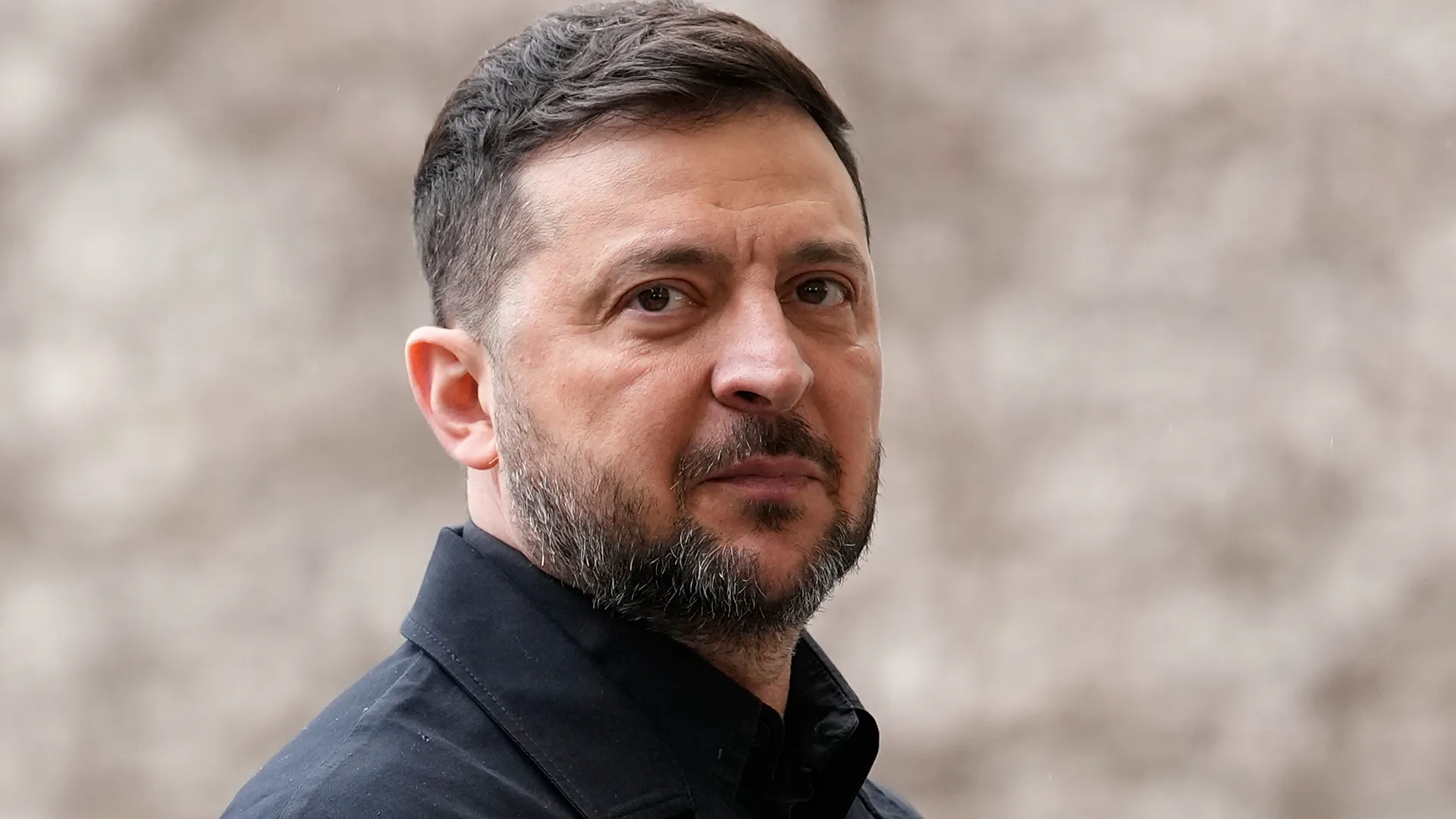
The war’s consequences are reaching Russia’s capital.
KYIV, Ukraine | June 2026
Ukrainian President Volodymyr Zelensky warned that Moscow would face further consequences if Vladimir Putin continued the war, following a Ukrainian drone strike that caused a fire at one of the Russian capital’s most important oil refineries. The Ukrainian leader said Kyiv would respond to every Russian attack and described the operation against the Moscow refinery as fully justified. His message came after Russia bombed the Kyiv-Pechersk Lavra, a historic religious complex protected as a UNESCO World Heritage site. The exchange illustrates how the conflict is expanding beyond the front line and increasingly placing strategic infrastructure inside Russia within Ukraine’s operational reach.
Zelensky framed the refinery strike as a direct response to the Russian attack on the Monastery of the Caves in Kyiv, one of Ukraine’s most important spiritual and cultural landmarks. He recalled that, after visiting the damaged complex, he had publicly promised that Ukraine would prepare an answer. The Ukrainian president maintained that his country had never sought the war but would not remain passive while Russian forces continued attacking its cities and national heritage. His warning that Moscow would also burn if Ukraine continued burning was intended to signal that the Kremlin could no longer assume that the effects of the invasion would remain confined to Ukrainian territory.
The Ukrainian operation targeted a refinery that plays a central role in supplying fuel to Moscow and the surrounding region. According to information cited by the Ukrainian General Staff, the facility provides around 40 percent of the capital’s fuel market, supplies much of the gasoline consumed across the Moscow region and delivers aviation fuel to the city’s four principal airports. Its annual processing capacity exceeds 12 million tonnes of crude oil, making it one of Russia’s largest refining complexes. Damage to such a facility therefore carries consequences beyond the immediate fire because repairs, interrupted production and reinforced security can increase the economic cost of sustaining the war.
Zelensky also emphasized the military significance of the attack, arguing that Moscow’s sophisticated air defenses had failed to stop the Ukrainian drones. The Russian capital is protected by multiple defensive layers designed to detect and intercept aerial threats before they reach critical government, industrial and civilian zones. The ability of Ukrainian unmanned aircraft to penetrate that protective system offers Kyiv both an operational success and a strategic message. It suggests that even highly defended Russian assets may remain vulnerable when Ukraine employs coordinated long-range attacks against selected targets.
The refinery strike is part of a broader Ukrainian effort to weaken the energy system that supports Russia’s economy and military capacity. Refineries, fuel depots, logistics hubs and defense facilities have become central targets because they contribute directly or indirectly to the movement of troops, aircraft and military equipment. Rather than competing with Russia only through conventional forces along the front, Kyiv is using drones to impose costs hundreds of kilometers from the battlefield. This approach allows Ukraine to challenge critical Russian infrastructure while relying increasingly on weapons developed or produced within the country.
Zelensky called for international pressure on Russia to expand beyond battlefield assistance and focus more aggressively on the financial structures that sustain the invasion. He identified the Russian energy sector, oil and gas revenues, the so-called shadow fleet, the banking system, weapons production and the wider defense industry as priority areas for additional sanctions. In his view, restrictions must become strong enough to convince the Kremlin that continuing the war offers no strategic or economic benefit. The statement also reflected Kyiv’s concern that existing measures have not yet deprived Moscow of sufficient resources to change Putin’s calculations.
The Ukrainian president directed part of his message toward the Russian population, arguing that ordinary citizens were paying the price for a war driven by one political leader. He urged Russians to understand that the prolonged conflict would continue bringing economic disruption, insecurity and physical damage closer to their own communities. This rhetoric seeks to erode the separation between Kremlin decision-making and the consequences experienced by Russian society. By striking a major refinery in Moscow, Ukraine is attempting to demonstrate that the costs of war can reach the country’s political and economic center.
The attack also reveals the growing strategic importance of drones in a conflict increasingly defined by distance, industrial capacity and technological adaptation. Ukraine has used long-range unmanned systems to compensate for limitations in conventional aviation and restrictions surrounding some Western-supplied weapons. Russia, meanwhile, continues employing missiles and drones against Ukrainian cities, energy installations and transport networks. Each side is therefore trying to disrupt the other’s ability to sustain military operations while simultaneously testing the resilience of civilian infrastructure.
The danger is that this cycle of attack and retaliation could deepen without producing a corresponding diplomatic breakthrough. Strikes against energy facilities may weaken logistical systems and raise political pressure, but they also create incentives for further retaliation against infrastructure and urban areas. Zelensky’s warning was not merely rhetorical because it was delivered after an operation that demonstrated Ukraine’s capacity to reach a heavily protected target in Moscow. As the conflict evolves, geographic distance offers Russia less protection, while Ukraine increasingly treats strategic depth as a battlefield of its own.
Phoenix24: claridad en la zona gris. / Phoenix24: clarity in the grey zone.