

 Phoenix 24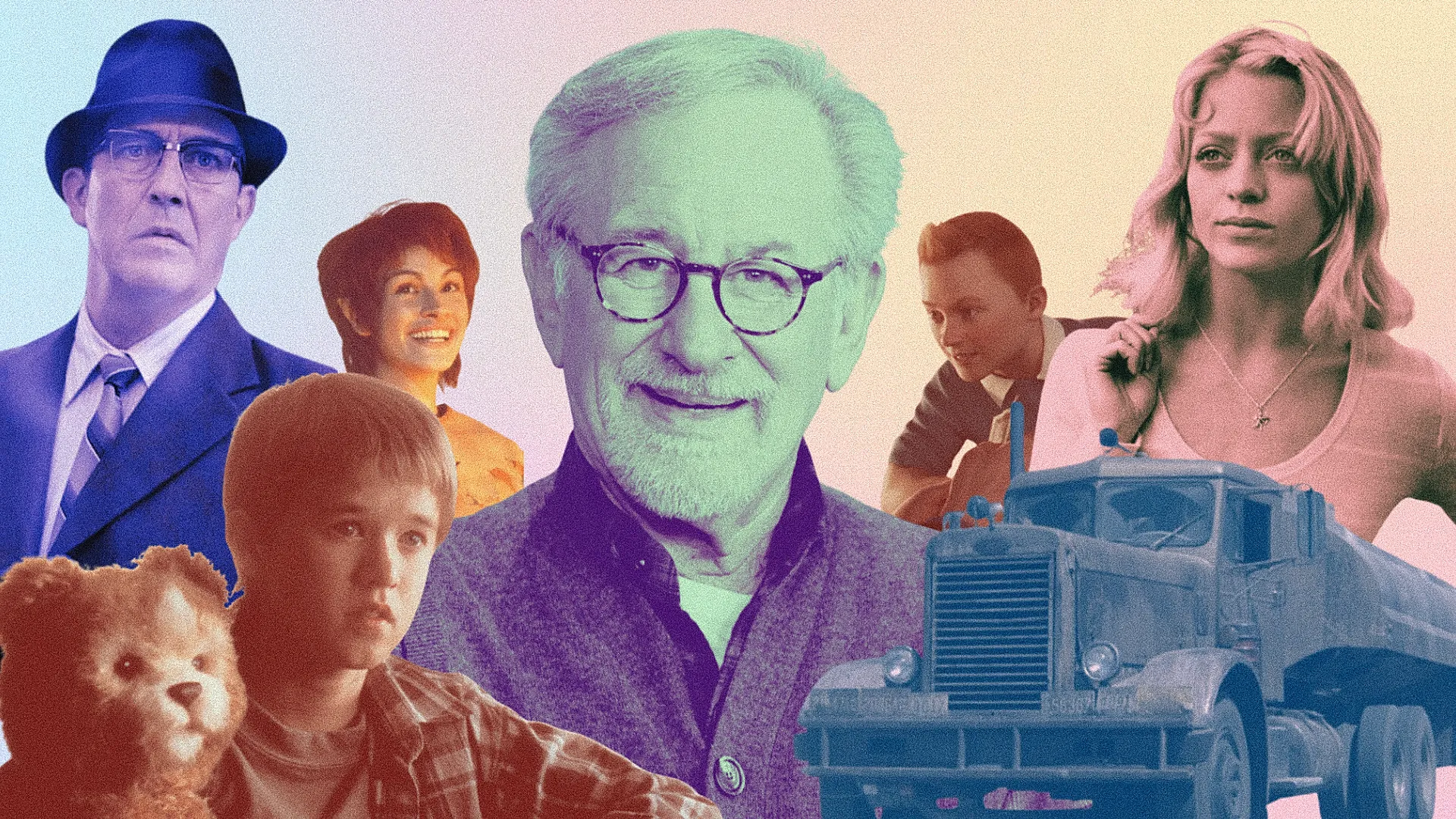
Beyond blockbusters, his quieter risks deserve a second look
HOLLYWOOD | JUNE 2026
The release of Disclosure Day has returned Steven Spielberg to one of the subjects that has defined his career: humanity’s encounter with the unknown. The science-fiction thriller has generated divided critical reactions, but its arrival also offers an opportunity to reconsider the films that have been overshadowed by the monumental success of Jaws, E.T., Jurassic Park, Schindler’s List and Saving Private Ryan.
Across more than five decades of filmmaking, Spielberg has built a body of work so commercially and culturally dominant that some of his most daring experiments have become almost invisible. The neglected titles are often the ones that best reveal his recurring concerns: fear without explanation, broken families, childhood memory, political violence, artificial intelligence and the moral cost of survival.
Duel, released in 1971 after being produced for television, remains one of the clearest demonstrations of Spielberg’s instinctive command of suspense. Its premise is brutally simple: an ordinary driver is pursued across an empty highway by a massive truck whose operator is never fully seen.
The absence of a clear motive turns the vehicle into an almost elemental predator, anticipating the invisible menace Spielberg would later perfect in Jaws. The film demonstrates that suspense does not require elaborate mythology. It can emerge from movement, isolation and the terrifying possibility that violence may have no explanation.
Three years later, The Sugarland Express offered another early example of his visual precision. Based on a real case, the film follows a couple fleeing across Texas after taking a police officer hostage in an attempt to recover their child.
Beneath the pursuit and spectacle, Spielberg constructs a compassionate portrait of people whose emotional intentions are more coherent than their actions. The film combines criminal desperation with social tragedy, refusing to reduce its characters to heroes or villains.
Both productions demonstrate that Spielberg’s cinema was never built on scale alone. Long before dinosaurs, extraterrestrials and historical epics, he understood how perspective, editing and uncertainty could transform simple stories into immersive experiences.
The reappraisal also extends to films initially criticized for sentimentality or tonal excess. Hook, Spielberg’s 1991 reinterpretation of Peter Pan, has often been treated as a failed family spectacle, and the director himself has expressed dissatisfaction with it.
Yet the film’s central idea remains unusually ambitious: Peter Pan has grown up, forgotten his identity, become a work-obsessed corporate lawyer and failed to remain emotionally present for his children. The fantasy therefore becomes less a celebration of perpetual childhood than an examination of what adulthood erases.
Robin Williams brings vulnerability to a man attempting to recover his imagination, while Dustin Hoffman and Bob Hoskins embrace the theatricality of Neverland. Its imperfections are visible, but so is its emotional intelligence.
What some critics dismissed as excessive sentiment can now be read as a warning about professional success achieved at the cost of memory, family and wonder. In that respect, Hook may resonate more strongly with adults who first encountered it as children than it did with critics at the moment of release.
No film in this group feels more contemporary than A.I. Artificial Intelligence. Developed initially by Stanley Kubrick and ultimately directed by Spielberg in 2001, the story follows David, a robotic child programmed to love unconditionally.
At the time, audiences often struggled with the combination of Kubrickian darkness and Spielbergian emotion. Today, as generative systems enter creative industries and people increasingly form emotional relationships with artificial agents, the film appears less like distant speculation and more like an unsettling preview.
Its deepest question is not whether machines can imitate human feeling, but whether humans are morally prepared to receive affection from beings they created and may later discard.
Haley Joel Osment’s performance makes David’s artificiality inseparable from his suffering. The film’s apparent sentimentality becomes its philosophical weapon: viewers are forced to recognize humanity in a machine while witnessing the cruelty of the humans surrounding him.
What once seemed emotionally excessive now feels disturbingly precise.
The remaining selections reveal Spielberg’s political and formal range. Munich, released in 2005, transforms the Israeli response to the 1972 Olympic massacre into an examination of vengeance, trauma and the self-perpetuating logic of violence.
Rather than offering moral simplicity, the film allows counterterrorism and terrorism to enter the same corrosive cycle, making it one of the director’s most politically uncomfortable works. Its power lies in refusing the comfort of a clean resolution.
The Adventures of Tintin, released in 2011, operates at the opposite tonal extreme but displays equal technical confidence. Through motion capture, elaborate action sequences and fluid visual transitions, Spielberg uses animation to liberate the camera from physical limitations while preserving the rhythm of classical adventure cinema.
The film demonstrates that Spielberg’s visual imagination did not weaken with age. Instead, it adapted to new technologies while retaining the sense of movement, danger and wonder that defined his earliest work.
These films are rarely placed beside his acknowledged masterpieces, yet they reveal the same essential filmmaker: a director interested not merely in spectacle, but in how spectacle can carry fear, empathy, ideology and memory.
Spielberg’s greatness is easiest to recognize in his iconic successes, but his artistic identity becomes clearer in the films audiences neglected, resisted or misunderstood.
Rediscovering them is not an act of nostalgia. It is a reminder that a major career is often best understood at its margins.
Every frame holds a hidden truth. / Cada encuadre guarda una verdad.