

 Phoenix 24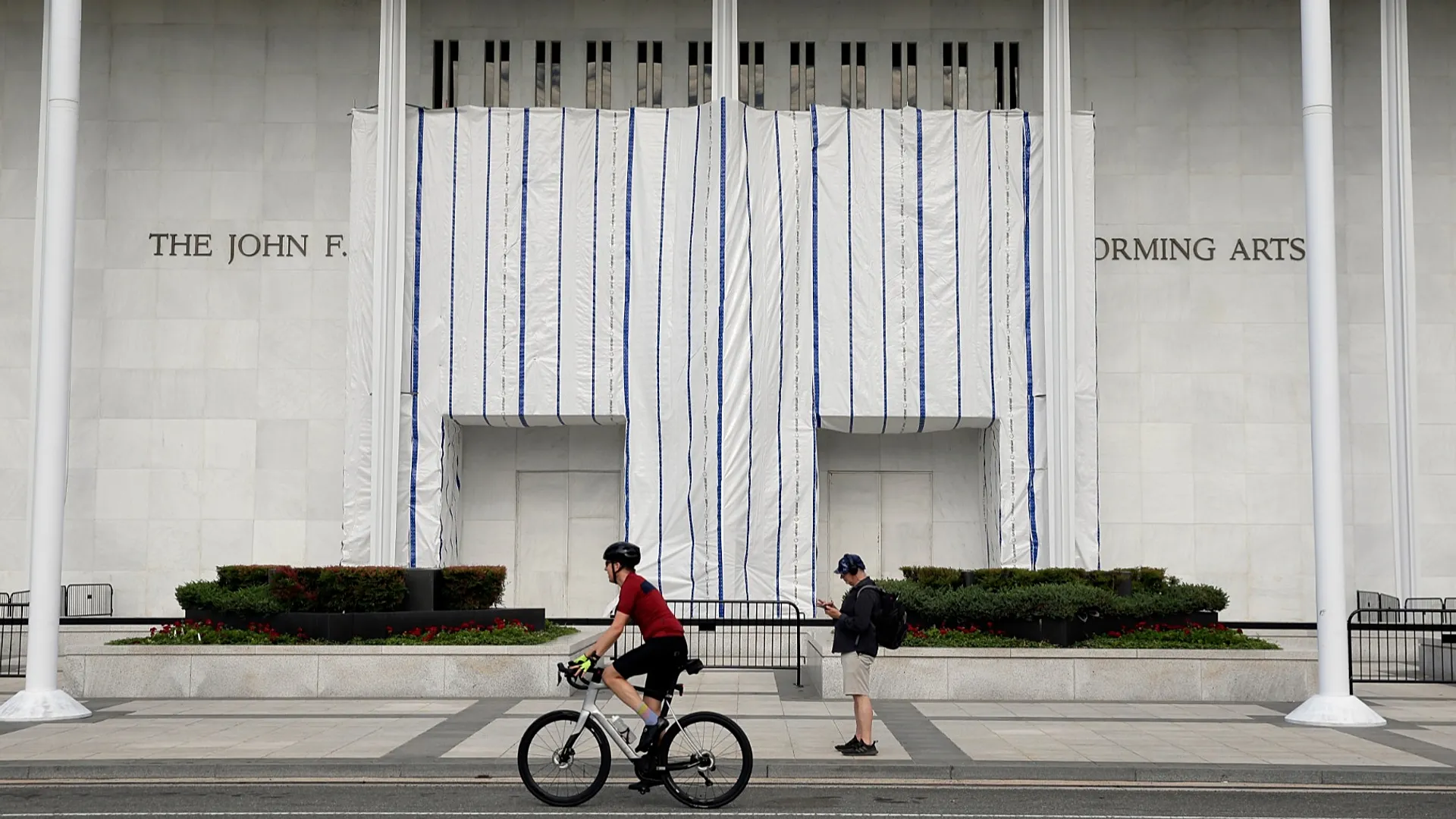
A banner becomes a political symbol
Washington, June 2026.
A controversy has emerged at the Kennedy Center after a large banner was reportedly used to cover the name of President Donald Trump during a public event, triggering criticism from political figures, commentators and cultural observers. What might have appeared to be a logistical or aesthetic decision quickly evolved into a broader debate about politics, public institutions and cultural symbolism in the United States.
The incident comes amid heightened scrutiny of the Kennedy Center following changes in leadership and governance associated with the Trump administration. Critics of the banner argued that covering the president’s name represented an unnecessary political gesture within a national cultural institution, while supporters viewed it as a legitimate expression of disagreement with recent political developments.
The dispute reflects a wider trend in which cultural venues, museums, universities and artistic organizations increasingly find themselves drawn into political controversies. Decisions involving names, symbols, exhibitions and public events often become focal points for broader debates over identity, representation and institutional independence.
For supporters of Trump, the episode has been cited as evidence of continuing political bias within parts of the cultural sector. Opponents, meanwhile, argue that cultural institutions retain the right to express positions they consider consistent with their values and missions. The result is a dispute that extends far beyond a single banner or a single event.
The Kennedy Center controversy highlights how symbolic actions can rapidly acquire national significance in a polarized political environment. As cultural institutions continue to operate at the intersection of public funding, artistic expression and political scrutiny, seemingly minor decisions are increasingly interpreted through a broader ideological lens.
In polarized societies, symbols often become larger than the events that create them.