

 Phoenix 24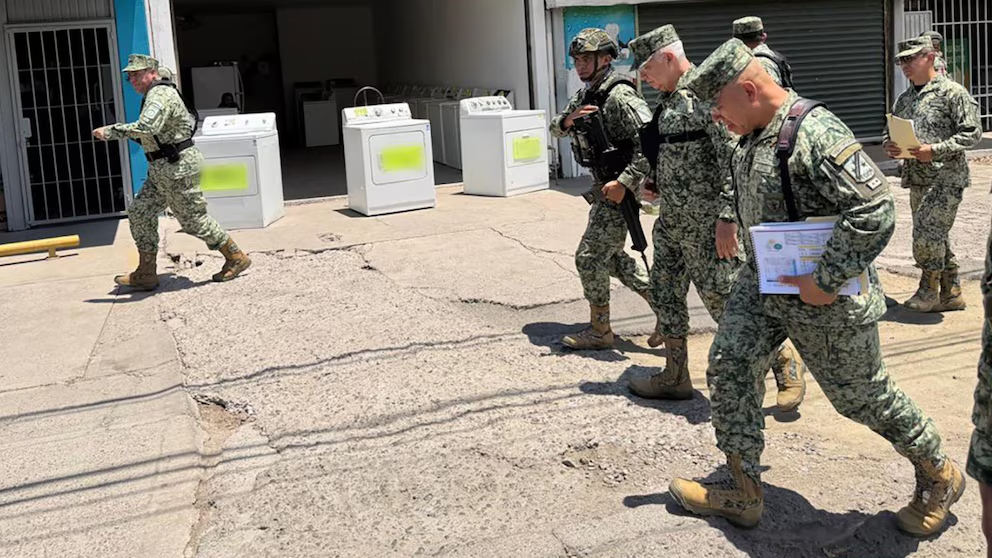
Security control is now a national test.
Culiacán, June 2026
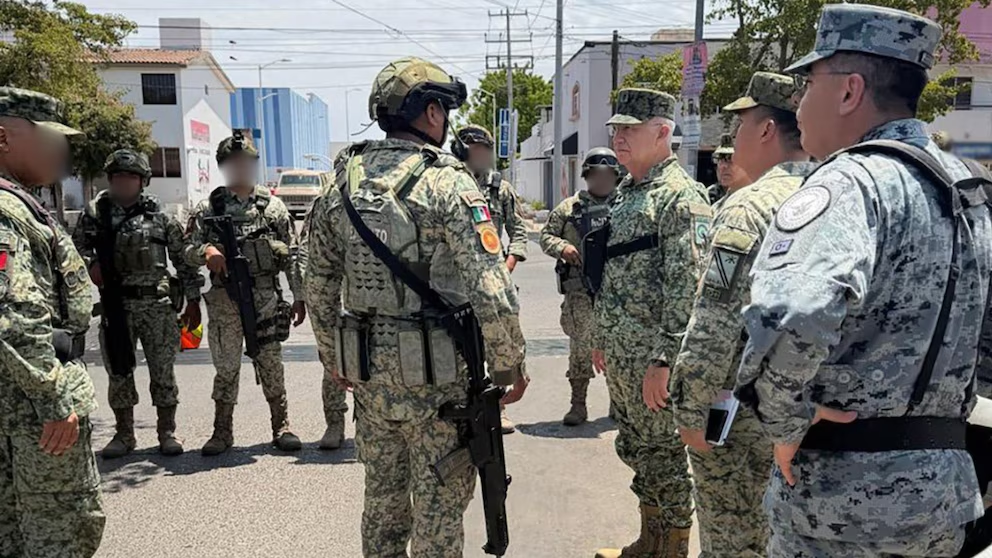
Mexico’s top military leadership has arrived in Culiacán to supervise the federal security deployment in Sinaloa, reinforcing the message that the state’s crisis has moved beyond routine police management. The visit by senior Defense and National Guard commanders comes after the arrival of 90 Army special forces elements, deployed to strengthen operations amid a sustained wave of violence.
The move reflects a deeper shift in the federal posture toward Sinaloa. The state is not being treated only as a local security emergency, but as a strategic theater where criminal fragmentation, political pressure and public fear are converging. Culiacán, once again, has become the visible center of a struggle over territorial authority.
The new special forces contingent is expected to support deterrence, prevention and patrol operations across key zones of the state. Its presence signals that federal authorities are attempting to reinforce operational capacity in a context where ordinary security structures have been repeatedly overwhelmed. The message is direct: the federal government wants to show that it remains physically present on the ground.
The deployment comes after a violent start to June and after Sinaloa accumulated more than 500 intentional homicides during the first five months of the year. May became the most violent month of 2026 so far, confirming that the conflict is not episodic but structural. The dispute between criminal factions has produced a security environment where each spike in violence tests the credibility of state and federal institutions.
The political dimension is equally significant. Sinaloa’s crisis is unfolding under intense scrutiny after allegations in the United States placed pressure on figures linked to the state’s power structure. That external pressure has turned public security into a diplomatic and institutional problem, where Washington’s reading of Sinaloa’s criminal ecosystem increasingly shapes the national conversation in Mexico.
For the Army and the National Guard, the challenge is not only to patrol streets or increase arrests. The deeper task is to rebuild the perception of state control in a territory where criminal organizations have long competed not just with each other, but with formal authority itself. Every convoy, checkpoint and military inspection now carries symbolic weight.
The arrival of high command in Culiacán is therefore more than an operational visit. It is a signal that Sinaloa has become a stress test for Mexico’s security doctrine, federal coordination and political resilience. The question is whether deployment can translate into durable control, or whether the state will remain trapped between tactical reinforcement and structural violence.
Más allá de la noticia, el patrón. / Beyond the news, the pattern.