

 Phoenix 24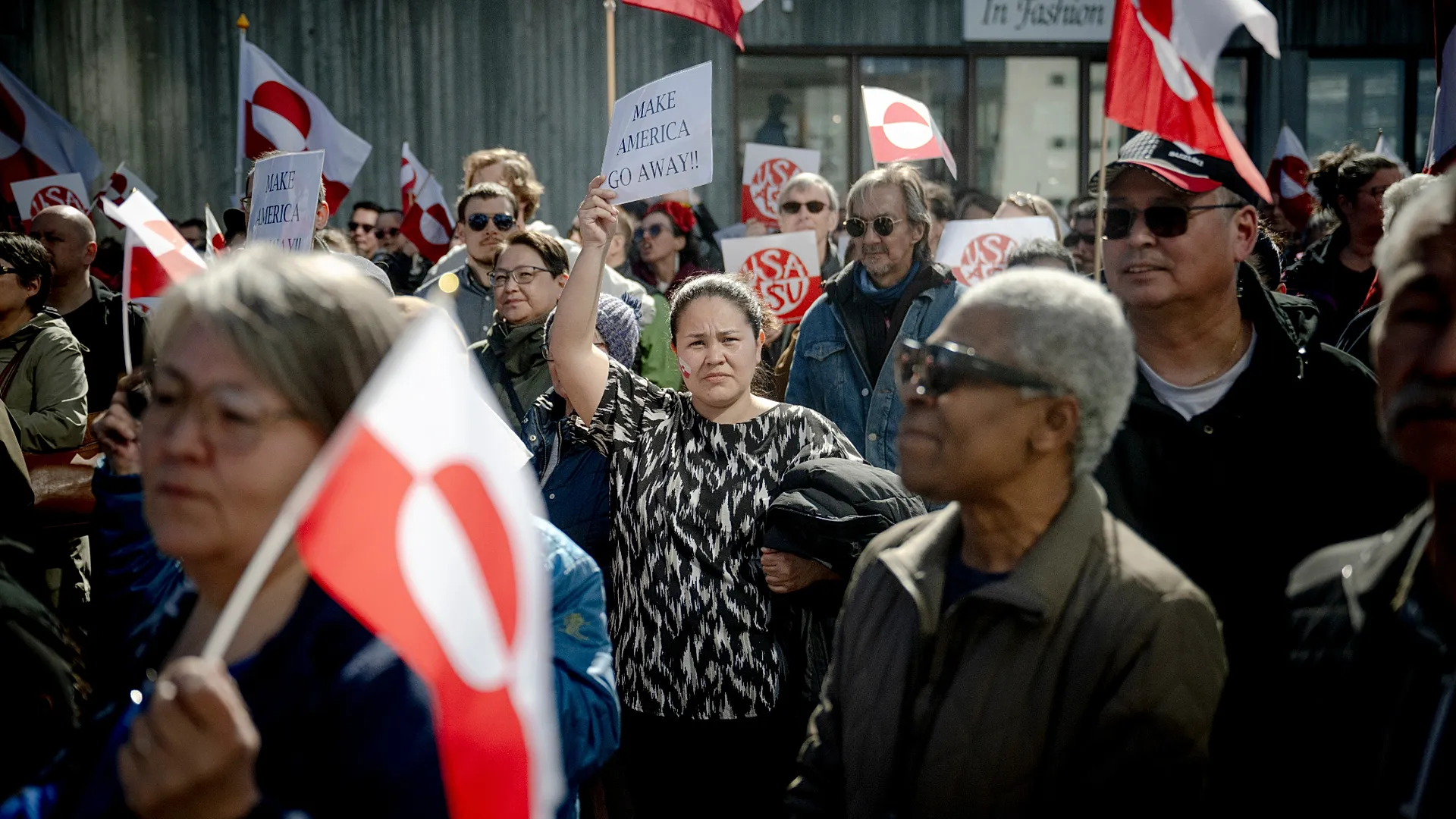
One phrase reopened the Arctic pressure front.
Nuuk, June 2026. Marco Rubio’s answer before the House Foreign Affairs Committee was brief, but strategically loaded. Asked whether he recognized that Greenland is part of Denmark, the U.S. secretary of state replied: “For now.” In diplomatic language, two words can become an escalation, especially when they touch sovereignty, NATO cohesion and Arctic militarization.
The remark revived a dispute that Washington has never fully buried since Donald Trump returned to the idea that Greenland should fall under U.S. control for national security reasons. Rubio later framed the issue around defense cooperation, missile warning systems and the island’s geographic relevance to North America. Yet the phrase “for now” weakened that containment, suggesting that the question of Greenland’s status remains politically open inside the American strategic imagination.
For Denmark and Greenland, the problem is not only rhetorical. Greenland is an autonomous territory within the Kingdom of Denmark, with its own political identity and a long history of colonial injury, self-government and debate over future independence. Treating the island as a strategic object rather than a political community risks turning Arctic security into a new language of possession.
The United States already has a military footprint in Greenland, and the island has mattered to Western defense planning since the Cold War. But there is a sharp difference between cooperation with an ally and the suggestion that an ally’s territory is provisional. That distinction matters because NATO depends not only on military hardware, but on trust that borders among members are not subject to transactional reinterpretation.
The Arctic is no longer a frozen margin. It is a theater of minerals, surveillance, shipping routes, missile defense and great-power competition involving the United States, Russia, China, Denmark and Greenland itself. Rubio’s comment therefore landed in a region where every ambiguity is amplified by geography. What sounds like improvisation in Congress can become doctrine when repeated through the machinery of power.
Greenland’s future belongs first to Greenlanders, not to Washington’s security architecture or Copenhagen’s institutional reflexes. Any durable Arctic framework must recognize that the island is not merely territory, not merely ice, not merely a radar platform. It is a society negotiating sovereignty under the pressure of climate change, military expansion and external appetite.
The danger of “for now” is that it normalizes uncertainty where law should be clear. Once sovereignty becomes negotiable language, allies begin to calculate risk differently. In the Arctic, that is not a small semantic slip. It is a warning flare over the northern map.
Más allá de la noticia, el patrón. / Beyond the news, the pattern.