

 Phoenix 24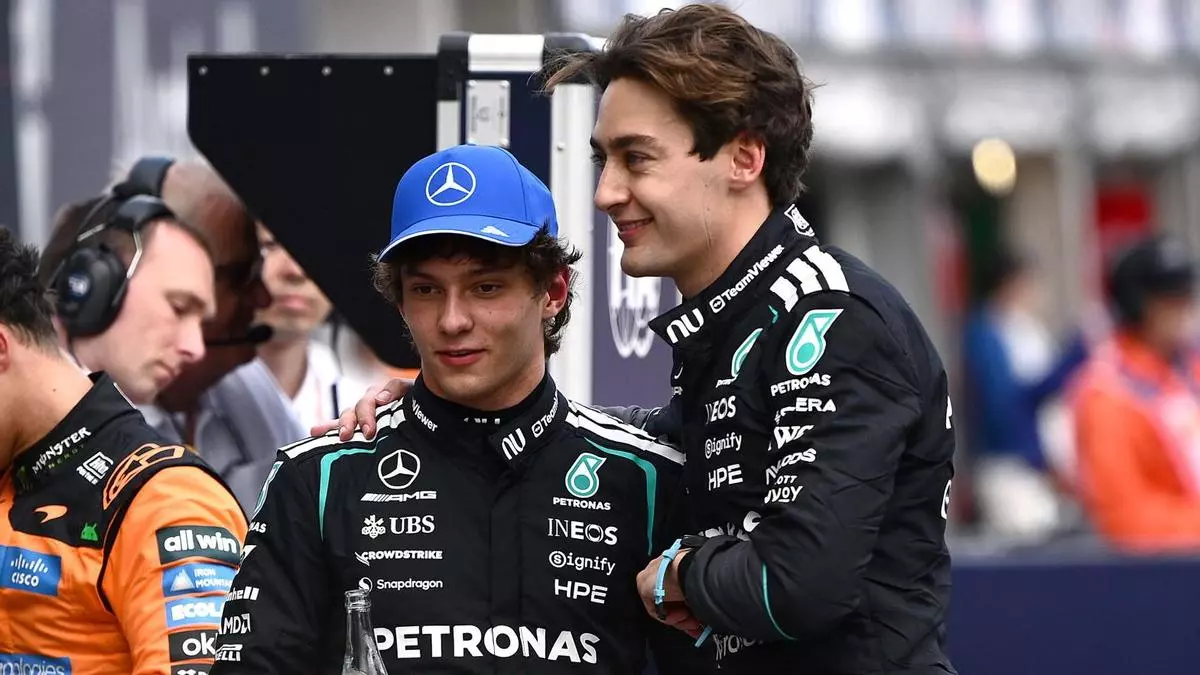
The rookie is no longer being protected.
Monaco, June 2026
Mercedes has given Andrea Kimi Antonelli the green light to race without artificial limits, confirming what the early part of the season has already suggested: the Italian is no longer being treated as a protected prospect, but as a full competitive asset inside one of Formula 1’s most powerful structures. In a championship where Mercedes has recovered its authority through the W17, Antonelli’s acceleration from promise to contender is reshaping the internal balance at Brackley.
The decision matters because it changes the political grammar of the team. Young drivers are often managed through caution, gradual exposure and internal hierarchy, especially when paired with an experienced teammate like George Russell. Antonelli, however, has forced Mercedes to recalibrate that script by delivering speed, consistency and race-winning authority earlier than expected.
The context is especially delicate. Mercedes entered the new regulatory era with a car that has quickly become the reference point of the grid, combining power unit efficiency, chassis stability and operational execution. In that environment, a rookie’s performance is no longer a development story alone; it becomes a title variable, a strategic weapon and a potential source of internal tension.
Antonelli’s rise also alters Russell’s position. The British driver remains experienced, technically sharp and deeply embedded in the team, but the emergence of a young teammate capable of fighting at the front compresses the margin for internal comfort. Mercedes now faces the familiar dilemma of elite teams: how to maximize two fast drivers without allowing ambition to fracture control.
For Toto Wolff, the challenge is managerial as much as sporting. Giving Antonelli freedom signals confidence, but it also demands discipline from both sides of the garage. The team must protect points, maintain strategic coherence and avoid allowing a generational duel to become a liability in a championship where Ferrari, McLaren and Red Bull will exploit every internal mistake.
Antonelli’s advantage is psychological. He has arrived at the front before the paddock fully adjusted to him, turning youth into tactical surprise. His lack of long-term baggage allows him to attack with a freedom that more established drivers sometimes lose under accumulated pressure. That freshness is precisely what Mercedes appears willing to convert into competitive force.
The deeper story is not simply that Mercedes trusts Antonelli. It is that Formula 1 may be watching the start of a new internal order inside the team that once revolved around Lewis Hamilton’s gravitational pull. If Antonelli continues to translate freedom into results, Mercedes will not merely have found a future champion. It may have found the center of its next dynasty.
Más allá de la noticia, el patrón. / Beyond the news, the pattern.