

 Phoenix 24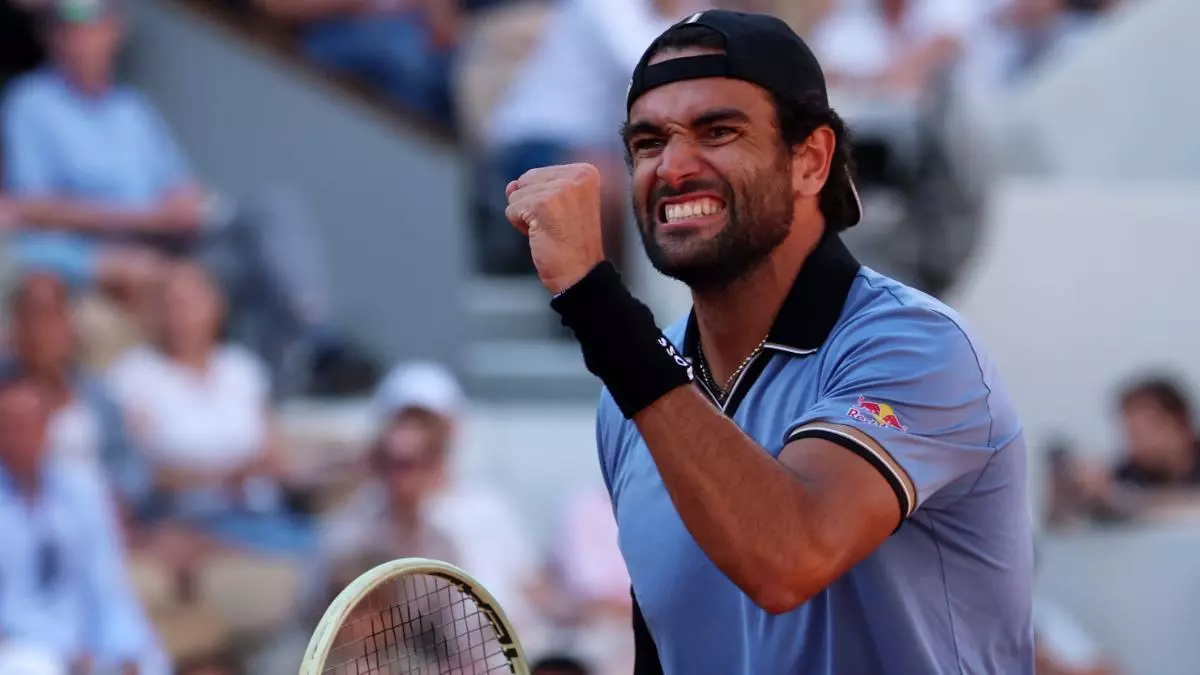
A teammate’s revenge becomes national momentum.
Paris, June 2026. Matteo Berrettini kept Italy’s Roland Garros hopes alive after advancing in a match loaded with symbolic weight following Jannik Sinner’s unexpected exit. His victory was not only a personal result, but a sporting response to the absence of Italy’s biggest tennis figure, whose fall had shaken the tournament’s projected hierarchy.
Berrettini’s performance carried the tone of recovery. After years marked by injuries, interruptions and uneven rhythm, the Italian showed that his game still has the weapons to survive on one of tennis’s most demanding stages. His serve, forehand and competitive discipline allowed him to turn pressure into authority when the draw had suddenly opened.
The emotional layer was impossible to ignore. With Sinner out, Italian tennis needed another figure to absorb the national expectation. Berrettini did not replace Sinner’s dominance, but he gave Italy continuity, pride and a new narrative inside a tournament that had already lost one of its central protagonists.
Roland Garros now enters a more unpredictable phase. The elimination of major contenders has altered the competitive map, creating space for players capable of combining experience, physical resilience and tactical clarity. Berrettini’s advance fits that moment: less spectacular than a coronation, but powerful enough to keep the dream alive.
For Berrettini, the challenge is no longer only winning matches. It is proving that his career still belongs inside the elite conversation after a long cycle of physical setbacks. In Paris, every round becomes both a sporting test and a statement of survival.
Italy’s tennis generation remains one of the strongest stories in the modern game. Sinner represents dominance; Berrettini represents resistance. Together, even when one falls and the other advances, they reveal the depth of a national project that no longer depends on a single name.
Hechos que no se doblan. / Facts that do not bend.