

 Phoenix 24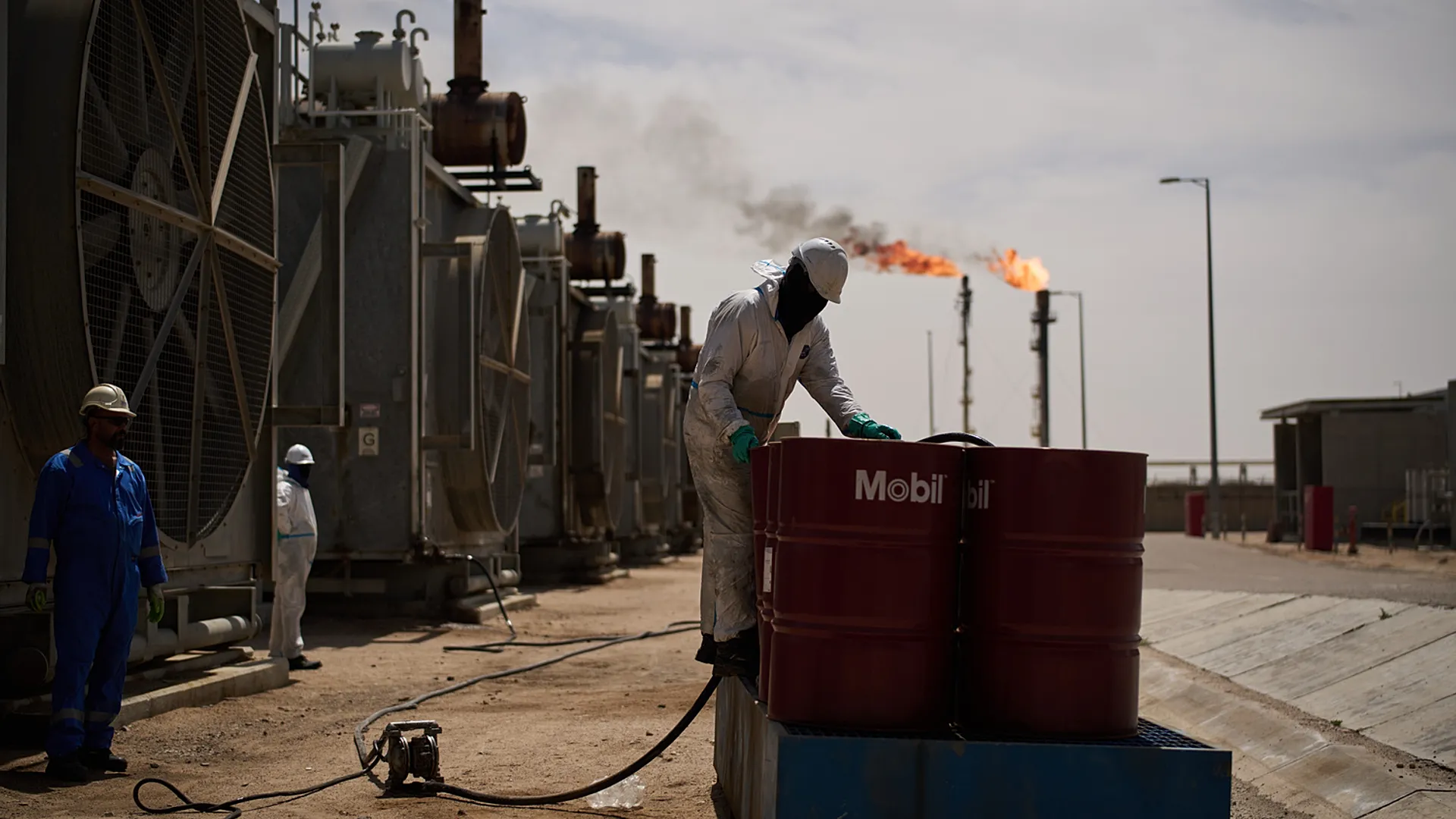
A desert discovery becomes geopolitical leverage.
Baghdad, June 2026. Iraq’s announcement of a massive oil discovery near its border with Saudi Arabia has arrived at a moment when global energy politics are already under severe pressure. Initial estimates place reserves at more than 8.8 billion barrels, making the find one of the most significant discoveries in Iraq’s energy sector in recent years. For Baghdad, this is not only a technical success; it is a strategic asset capable of reshaping investment, production planning and regional influence.
The discovery, located in Najaf province, reinforces Iraq’s position as one of the world’s most important oil powers. Yet the timing gives the announcement an added layer of significance. With Middle Eastern tensions feeding volatility across maritime routes and energy markets, any new reserve of this magnitude immediately becomes part of a wider geopolitical calculation. Oil is never just oil in this region; it is revenue, sovereignty, leverage and vulnerability at the same time.
The presence of Chinese-linked investment around the exploration process adds another strategic dimension. Beijing has spent years deepening its energy footprint across Iraq, not only as a buyer of crude but as an infrastructure and development partner. In that context, the Najaf discovery strengthens China’s role in a country where energy, reconstruction and geopolitical alignment remain closely connected.
For Iraq, the challenge is converting geological potential into durable national power. Large reserves do not automatically produce stability, fiscal resilience or industrial development. Baghdad must still manage infrastructure limitations, export bottlenecks, political fragmentation, corruption risks, environmental pressure and its obligations inside the broader oil-production framework. The discovery creates opportunity, but also raises expectations that the Iraqi state has often struggled to meet.
The field’s initial production indicators remain modest compared with the scale of the estimated reserves. That contrast matters. A giant discovery can attract headlines, but its real impact depends on drilling capacity, pipeline access, financing, security conditions and the speed at which development plans can move from announcement to sustained output. In energy politics, the distance between reserve estimates and market transformation is often measured in years, not weeks.
Regionally, the discovery strengthens Iraq’s relevance at a time when Gulf producers are trying to balance price discipline, long-term demand uncertainty and the political consequences of the energy transition. Saudi Arabia, Iran and Iraq each occupy different positions inside this shifting equation. Iraq’s advantage is geological abundance; its weakness remains institutional fragility. That combination has defined the country’s energy story for decades.
The discovery also complicates the global narrative around decarbonization. While governments speak of transition, major producers continue to invest in new reserves, and major consumers continue to secure long-term access to hydrocarbons. The Najaf find is therefore a reminder that the post-oil world has not arrived. It is being negotiated unevenly, while states still treat crude as a pillar of national strategy.
For Baghdad, the immediate message is clear: Iraq has more energy weight to bring to the table. For global markets, the signal is more cautious: new reserves may ease long-term supply concerns, but they do not eliminate short-term geopolitical risk. In a region where pipelines, ports and chokepoints can become instruments of pressure, the value of oil depends not only on what lies underground, but on who controls the routes above it.
Phoenix24: clarity in the grey zone. / Phoenix24: claridad en la zona gris.