

 Phoenix 24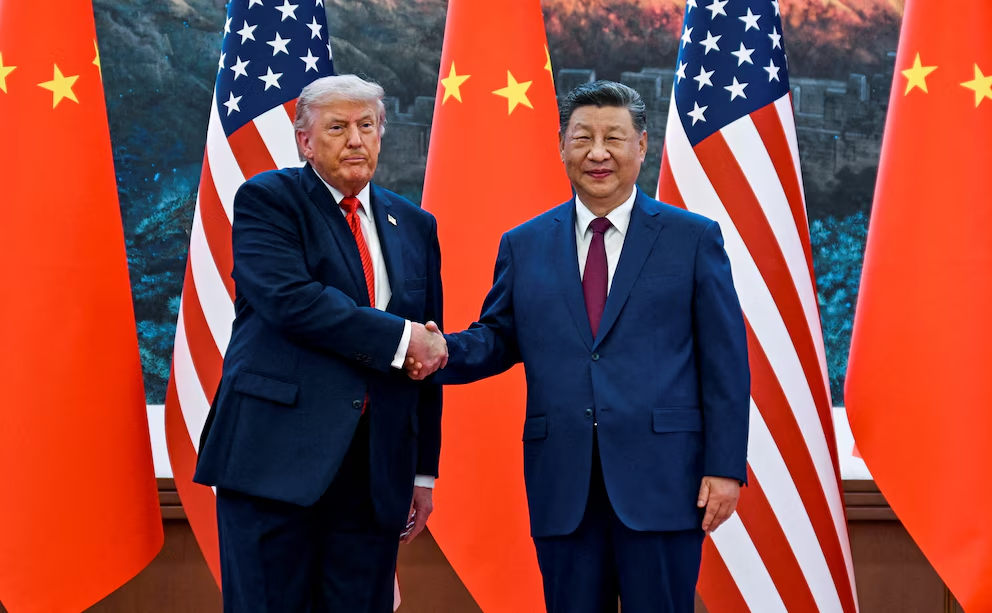
Global rivals are beginning to negotiate through shared fears.
Beijing, May 2026. Donald Trump and Xi Jinping publicly agreed that Iran must not obtain nuclear weapons and demanded the reopening of the Strait of Hormuz, marking one of the clearest points of convergence between Washington and Beijing amid escalating instability in the Middle East.
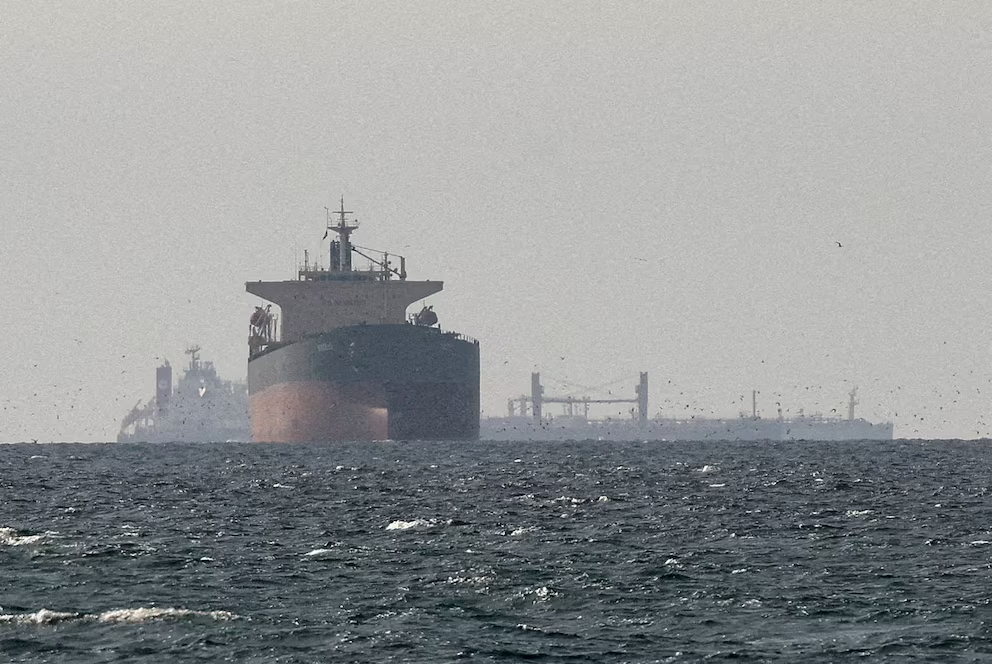
The significance lies less in diplomatic symbolism than in economic necessity. China depends heavily on Gulf energy flows, while the United States faces mounting pressure from shipping disruptions, energy volatility and military escalation around one of the world’s most strategic maritime chokepoints.
Trump stated that Xi had expressed support for reopening the corridor and preventing Iran from becoming a nuclear power, while also signaling that Beijing would avoid supplying military equipment to Tehran. That position reflects China’s balancing act: preserving relations with Iran without being pulled into a wider confrontation capable of destabilizing global trade.
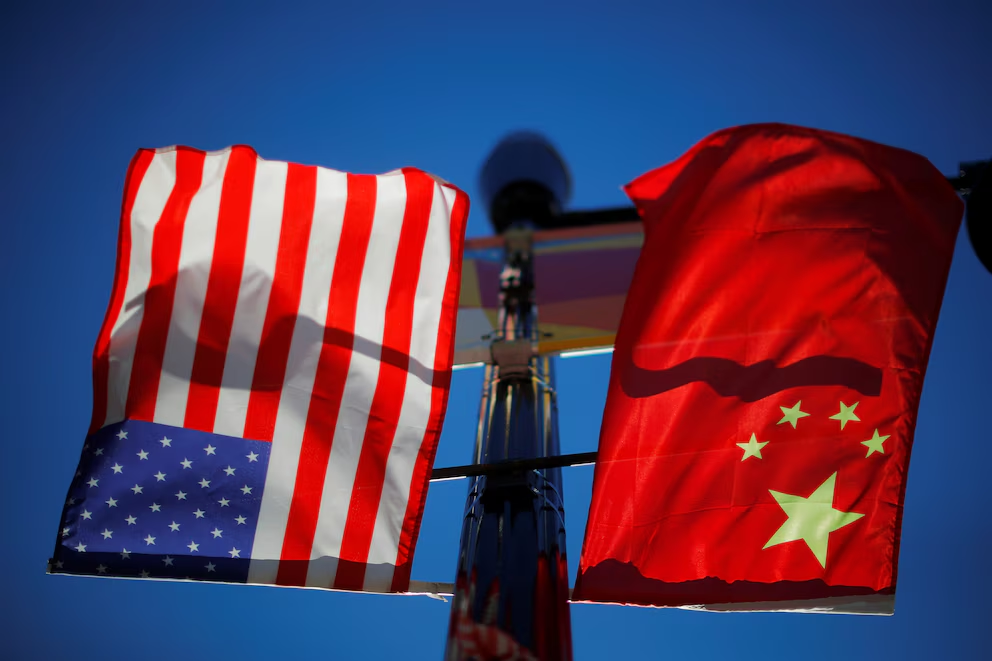
Behind the diplomatic language sits a harsher reality. The Strait of Hormuz has become the operational center of a broader confrontation involving naval blockades, drone attacks, energy pressure and strategic signaling. Shipping disruptions and threats against commercial vessels have transformed the corridor into a live geopolitical fault line.
The summit also exposed the emerging structure of global power politics. Even while competing over Taiwan, technology, trade and influence in Asia, Washington and Beijing appear aware that uncontrolled escalation in the Gulf could destabilize both economies simultaneously.
Neither leader resolved the deeper tensions dividing the two countries. But both acknowledged an uncomfortable truth: in a fragmented world, some crises are too economically dangerous to leave entirely to confrontation.
Phoenix24: claridad en la zona gris. / Phoenix24: clarity in the grey zone.