

 Phoenix 24
Fear became poetry inside a labyrinth.
Cannes, May 2026. Guillermo del Toro marked the twentieth anniversary of Pan’s Labyrinth by revisiting the film that transformed him from cult visionary into one of the defining filmmakers of modern fantasy cinema. The commemoration carried symbolic weight because the film’s original premiere remains one of the great festival moments in the director’s career. Two decades later, its endurance confirms that del Toro did not simply make a dark fairy tale; he built a moral language through fantasy.
What continues to distinguish Pan’s Labyrinth is its refusal to separate brutality from imagination. Set in post–Civil War Spain under Francoist repression, the film fused political violence with dark mythology, creating a narrative where monsters were often more humane than the people enforcing order. That inversion remains central to del Toro’s cinema: the creature is rarely the true horror. The real terror usually comes from obedience, cruelty and power dressed as discipline.

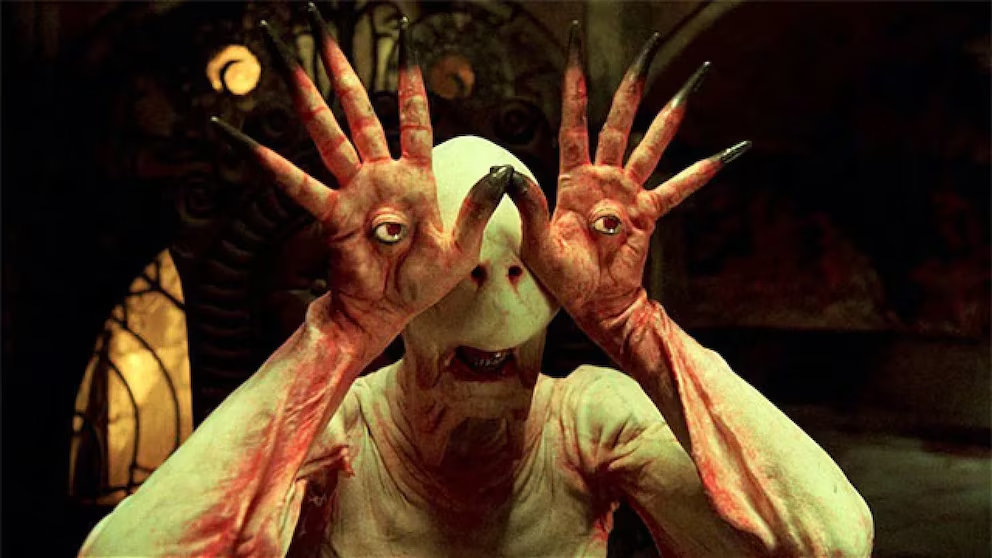
The anniversary also revives one of the most memorable anecdotes surrounding the film: Stephen King’s reaction to the Pale Man sequence. The idea that one of horror’s most influential authors was unsettled by del Toro’s imagery captures the precision of the scene. The Pale Man does not terrify only because of his appearance, but because he embodies appetite without conscience. In that figure, childhood fear, authoritarian violence and predatory silence converge.
Del Toro’s achievement lies in making fantasy carry historical weight without turning the film into a lecture. The young Ofelia’s journey through the labyrinth is not an escape from reality, but a way of interpreting a world already ruled by terror. The magical elements do not soften the violence surrounding her; they reveal its deeper grammar. That is why the film still feels alive: it understands that imagination can be a survival mechanism when reality becomes unbearable.
The film’s return also arrives during a period in which cinema depends heavily on digital spectacle and franchise repetition. Del Toro’s work resists that flattening because it preserves texture, imperfection and handcrafted presence. His monsters feel remembered rather than generated, as if they came from old books, childhood nightmares and political ruins. That physicality gives the film an emotional density that many contemporary fantasies struggle to recover.
Twenty years later, Pan’s Labyrinth remains a warning about innocence under authoritarian pressure. Its power does not come from nostalgia, but from the way it continues to speak to societies where fear is organized, cruelty is bureaucratized and children are forced to understand adult violence too soon. Del Toro’s labyrinth still holds because it was never only a place of fantasy. It was a map of how terror enters the imagination and how imagination refuses to surrender.
Phoenix24: claridad en la zona gris. / Phoenix24: clarity in the grey zone.