

 Phoenix 24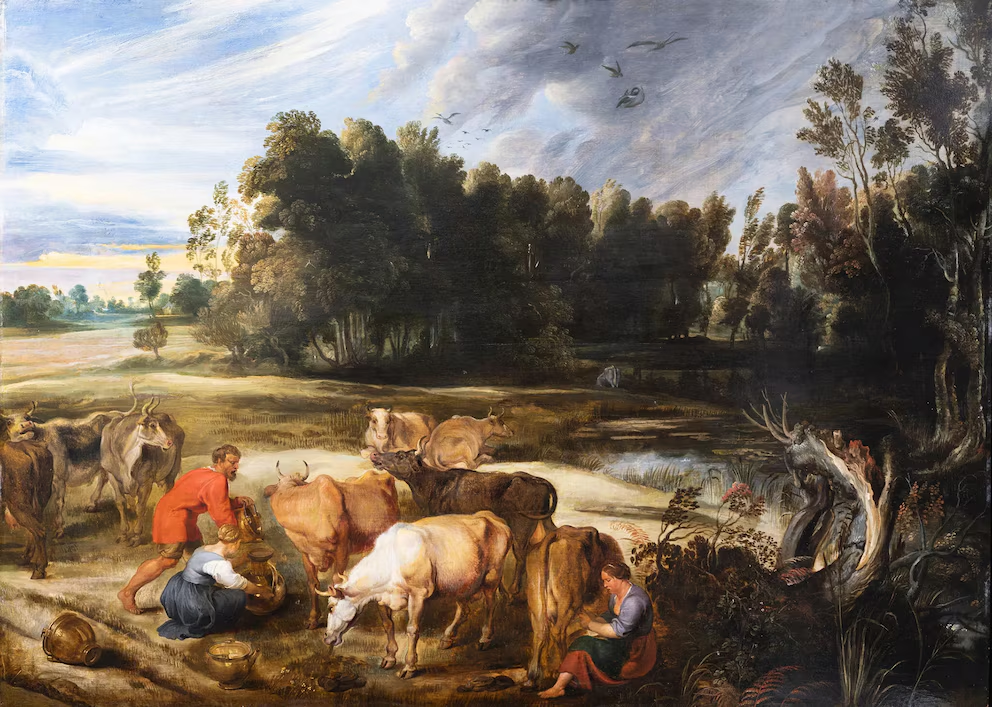
Provenance can collapse over one detail.
New York, May 2026. A Nazi-era restitution dispute over a pastoral painting attributed by some to Peter Paul Rubens has turned on an almost absurd question: whether the absence of a cow proves the work is not the original. The family of Abraham Adelsberger, a Jewish toy manufacturer who fled Nazi persecution, has pursued the return of a landscape they believe was part of his collection before it was lost under the pressure of the Third Reich.
The case shows how art restitution often depends on fragments rather than certainties. Inventories, photographs, expert opinions and wartime transactions become forensic evidence in disputes where memory, ownership and market value collide. In this instance, the missing animal is not a curiosity; it may determine whether the painting is a Rubens, a copy, or a work connected only indirectly to the lost collection.
That detail carries enormous legal and moral weight. If the work is authenticated as the painting claimed by the heirs, the restitution argument becomes stronger. If experts conclude it is a later copy or a different version, the family’s claim weakens, even if the broader history of Nazi persecution remains undeniable. The law can recognize suffering, but it still demands object-level proof.
The dispute reveals the cold precision of postwar justice in the art world. A vanished cow can become a legal hinge because stolen art is not recovered through emotion alone. It is recovered through provenance, attribution and the fragile discipline of matching what history remembers with what the canvas actually shows.
Phoenix24: claridad en la zona gris. / Phoenix24: clarity in the grey zone.