

 Phoenix 24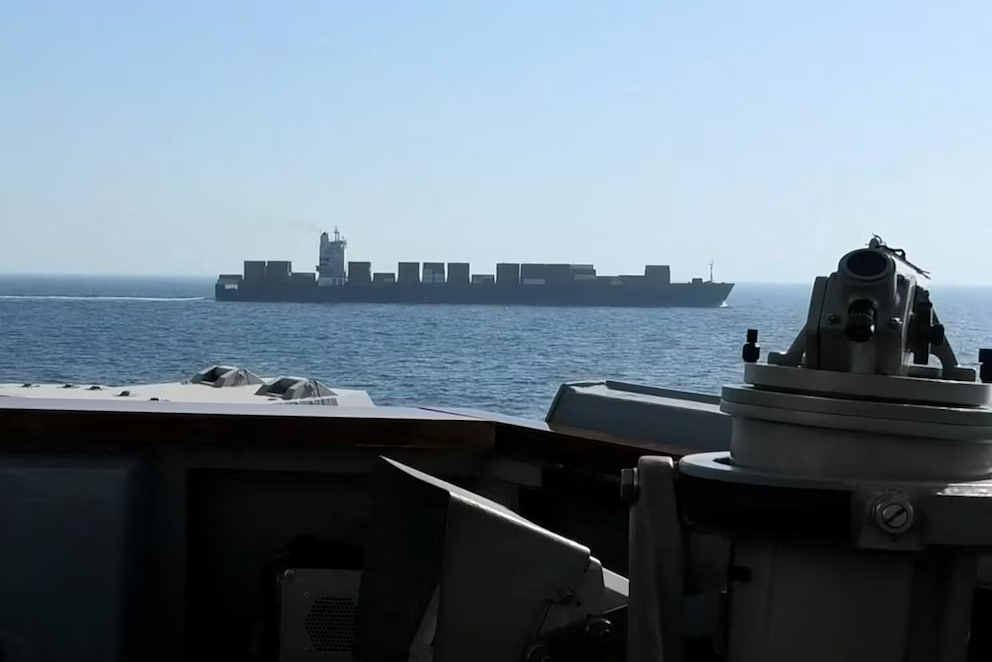
Hormuz is becoming a controlled pressure zone.
Washington, May 2026. The United States has diverted 61 commercial vessels and immobilized four additional ships as part of the expanding maritime blockade surrounding Iran and the Strait of Hormuz. The operation reflects a new phase of pressure strategy in which Washington is no longer limiting itself to sanctions, but actively shaping maritime traffic through military deterrence, interception protocols and selective immobilization.
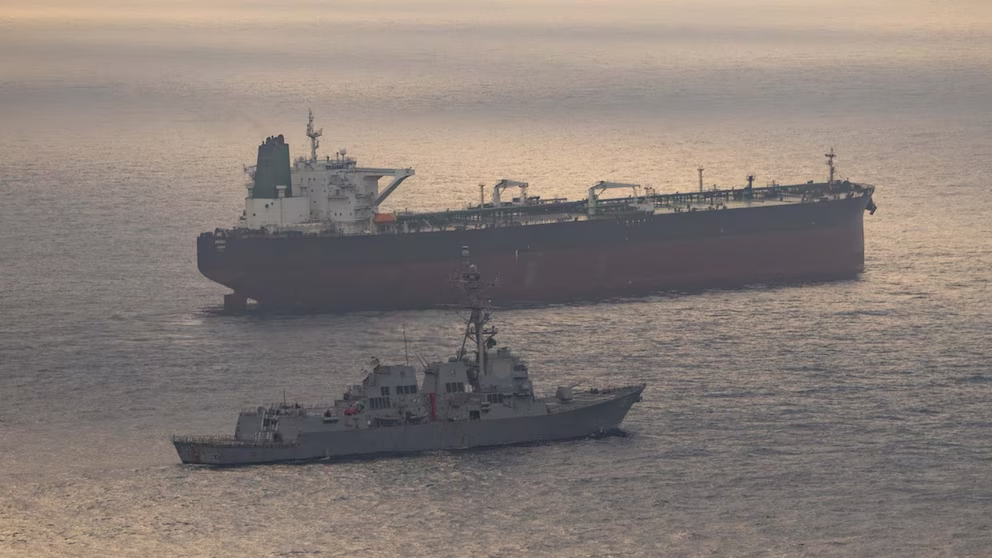
The scale of the operation signals that the Strait of Hormuz is no longer functioning under normal commercial logic. Daily maritime flows have fallen under crisis conditions, while insurers, shipping companies and energy traders increasingly treat the corridor as a geopolitical risk zone rather than a conventional trade route. Every diverted vessel now carries not only cargo, but also the weight of strategic calculation.
Washington frames the operation as necessary to contain Iranian leverage after Tehran’s threats and disruptions around the strait. The broader campaign includes naval escorts, aerial surveillance, drone interception and maritime enforcement actions designed to preserve navigational control. Yet the line between protecting navigation and imposing economic pressure is becoming increasingly thin.
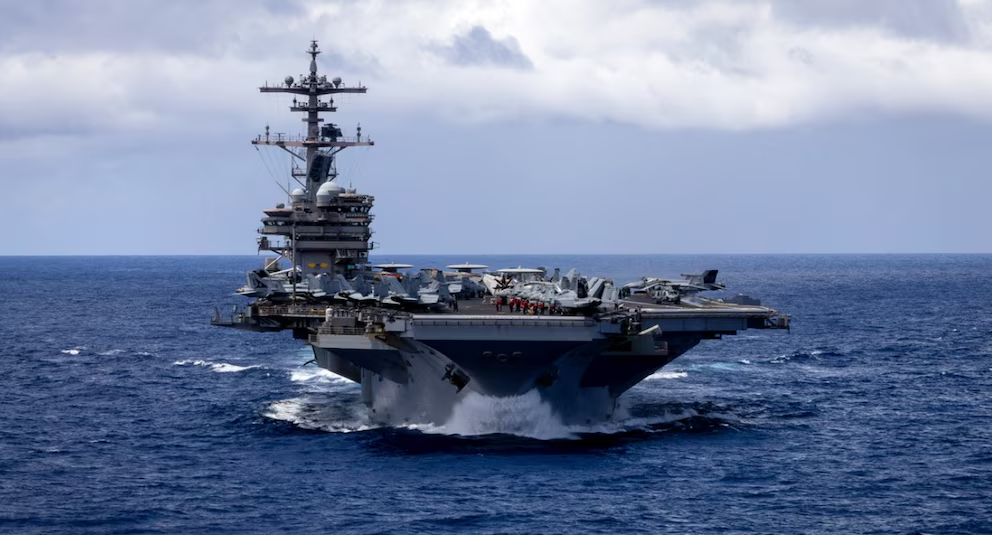
Hormuz has become the central economic battlefield of the Iran crisis because a critical share of global oil flows traditionally moves through that corridor. Every delayed tanker, rerouted ship or immobilized vessel produces consequences across energy markets, insurance costs and global supply chains. What happens in the strait no longer remains regional; it travels through prices, ports and political calculations worldwide.
The United States appears to be pursuing a dual objective: economically suffocating Iran’s maritime exports while preventing Tehran from fully controlling access to the strait. That creates a maritime pressure system in which both sides test limits without openly crossing into full naval war. The result is a controlled confrontation, but controlled confrontations can still generate uncontrolled consequences.
For global markets, the danger lies not only in a direct U.S.-Iran clash, but in prolonged instability. Even limited disruption in Hormuz can elevate freight prices, fuel costs and commodity volatility. Asian importers remain especially vulnerable because many depend heavily on Gulf energy shipments. As uncertainty deepens, traders increasingly price geopolitical risk directly into oil logistics.
The deeper pattern is strategic. Modern economic warfare is no longer confined to sanctions documents or frozen assets. It now includes shipping corridors, maritime surveillance, naval pressure and control over logistical arteries that sustain globalization itself. Hormuz is no longer merely a strait. It has become a geopolitical choke point where military deterrence and economic coercion now operate simultaneously.
Geopolítica, sin maquillaje. / Geopolitics, unmasked.