

 Phoenix 24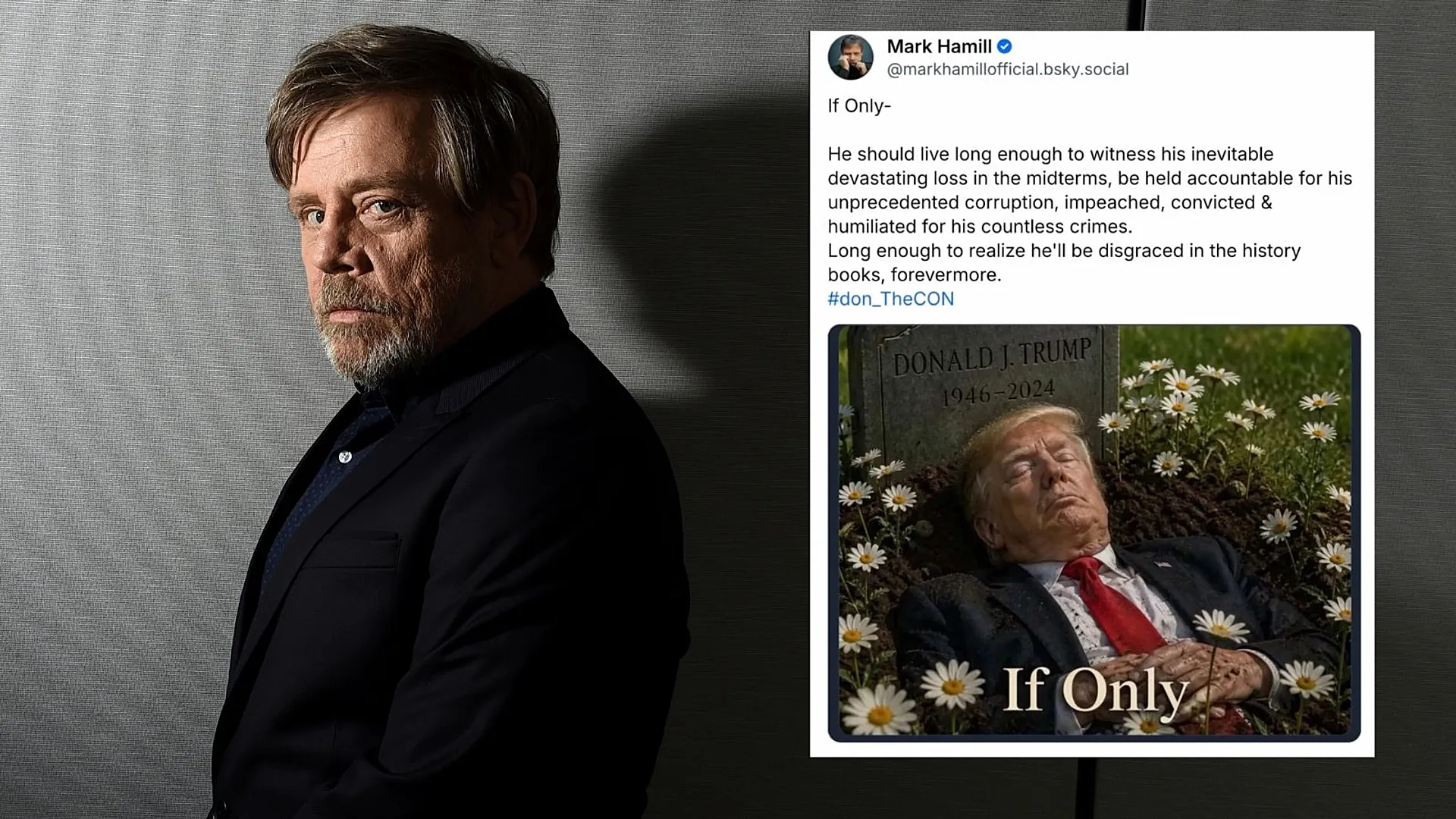
Artificial images are becoming political ammunition.
Washington, May 2026. A digitally generated image shared by Mark Hamill showing Donald Trump inside a grave triggered an aggressive response from the White House and reignited the American debate over political rhetoric, artificial intelligence and symbolic violence. The controversy escalated rapidly because it emerged in an already polarized environment marked by recent assassination attempts, digital propaganda battles and the normalization of AI-generated political imagery.
The image, posted on Bluesky and later deleted, showed Trump in a grave with a short provocative caption. Hamill later clarified that he was not wishing death upon the president, but political defeat, accountability and historical disgrace. The White House rejected that explanation and framed the post as another example of rhetoric that can intensify political hostility.
The episode matters beyond celebrity controversy because it reflects a structural transformation in political communication. AI-generated imagery is no longer limited to satire, memes or experimental art. It has become part of the emotional arsenal of modern politics, where synthetic visuals are designed to provoke outrage, mobilize supporters and dominate attention cycles faster than factual debate can respond.
The contradiction is that the American political ecosystem already uses artificial imagery as a weapon across ideological lines. Supporters, critics, campaign networks and online communities increasingly rely on synthetic scenes to dramatize enemies, sanctify leaders or create instant emotional narratives. In that environment, the dispute is less about one image and more about who controls the moral boundaries of digital aggression.
Hamill’s role magnified the controversy because he is not merely an actor. Through Star Wars, he carries one of the most recognizable cultural identities in global popular imagination. When a figure associated with heroic myth, rebellion and resistance enters partisan combat, entertainment symbolism becomes absorbed into state politics, and political conflict begins to speak in the language of fandom.
The White House response also reflects a deeper security anxiety surrounding Trump. After years of escalating political violence, threats and assassination attempts, any image suggesting death or burial acquires a heavier institutional meaning. Even when presented as satire, a synthetic image can be interpreted as a cultural signal in a country where rhetoric and violence have repeatedly moved too close to each other.
The real danger is not that AI creates political conflict by itself. The danger is that it accelerates the emotional metabolism of an already fractured society. It allows symbolic violence to be manufactured instantly, circulated massively and defended afterward as humor, satire or artistic expression. That cycle weakens public language because every side can claim victimhood while continuing to escalate.
The Hamill-Trump dispute is therefore not a marginal entertainment story. It is a warning about the next phase of democratic communication. Artificial intelligence is turning political imagery into a battlefield where intent, interpretation and manipulation collide before institutions can react. The image disappeared, but the pattern remains: synthetic politics is no longer coming. It is already governing the emotional surface of public life.
Información que anticipa futuros. / Information that anticipates futures.