

 Phoenix 24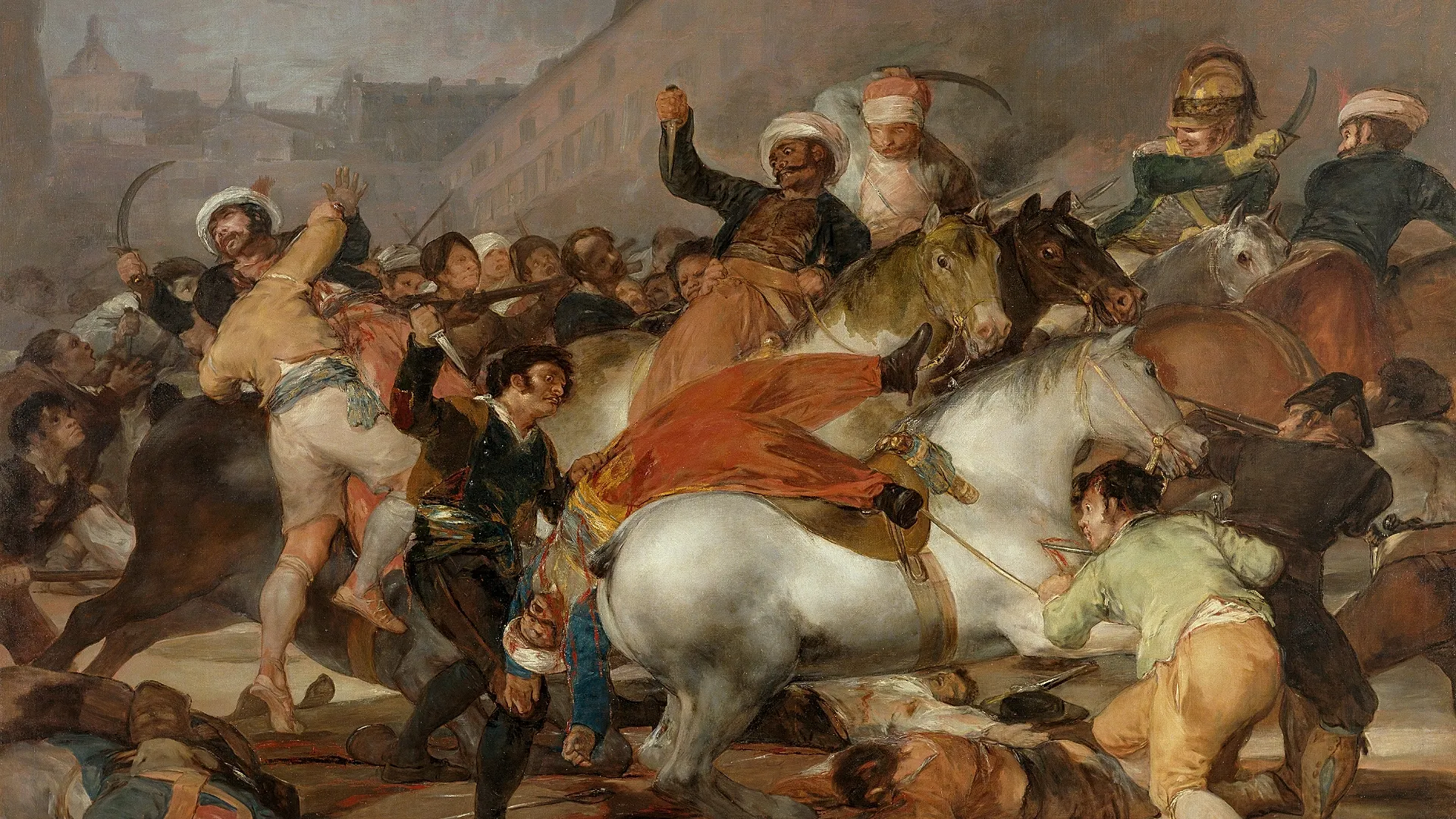
A local uprising became a continental warning.
Madrid, May 2026. Two hundred and eighteen years after the uprising of May 2, 1808, Madrid is not only commemorating a foundational episode of Spanish resistance, but revisiting one of the clearest historical lessons about occupation, legitimacy and political miscalculation. What began as a popular reaction against Napoleon’s troops became the opening act of the Spanish War of Independence and one of the first major cracks in the imperial confidence of Napoleonic Europe. The memory of that day remains powerful because it shows how an apparently fragmented society can become a strategic force when foreign domination crosses the threshold of humiliation.
The spark came when French forces attempted to remove the Infante Francisco de Paula from Madrid, deepening the perception that Spain’s royal family and political sovereignty were being dismantled under foreign control. The cry attributed to José Blas Molina, warning that they were taking him away, condensed a broader anxiety already present in the city. Madrid did not rise with a disciplined army or a prepared command structure, but with civilians, artisans, women, workers and scattered soldiers who transformed outrage into resistance.
The military imbalance was brutal. Napoleon’s forces represented one of the most feared armies in Europe, while the Madrid uprising was improvised, urban and materially fragile. Yet that asymmetry is precisely what gave the revolt its historical force: it exposed the limits of imperial power when occupation loses moral control over the population it seeks to dominate.
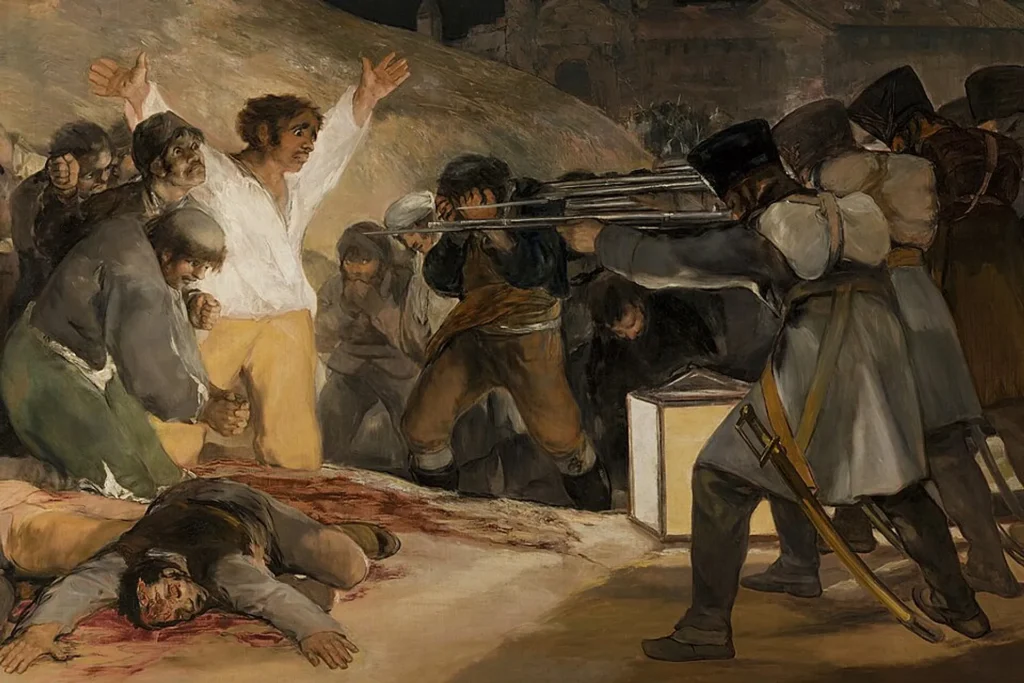
The defense of key sites such as the Monteleón barracks elevated figures like Luis Daoíz and Pedro Velarde into symbols of sacrifice, while the repression that followed deepened the rupture between French authority and Spanish society. The executions carried out after the uprising, later immortalized by Francisco de Goya, transformed defeat into political memory. In that conversion, violence failed to close the rebellion and instead expanded its legitimacy.
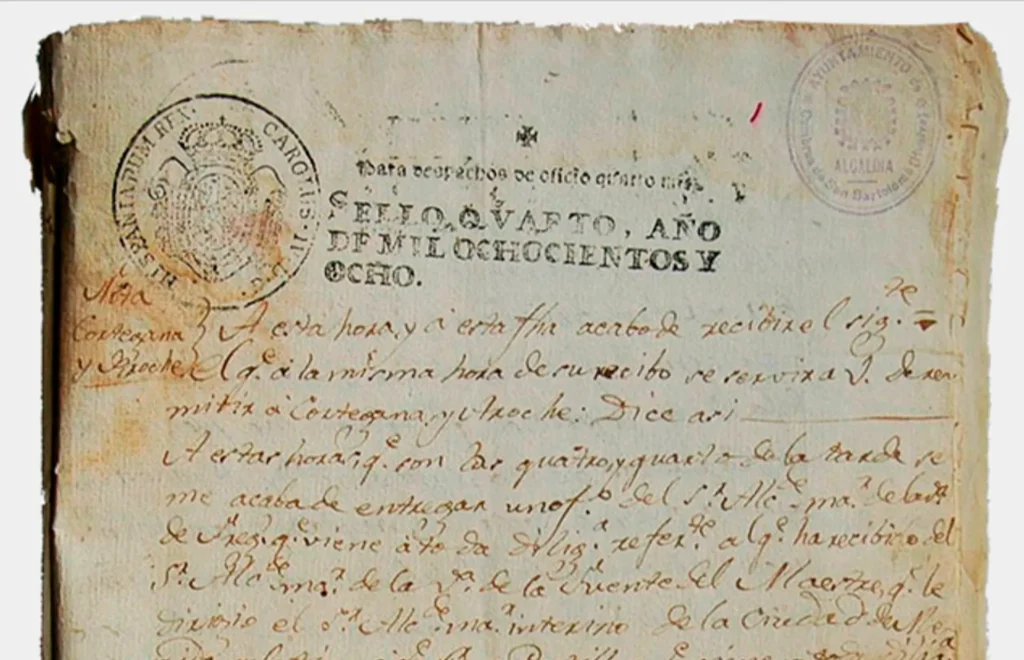
Móstoles occupies a decisive place in this sequence. That same day, local authorities issued a call that helped extend the revolt beyond Madrid and turned a city’s anger into a wider national mobilization. The importance of that gesture lies not only in its military consequence, but in its symbolic grammar: resistance ceased to be a spontaneous riot and became a political message capable of traveling across territory.
The 1808 uprising also reveals a deeper European pattern. Empires often mistake control of institutions for control of societies, and Napoleon’s Spain became one of the clearest examples of that strategic error. By seeking to manage the monarchy, occupy territory and impose authority from above, France underestimated the emotional and cultural architecture of sovereignty.
Today, the commemoration operates on two levels. It is a regional celebration of Madrid’s identity, but also a reminder that historical memory is never neutral when it concerns invasion, resistance and national dignity. The rituals, reenactments and institutional ceremonies around May 2 preserve a civic narrative in which ordinary people are not passive witnesses to history, but actors capable of altering its direction.
That is why the anniversary still carries political weight beyond nostalgia. The uprising of May 2 does not survive merely because it belongs to the past, but because it continues to speak to the present: legitimacy cannot be occupied, fear cannot always discipline a population, and sovereignty becomes most visible when it is threatened. In Madrid’s memory, Napoleon did not begin to fall only on distant battlefields, but also in the streets where civilians refused to accept that power was irreversible.
Hechos que no se doblan. / Facts that do not bend.