

 Phoenix 24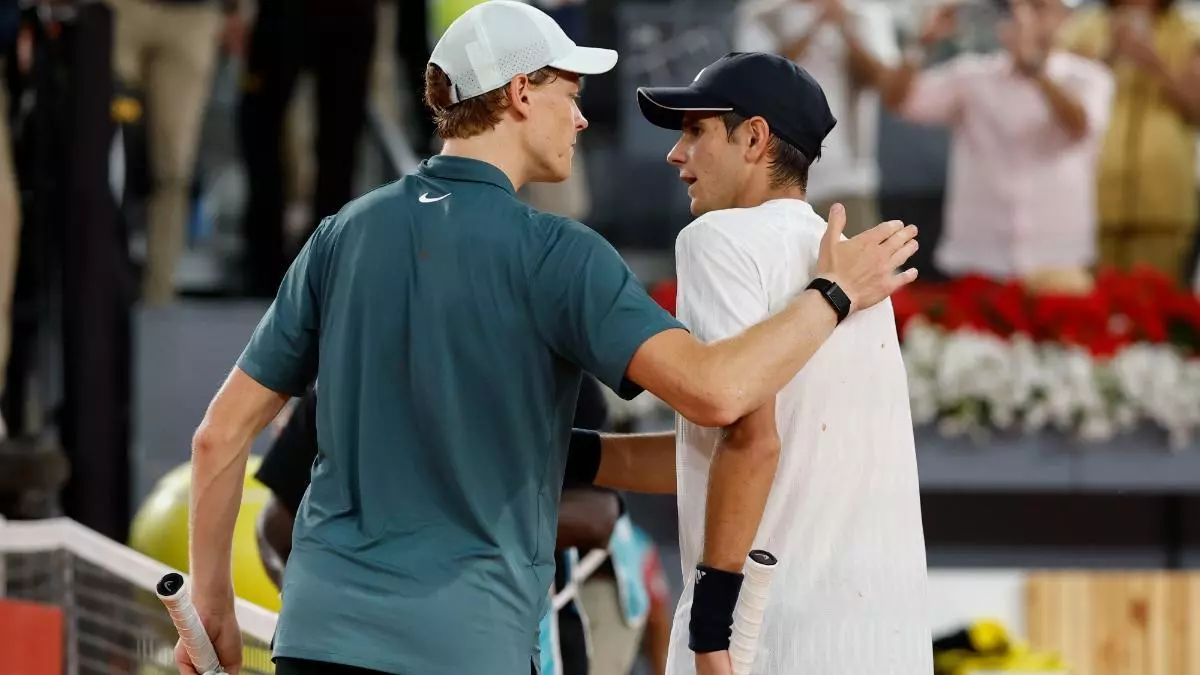
Respect reveals what the scoreboard cannot measure
Madrid, April 2026. Jannik Sinner defeated Rafa Jódar at the Madrid Open, but the image that traveled beyond the result came after the final point. Instead of reducing the match to hierarchy, the world number one used the camera-signing ritual to recognize the young Spanish player with a message that captured the tone of the day: “what a player.” It was a brief gesture, but in elite sport, gestures often carry more meaning than speeches.
Jódar’s run in Madrid had already become one of the tournament’s most unexpected stories. At 19, he entered the event as a rising Spanish prospect and left with the aura of someone who had forced the circuit to look more carefully. Losing to Sinner did not diminish the impression; it sharpened it, because the defeat came with recognition from the player currently setting the standard.
Sinner’s reaction matters because tennis is a sport built on both competition and codes. The handshake at the net, the signature on the camera and the public acknowledgment of an opponent are small rituals, but they help define the moral architecture of the game. By praising Jódar immediately after beating him, Sinner turned victory into validation rather than domination.
For Spanish tennis, the moment arrives at a sensitive transition. The long shadow of Rafael Nadal and the present force of Carlos Alcaraz have made generational comparison almost inevitable. Jódar does not need to carry that burden yet, but Madrid has given him something powerful: early symbolic legitimacy in front of a national audience.
The match also exposed the difference between promise and arrival. Jódar showed enough talent, courage and competitive clarity to suggest that his emergence is not decorative. But Sinner also reminded everyone that the top of the sport demands not only brilliance, but sustained precision across pressure points, momentum shifts and physical intensity.
That is why the camera message resonated. It did not crown Jódar prematurely, nor did it inflate a single performance into destiny. It simply marked him as visible. In a sport where the future is often announced too loudly, that kind of recognition can be more valuable because it feels earned.
Sinner advanced, Jódar learned, and Madrid gained a new storyline. The scoreboard recorded a winner, but the scene after the match revealed something deeper: tennis still knows how to identify talent before the rankings fully explain it.
Cada silencio habla. / Every silence speaks.