

 Phoenix 24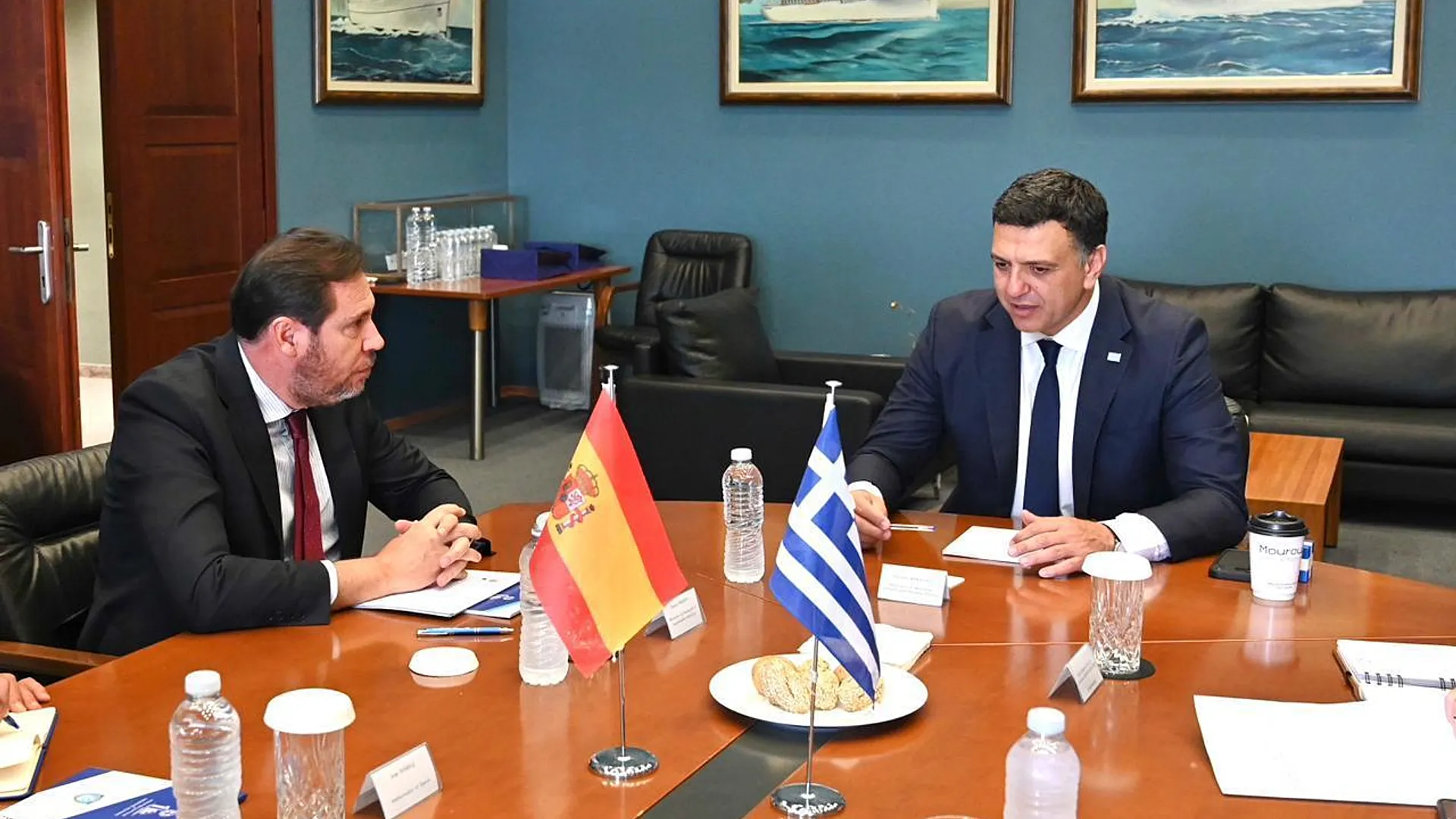
Sustainability now sails with geopolitical weight.
Athens, April 2026.
Spain is moving to align its maritime policy with a broader European transition: reducing emissions without surrendering logistical influence. Transport Minister Óscar Puente has discussed the possibility of establishing green maritime corridors with his Greek counterparts, presenting the initiative as part of a cleaner, more efficient Mediterranean transport strategy. The proposal connects environmental policy with port modernization, alternative fuels and regional competitiveness. It also places Spain and Greece inside a larger contest over who will define the next generation of European maritime routes.
The idea of green maritime corridors goes beyond cleaner ships. It involves coordinated ports, emissions monitoring, renewable fuel infrastructure, digital logistics and regulatory alignment between countries. For Spain and Greece, both located at strategic edges of the Mediterranean, the project offers a way to strengthen their position in a shipping system increasingly shaped by climate rules. The ports that adapt first will not only reduce emissions; they will attract routes, investment and industrial relevance.
Puente’s approach reflects the EU’s growing pressure to decarbonize hard-to-transform sectors. Maritime transport remains especially difficult because global shipping depends on fuel-intensive vessels, fragmented regulation and long investment cycles. Green corridors allow governments to test practical solutions on specific routes before scaling them across wider networks. That makes them laboratories of policy, technology and commercial adaptation.
Yet the initiative also carries a strategic dimension. Spain and Greece are not merely discussing sustainability; they are positioning themselves within the future map of Mediterranean trade. Cleaner corridors could increase the relevance of southern European ports and reduce dependence on traditional northern logistics hubs. In that sense, environmental policy becomes a mechanism for redistributing influence inside the European transport system.
The Mediterranean is especially suited for this transformation because it combines dense maritime traffic, proximity to energy corridors and connection points with Africa, Asia and the Middle East. A green corridor between Spain and Greece would not operate in isolation. It would form part of a broader network linking ports, fuel suppliers, ship operators and regulatory authorities. The success of such a project would depend on whether environmental ambition can be converted into operational reliability.
The main challenge is cost. Alternative fuels such as green hydrogen, ammonia or methanol require infrastructure, safety protocols and long-term demand guarantees. Shipowners need certainty before investing in new vessels or retrofits, while ports need financing to build bunkering and digital tracking systems. Without coordination, green corridors risk becoming symbolic projects rather than commercially viable routes.
There is also a timing dilemma. Move too slowly, and Southern Europe risks losing the opportunity to lead the next maritime cycle. Move too quickly, and governments may create infrastructure before the market is ready to use it at scale. The value of the Spain-Greece dialogue lies precisely in that balance: building a transition that is ambitious enough to matter, but practical enough to endure.
For the EU, projects like this serve a broader strategic purpose. They help translate climate policy into infrastructure, industry and regional power. Decarbonization is no longer only a regulatory agenda; it is becoming a competition over ports, fuels, supply chains and standards. Countries that control the early corridors will help define the rules of cleaner maritime trade.
That is why the Spanish-Greek conversation matters beyond its technical language. It signals a future where sustainability and strategic autonomy are increasingly inseparable. Green maritime corridors may reduce emissions, but they also reorganize commercial geography. The Mediterranean, long treated as a passage between larger powers, is becoming a platform where Europe’s climate, trade and transport ambitions converge.
Sustainability redraws routes before it reduces emissions.
La sostenibilidad redefine rutas antes de reducir emisiones.