

 Phoenix 24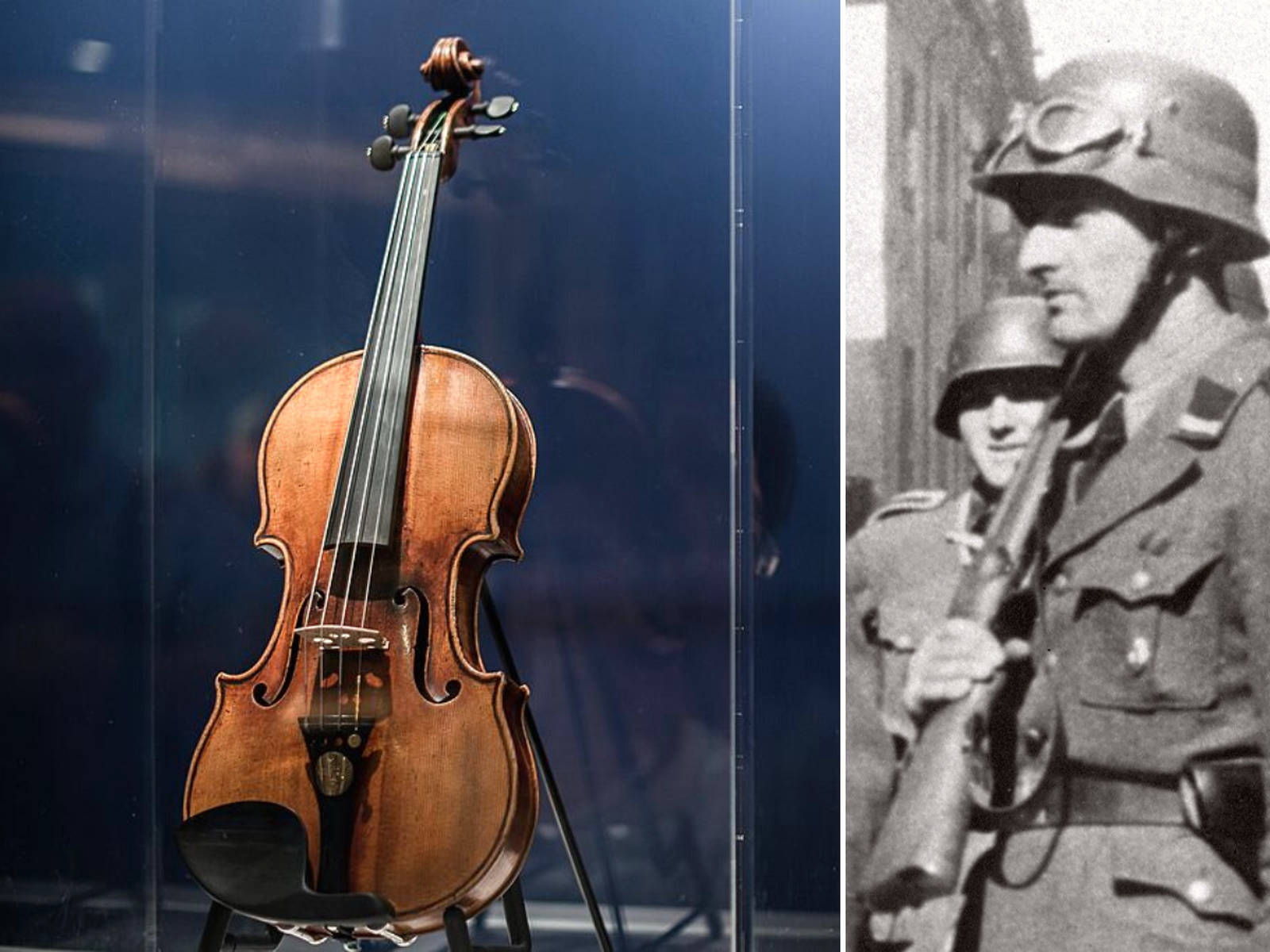
A violin turns memory into evidence.
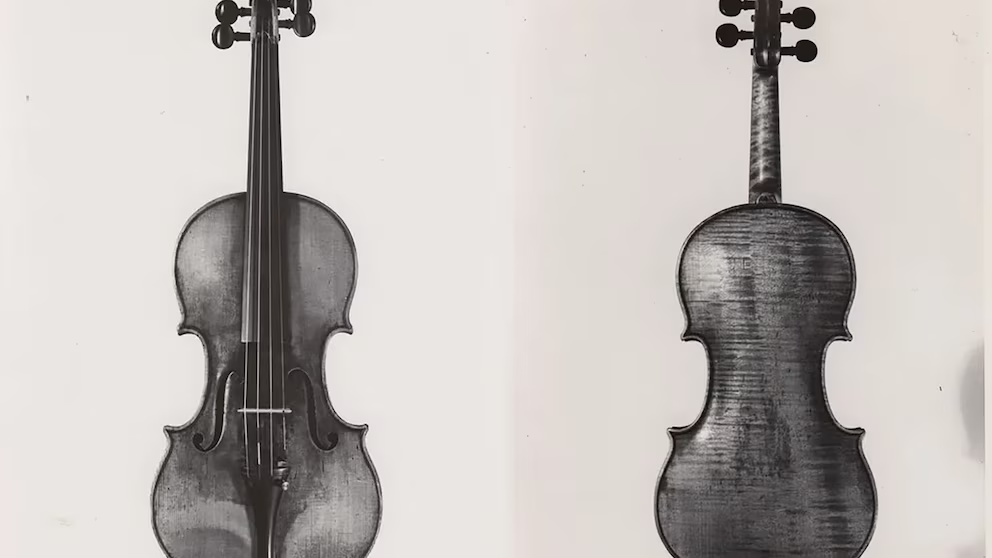
Colmar, April 2026. A mysterious Stradivarius has reopened one of the most delicate chapters in Europe’s cultural memory: the long afterlife of Nazi looting. The instrument, reportedly heard during a concert in northeastern France, has triggered a debate among specialists over whether it could be the lost “Lauterbach,” a 1719 violin stolen by Nazi soldiers from the National Museum in Warsaw in 1944. What appears at first to be a dispute over musical provenance is, in fact, a deeper investigation into theft, silence and the unfinished geography of restitution.
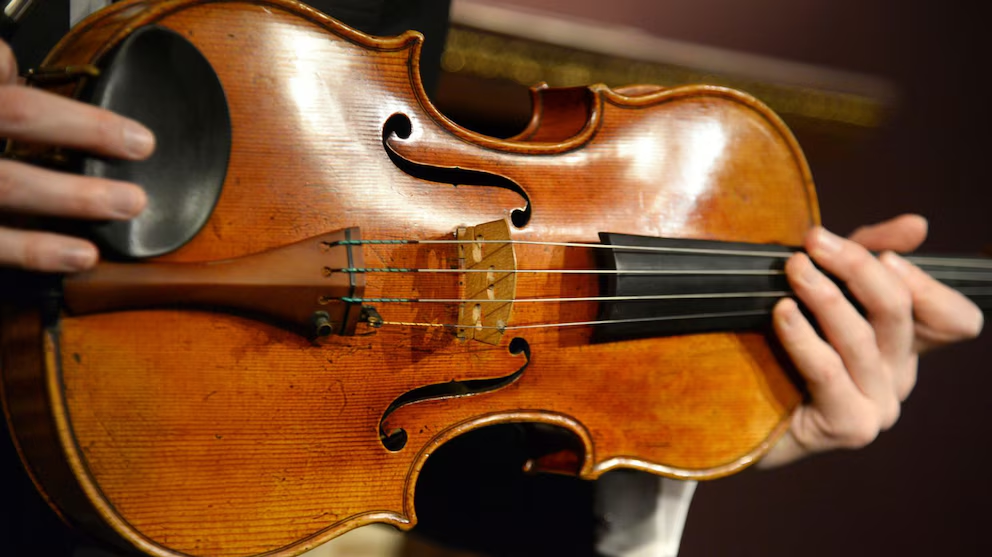
The case carries extraordinary symbolic force because a Stradivarius is not merely an object of luxury. It is a historical instrument, a cultural archive and a financial asset capable of moving through private hands for generations. When one of these violins disappears during war, the loss is not only artistic; it becomes part of a broader system of violence in which identity, memory and patrimony are stripped from institutions, families and nations.
The suspected instrument is especially important because only a small number of Stradivarius violins from 1719 are known to exist. Two have been considered missing, and that scarcity intensifies the stakes of identification. If the violin played in France is indeed the “Lauterbach,” then its reappearance would not simply correct a catalogue. It would reopen a chain of custody shaped by occupation, postwar opacity and decades of private circulation.
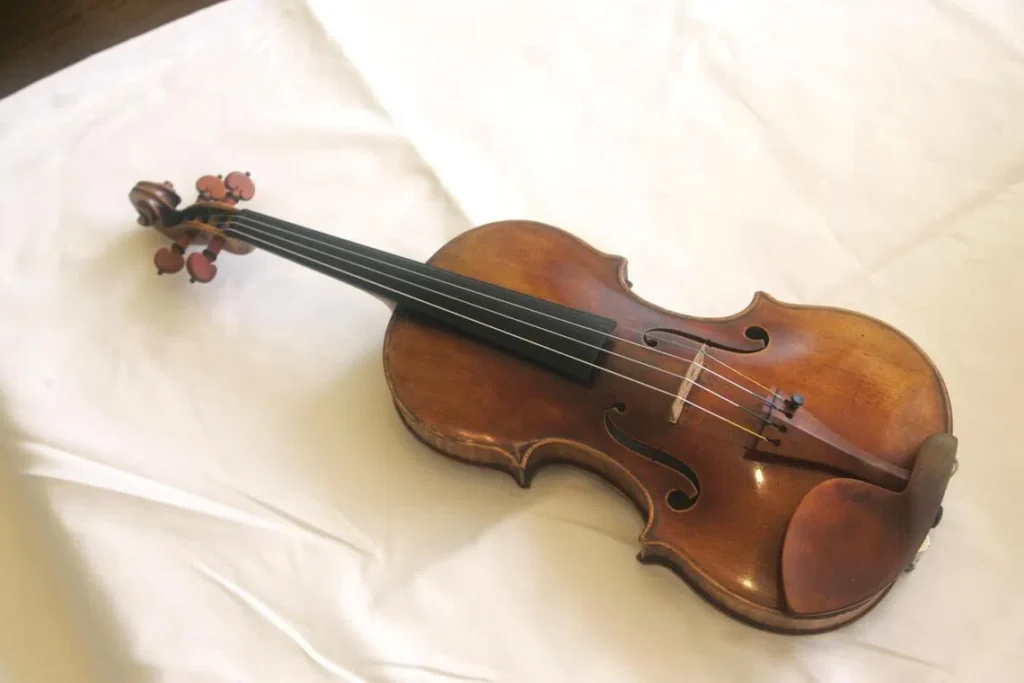
The expert Pascale Bernheim, who has investigated musical instruments linked to wartime spoliation, believes the clues point toward the stolen violin. Her argument rests on the date, construction details and the known absence of other matching instruments. But the matter remains contested, and those connected to the instrument have denied that it is the looted “Lauterbach.” That uncertainty is precisely what gives the case its historical gravity.
Provenance disputes are rarely clean. Instruments pass through workshops, collectors, heirs, dealers and performers, often with gaps in documentation that can last decades. In the aftermath of the Second World War, those gaps became protective fog. Stolen paintings, archives, books, jewelry and instruments moved across borders, entered private collections and sometimes resurfaced with stories incomplete enough to be convenient.
The route of this violin is particularly revealing. After being stolen in Poland, the “Lauterbach” is believed to have passed through the orbit of postwar Eastern Europe before appearing decades later in France. The investigation also reached descendants of its prewar owner in Austria and Argentina, extending the case beyond Europe into the wider map of exile, diaspora and unresolved inheritance. Argentina’s presence in that story is not incidental; it belongs to a broader postwar geography where families, objects and traces of violence traveled in different directions.
The Argentine thread does not necessarily mean the violin was hidden there. It means the history of ownership, loss and restitution crosses the Atlantic because families did. Many heirs of European cultural losses rebuilt their lives in countries far from the original scene of dispossession. Their claims are not only legal; they are mnemonic. They ask whether history can still recognize what was taken after the people who lived the theft are gone.
This is where the Stradivarius becomes more than a musical mystery. It becomes a test of how seriously the art world treats memory when the object is beautiful, expensive and already absorbed into elite circulation. A violin worth millions can be protected by prestige as much as by paperwork. Its sound may enchant an audience while its past remains buried beneath varnish, expert certificates and market discretion.
The technical process of authentication is therefore central. Dendrochronology, construction analysis, archival comparison and expert evaluation can help determine whether an instrument matches a historical record. But even science cannot always resolve the social question: who has the right to possess an object when its history has been damaged by war? Provenance is not only about origin; it is about responsibility.
The debate also exposes the moral tension within the classical music world. Great instruments are often treated as almost sacred because they carry the sound of centuries. Yet their ownership histories can be marked by coercion, persecution and opportunism. To celebrate the instrument without confronting its possible theft is to turn beauty into a form of forgetting.
For museums, collectors and dealers, the case should be a warning. The era in which provenance gaps could be ignored is closing. Public scrutiny, digital archives, restitution movements and transnational research have made it harder for looted objects to remain comfortably invisible. Every rediscovered painting, book or instrument now carries a demand for documentation.
The legal path, however, may be difficult. Wartime restitution cases often face limitations, missing records, disputed expert opinions and conflicting national jurisdictions. The more valuable the object, the more complex the battle becomes. A Stradivarius is not only a cultural artifact; it is also an investment, a performance tool and a symbol of institutional prestige.
That complexity does not reduce the ethical obligation. If the violin is the stolen “Lauterbach,” its current status cannot be treated as a private inconvenience. It would belong to a history of organized plunder, and that history demands transparency before possession. If it is not the “Lauterbach,” the case still demonstrates why open documentation is essential in a market built around rare objects with long, fragile biographies.
The mystery also reminds us that Nazi looting did not end when the war ended. Its consequences continued through auction houses, estates, migration routes, private collections and family silences. The objects survived, but often separated from the people, institutions and communities to which they once gave meaning. That separation is the unfinished wound of cultural theft.
In Colmar, a concert may have reopened that wound. A violin was played, a date was noticed, an expert made a claim, and a buried history returned to public attention. Whether the instrument is confirmed as the lost Stradivarius or not, the question has already done its work. It has forced the music world to listen not only to the sound of the violin, but to the silence behind it.
The “Lauterbach” case is therefore not only about authenticity. It is about whether Europe and its global diaspora are still willing to trace the routes of stolen memory. A Stradivarius can survive war, borders and decades of secrecy. But survival is not restitution, and beauty is not innocence.
Detrás de cada dato, hay una intención. Detrás de cada silencio, una estructura.