

 Phoenix 24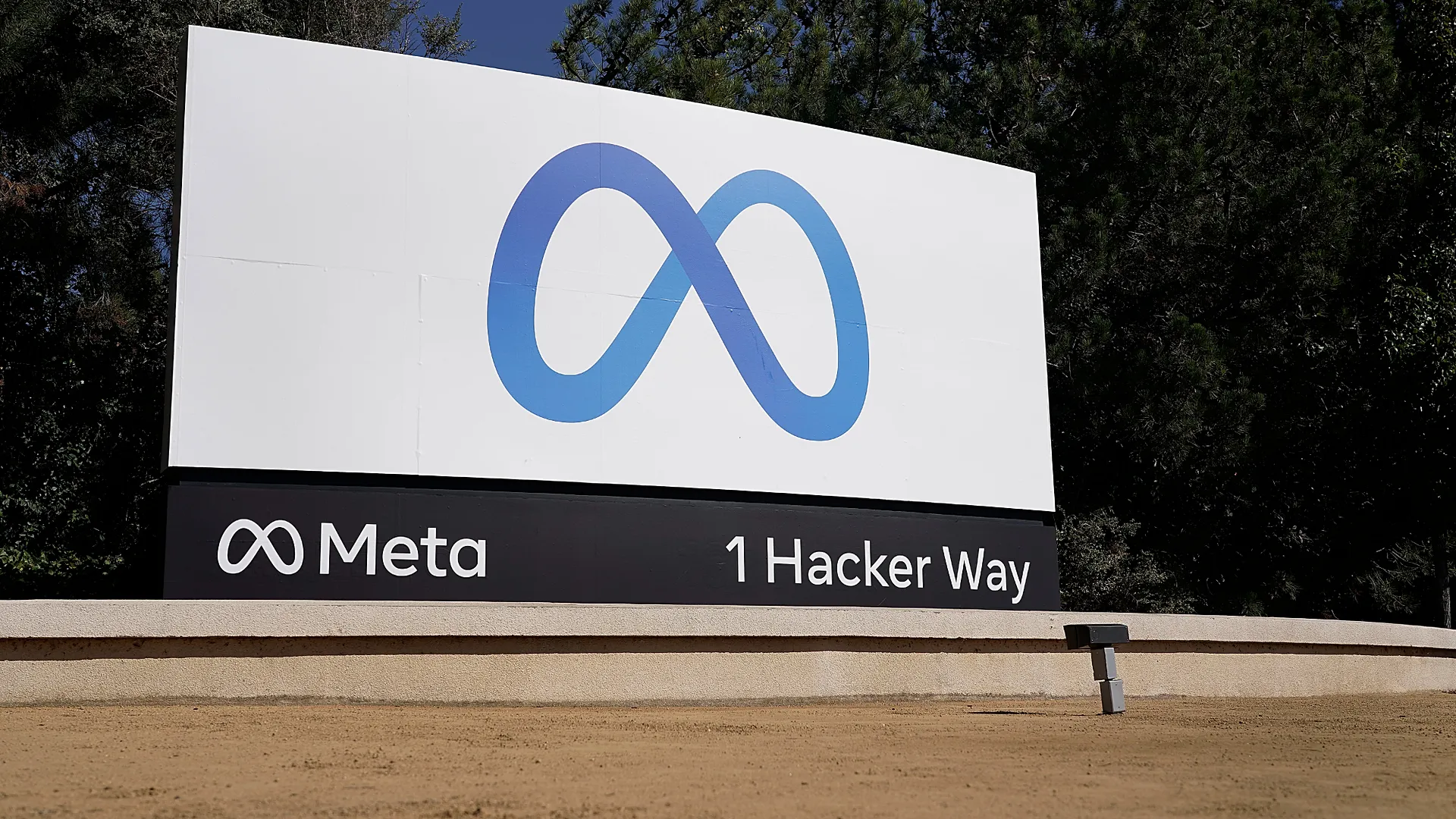
The machine now reorganizes the office.
Menlo Park, April 2026. Meta’s decision to cut around 8,000 jobs marks a turning point in the economics of artificial intelligence. This is not a conventional corporate downsizing caused by weak demand, declining revenue or a collapsing business model. It is a strategic transfer of resources from human labor toward computational infrastructure, data centers, chips and AI systems that now define the next phase of technological power.
The company’s move comes as Microsoft prepares a parallel adjustment through voluntary retirement packages for thousands of employees in the United States. Both decisions reveal the same underlying pattern: the world’s most powerful technology firms are not retreating from growth, but redesigning the cost structure required to dominate the AI race. The message is brutal in its simplicity: fewer workers, more machines, deeper capital expenditure.
Meta’s restructuring is especially symbolic because it affects a company that remains profitable and central to the global digital economy. The cuts are not being presented as emergency measures, but as part of an efficiency strategy tied to massive AI investment. That distinction matters because it shows how artificial intelligence is beginning to change the meaning of efficiency inside Big Tech.
For years, technology companies scaled by hiring engineers, product teams, moderators, designers, sales personnel and operational staff. Now the model is shifting toward smaller teams supported by increasingly capable AI systems. What once required large departments can now be compressed into leaner units where machine assistance performs coding, analysis, testing and repetitive operational work.
Microsoft’s case reinforces the same structural transition. The company has already integrated AI deeply into software development, cloud services and productivity tools. By offering early retirement to a significant number of eligible workers, it is creating room for a different workforce architecture, one shaped less by headcount expansion and more by automation, specialization and infrastructure intensity.
This is the new paradox of the AI economy. The companies building the future are reducing the number of people needed to build it. They are not eliminating work entirely, but they are changing which forms of work remain valuable. Routine technical tasks, administrative layers and mid-level operational roles are becoming more exposed to replacement, while elite AI engineering, model governance, infrastructure design and strategic product roles gain importance.
The labor market implications are profound. Artificial intelligence is no longer only a tool that helps employees produce more. It is becoming a managerial logic, a budgetary justification and a restructuring mechanism. Executives can now argue that the same output, or even greater output, can be achieved with fewer people because AI has altered the productivity equation.
That argument will appeal strongly to investors. Markets reward companies that can show rising margins, lower operating costs and credible AI positioning. In this environment, layoffs become part of a broader narrative of discipline, not weakness. The more expensive the AI race becomes, the more pressure companies face to show that they are funding it through internal efficiency.
But this creates a social contradiction. Workers are being asked to adopt AI tools, train AI systems and integrate AI into workflows that may later make their own positions unnecessary. The psychological contract between employee and technology company is therefore weakening. What was once sold as empowerment is increasingly experienced as exposure.
The tension is especially sharp because many of these companies remain highly profitable. When layoffs occur during a downturn, the explanation is easier to understand. When they occur during expansion, profitability and technological acceleration, the public reads them differently. The cuts begin to look less like survival and more like a redistribution of value from labor toward capital-intensive automation.
This does not mean every displaced role disappears permanently. New jobs will emerge around AI safety, data architecture, model supervision, cybersecurity, compliance, human-machine interface design and sector-specific deployment. Yet those jobs will not necessarily absorb the same workers, in the same locations, with the same wages or institutional protections. The transition may create opportunity, but not evenly.
For policymakers, the Meta and Microsoft cases should be treated as early warnings. Traditional employment policy was built around industrial cycles, not algorithmic substitution inside profitable firms. Governments will need to rethink taxation, reskilling, labor protections and competition rules for an economy where the most valuable companies can expand output while reducing workforce dependency.
There is also a governance problem inside the firms themselves. As AI becomes embedded into coding, performance monitoring, customer service and internal operations, employees may lose visibility over how decisions are made. A workplace managed through algorithmic tools can become more efficient, but also more opaque. That opacity matters when livelihoods, promotions, evaluations and dismissals are affected.
The global dimension is equally important. Big Tech’s AI spending concentrates power in a handful of companies capable of financing massive computing infrastructure. Smaller firms, universities, public institutions and emerging economies cannot easily match that scale. As a result, workforce restructuring in Silicon Valley is not only a labor story; it is part of a broader consolidation of technological sovereignty.
The competition is no longer simply about apps, platforms or consumer services. It is about who owns the infrastructure of cognition: models, chips, clouds, data pipelines and the platforms through which organizations make decisions. In that race, workers become both inputs and costs. The more AI can absorb tasks, the more pressure grows to reduce the human layer around it.
Meta’s layoffs and Microsoft’s retirement plan therefore point to a new corporate doctrine. Artificial intelligence is no longer an experimental investment attached to future growth. It is a present-day restructuring force that changes budgets, workforce planning, organizational culture and the political economy of employment. The AI race is not only being funded by capital markets; it is also being financed through labor compression.
The next phase will test whether societies can manage this transformation without allowing productivity gains to become mass insecurity. If AI produces more wealth but distributes fewer stable opportunities, the technology sector will face a legitimacy problem. The same systems presented as engines of progress may become symbols of institutional abandonment for the workers displaced by them.
What happened at Meta and Microsoft is not the end of the story. It is an opening signal from the companies closest to the center of the AI revolution. The future of work is not arriving as a dramatic rupture, but as a series of memos, buyout packages, canceled roles and budget reallocations. The office is not disappearing; it is being reorganized around machines.
Detrás de cada dato, hay una intención. Detrás de cada silencio, una estructura.