

 Phoenix 24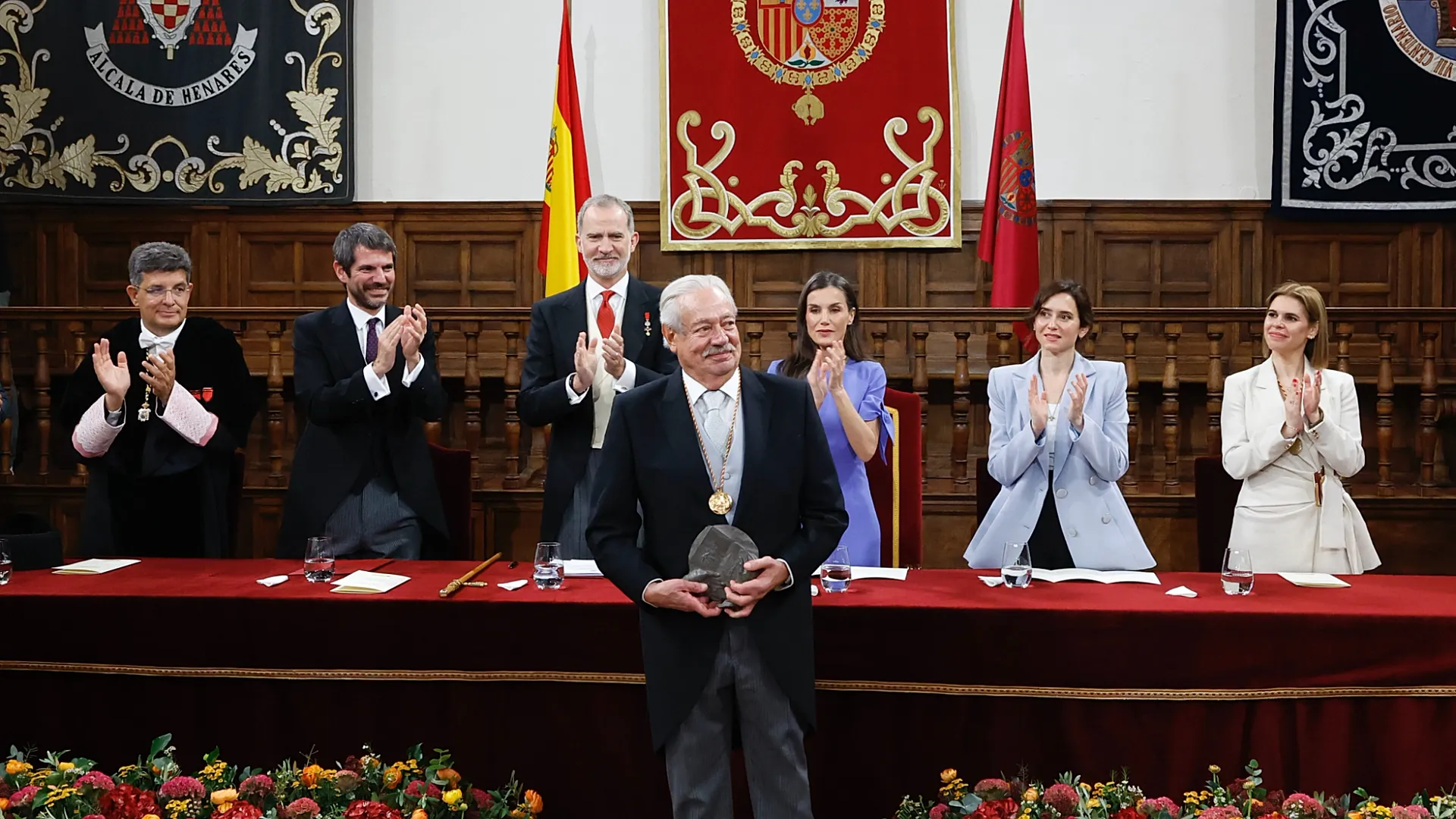
A canon speaks through its margins.
Alcalá de Henares, April 2026. Mexican writer Gonzalo Celorio received the 2025 Cervantes Prize on April 23 in a ceremony that elevated the event beyond literary protocol and into the realm of symbolic cultural power. The award, the highest distinction in Spanish-language literature, recognized a body of work built across decades and reaffirmed Celorio’s place within the central tradition of Hispanic letters. In his acceptance remarks, he invoked Cervantes, Don Quixote, and the enduring intellectual relationship between Mexico and Spain, presenting the novel as a form bound to freedom, irony, and human contradiction. What unfolded was not only a tribute to an author, but a public reaffirmation of Mexico’s weight within the architecture of the Spanish-speaking canon.
What gave the ceremony greater depth was the argument embedded in Celorio’s speech. He defended the idea that Mexican identity cannot be separated from Spanish history and culture, not as surrender or dependency, but as recognition of the linguistic and civilizational matrix through which Mexico has also narrated itself. That position unsettles simplified nationalist readings and returns literature to a more demanding terrain, where identity is layered, conflictive, and inseparable from inheritance. In that sense, the prize ceased to be merely personal recognition. It became a stage for restating the intellectual density and historical authority of Mexican literature within the wider Hispanic world.
Celorio’s intervention also mattered because it resisted any reduced notion of literature as ornament, prestige ritual, or elite ceremony. He foregrounded fiction as a way of reaching zones that factual history alone cannot fully recover, especially in matters of memory, family, migration, and the distortions through which nations imagine themselves. His work has long moved across autobiography, essay, chronicle, and novel without submitting to rigid genre boundaries. That refusal of literary confinement is central to his poetics. It also places him within a broader tradition of Spanish-language writing that understands form not as a cage, but as an instrument of intellectual freedom.
There is also a broader cultural reading beneath the applause. Celorio became the seventh Mexican writer to receive the Cervantes Prize, and his recognition arrives at a moment when literary prestige is increasingly entangled with questions of linguistic influence, symbolic legitimacy, and the struggle over who defines the center of the Spanish-language canon. His consecration in Spain reinforces that Mexico is not a peripheral extension of that tradition, but one of its principal engines. The event therefore carried an implicit redistribution of symbolic gravity. It reminded the Hispanic world that literary authority does not belong to a single center, if it ever truly did.
From a Phoenix24 perspective, the deeper significance of the award lies in what it reveals about power inside culture. Distinctions of this scale do not simply celebrate books; they stabilize hierarchies, renew lineages, and project an image of which voices are permitted to represent a language before the world. Celorio used that platform not to flatten complexity, but to insist on mixture, memory, and historical continuity across a transatlantic space still marked by unresolved tensions. That is why this was not only a literary coronation. It was also an intervention in the cultural geometry of the Spanish-speaking world.
Phoenix24 Editorial Note: analysis, context, and strategic narrative to read power beyond the headline.