

 Phoenix 24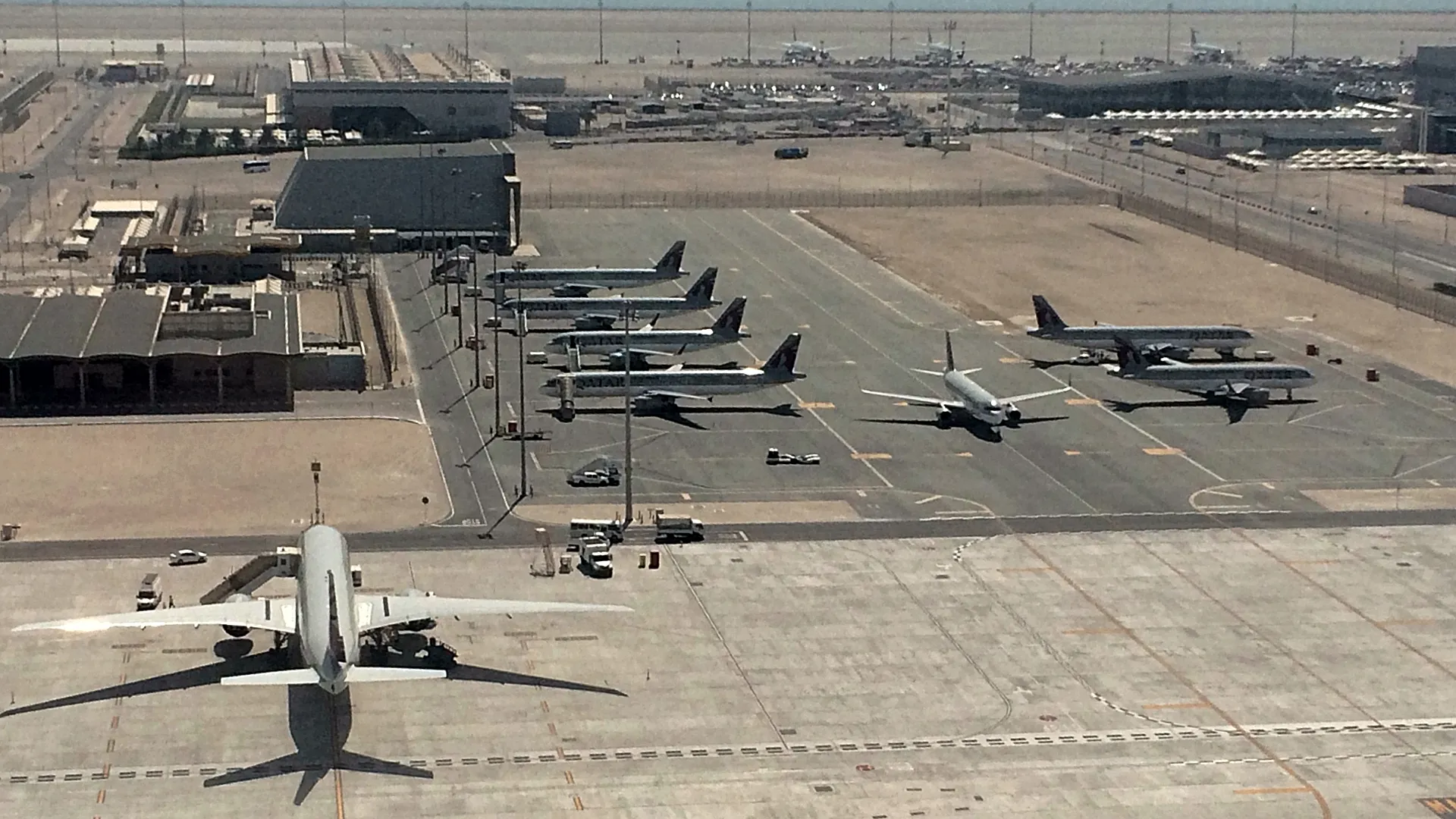
Flights are returning before certainty does.
Doha, April 2026
Foreign airlines are gradually resuming operations at Hamad International Airport, a sign that one of the Gulf’s most important aviation gateways is moving out of emergency mode after weeks of regional disruption. The reopening is being handled in phases, with Qatari authorities allowing international carriers to return under controlled conditions rather than through an immediate full restoration. That decision signals a limited improvement in the security environment, but it also reflects how fragile operational confidence remains. In global aviation, reopening an airport is one thing. Rebuilding trust in the airspace around it is something else.
Hamad is not simply a national airport serving a local market. It is a high-value transit hub linking Europe, Asia, and Africa through a network built on timing, reliability, and large-scale international connectivity. When a node of that caliber slows down or partially closes, the impact travels far beyond the host country. Airlines are forced to reroute fleets, passengers absorb cascading delays, and route economics shift almost immediately. The return of foreign carriers therefore matters not just for Qatar, but for the wider architecture of intercontinental travel.
The phased nature of the reopening is especially revealing. Authorities are not presenting the situation as full normalization, and that caution is itself part of the story. Aviation systems are highly sensitive to security risk, insurance exposure, crew scheduling complexity, and real-time airspace assessment. Even after the acute phase of a regional crisis subsides, carriers do not simply return as though nothing happened. They recalculate. They test assumptions. They wait for signs that stability is durable, not merely provisional.
That is why the resumption of flights should be read as a technical and strategic signal at the same time. On the technical side, it suggests that risk assessments have improved enough to permit a controlled restart. On the strategic side, it shows Qatar moving quickly to restore the image that underpins its aviation power: reliability under pressure. For a state that has invested heavily in becoming a connective platform rather than just a destination, prolonged disruption carries reputational costs that extend into commerce, tourism, logistics, and diplomacy.
Yet restoration does not erase memory. Airlines that suspended or reduced operations during the crisis will remain attentive to any sign of renewed volatility, and passengers are unlikely to treat a gradual reopening as proof that the region has returned to complete predictability. Confidence in aviation is cumulative and fragile. It depends not only on open runways, but on the belief that the surrounding political environment will not force another abrupt reversal. In that sense, the return of flights marks progress, but not closure.
There is also a broader lesson in what happened to Doha’s hub. Modern air travel presents itself as seamless and hyper-efficient, but its infrastructure remains deeply exposed to geopolitical rupture. A conflict or escalation in one part of the Gulf can unsettle schedules across continents, disrupt fleet planning, and alter travel behavior far beyond the original zone of tension. The system is global, but its vulnerabilities remain concentrated in strategic chokepoints. Hamad’s partial paralysis, and now its cautious restart, show how quickly mobility can be converted into uncertainty.
For Qatar, the challenge now is to prove that continuity can outlast shock. The country’s aviation model depends on preserving its role as a dependable bridge in a world where routes are increasingly shaped by risk as much as geography. Every foreign airline that returns adds to that narrative, but every cautious timetable and phased approval also reminds observers that the recovery is still conditional. Stability, in this context, is not a declaration. It is something that must be demonstrated repeatedly through uninterrupted operations.
What looks like a transport update is therefore much larger than a routine resumption notice. It is a measure of how global systems reassemble themselves after disruption, and how states built around connectivity defend their strategic relevance when conflict breaks the rhythm of movement. Doha is reopening its air hub, but the real test lies in whether the wider aviation system decides that reopening is enough.
Behind every data point lies intent. Behind every silence, a structure.