

 Phoenix 24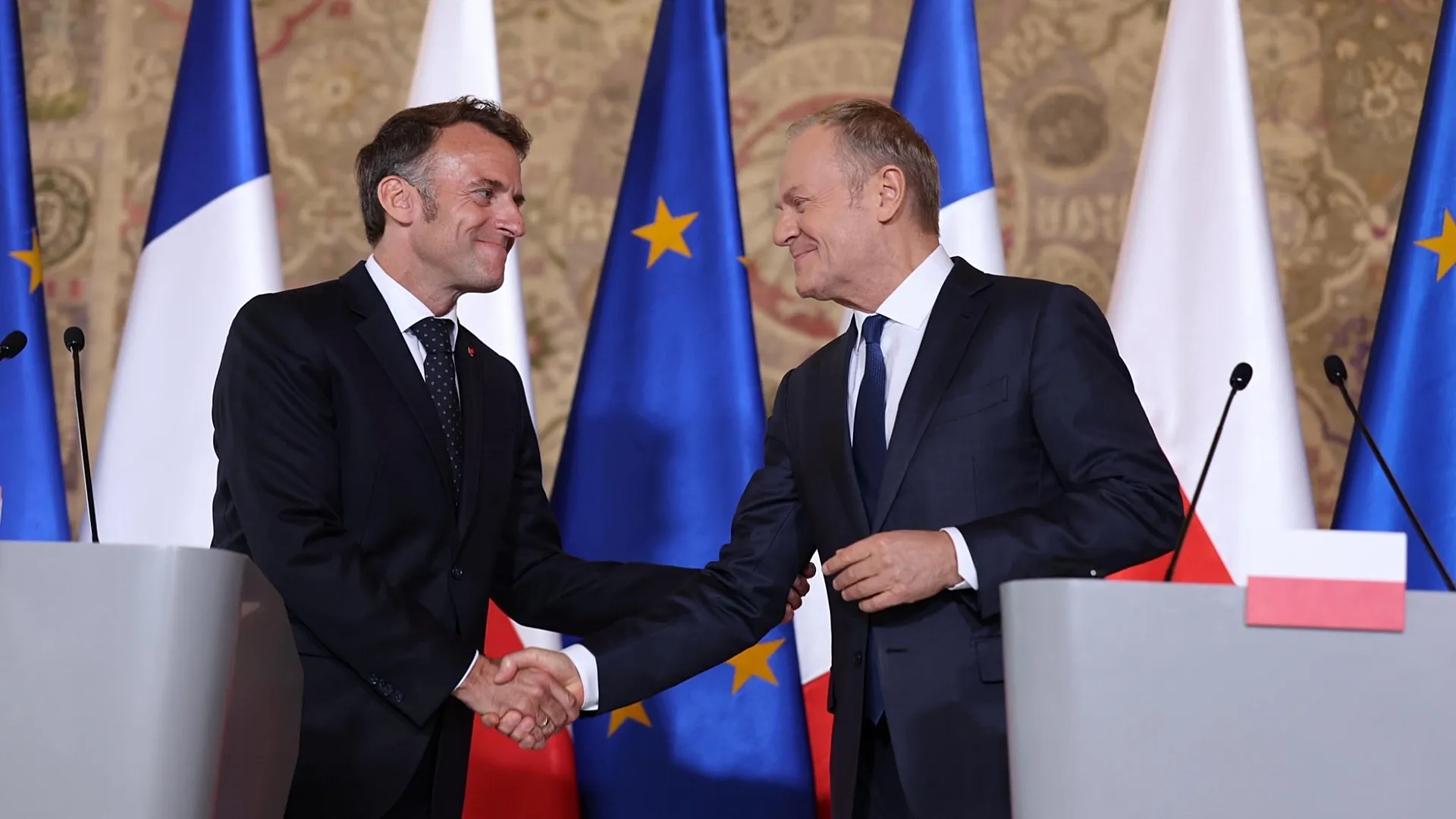
Strategic autonomy gets real when steel, atoms, and satellites align.
Gdansk, April 2026. France and Poland used the Gdansk summit to signal something larger than cordial bilateral cooperation. What emerged was the outline of a harder European axis built around defense, nuclear energy, cyber resilience, and strategic infrastructure. Donald Tusk and Emmanuel Macron presented the meeting as proof that Europe’s sovereignty can no longer remain a slogan managed from conference podiums. It now has to be materialized through military capacity, trusted industrial partnerships, and long-horizon energy decisions.
The symbolism of the meeting mattered. This was the first intergovernmental summit of its kind since the reinforced cooperation treaty signed in Nancy on May 9, 2025, and it unfolded in a climate shaped by war on Europe’s eastern flank, pressure on NATO cohesion, and growing anxiety over the durability of American strategic focus. In that context, Gdansk was not just a diplomatic venue. It became a stage for demonstrating that France and Poland, once separated by different strategic cultures, are now moving toward a more operational partnership.
Tusk framed the message with unusual clarity. Europe, he argued, has entered a different era, one in which unity is no longer optional and sovereignty must be defended in concrete sectors. That formulation matters because Poland has historically approached security through a harder Atlanticist lens, while France has long championed European strategic autonomy in language that some Eastern European states once treated with suspicion. The Gdansk summit suggests that the distance between those positions is narrowing. The war environment has accelerated a convergence that once looked politically premature.
Defense was the most visible layer of that convergence, but it was not the only one. Tusk identified military cooperation, cybersecurity, artificial intelligence, and support for Ukraine as urgent pillars of joint action. That broad framing reveals the actual architecture of contemporary power. Europe’s security is no longer reducible to tanks, troop levels, or formal alliance commitments. It now depends on integrated technological ecosystems, cyber-secure infrastructure, and the capacity to fuse industrial, digital, and military planning into one strategic posture.
The nuclear component of the summit may prove even more consequential in the long term. Poland signaled that France is a serious contender for the country’s second nuclear power plant, with Tusk openly describing Paris as one of the strongest long-term partners for major military, energy, and even space-related projects. This is not merely about electricity generation. Nuclear cooperation, in this context, functions as a sovereignty instrument. It ties national resilience, industrial policy, energy independence, and geopolitical trust into a single strategic decision. For France, it is also a chance to extend influence through one of the sectors in which it still possesses real continental weight.
Macron’s message fit neatly into that logic. He described bilateral ties as being at a historic level and linked Europe’s freedom directly to its capacity for self-defense and the independence of its member states. That language is revealing. France is no longer presenting strategic autonomy as a somewhat abstract continental aspiration. It is grounding it in specific partnerships with states on the Union’s front line. By deepening nuclear and defense ties with Poland, Paris is making its sovereignty discourse more credible in the part of Europe where rhetoric is tested against proximity to threat.
The satellite agreement signed alongside the summit added another layer to the story. Airbus, Thales Alenia Space, and Poland’s Radmor agreed to cooperate on a geostationary telecommunications satellite for the Polish Ministry of National Defence. On paper, this looks like a technical-industrial project. In reality, it is a sovereignty project in orbit. Secure communications, cyber resilience, and military-grade space infrastructure now sit at the center of strategic competition. Europe’s future balance of power will be shaped not only by fighter jets and missile systems, but by who controls resilient information architecture above the atmosphere.
That point is critical because it shows how the vocabulary of sovereignty is changing. It no longer belongs only to border policy, migration debates, or constitutional rhetoric. In today’s Europe, sovereignty is increasingly measured through secure energy supply, cyber-hardened systems, trusted satellite communications, and the capacity to sustain military and industrial dependence on reliable partners. The Gdansk summit reflects that broader recalibration. France and Poland are not just strengthening bilateral ties. They are participating in the redefinition of what strategic statehood means inside Europe.
There is also a geopolitical subtext that should not be missed. Tusk explicitly recalled France’s rapid response after Russian drones entered Polish airspace in September 2025, presenting that reaction as evidence that European allies can be counted on in moments of real uncertainty. That memory matters because trust in Europe is built less through declarations than through performance during crises. For Poland, French credibility rises when it is tied to operational responsiveness. For France, credibility in Eastern Europe rises when solidarity is demonstrated not rhetorically, but under pressure.
This is why the Gdansk summit should be read as more than diplomatic theater. It marks a deeper attempt to weld together two strategic traditions that Europe needs to reconcile if it wants to become more than a fragmented security consumer under permanent external stress. Poland brings urgency, proximity to threat, and a sharp security instinct. France brings military-industrial capacity, nuclear expertise, and a mature doctrine of autonomy. Separately, each has limits. Together, they begin to sketch a more serious European power formula.
Whether this axis becomes durable will depend on execution, not summit language. But the direction is now clearer. Europe’s sovereignty debate is moving out of the essay and into the contract, the reactor, the satellite, and the defense network. That is where real alliances start to matter.
Behind every datum, there is an intention. Behind every silence, a structure.
Detrás de cada dato, hay una intención. Detrás de cada silencio, una estructura.