

 Phoenix 24
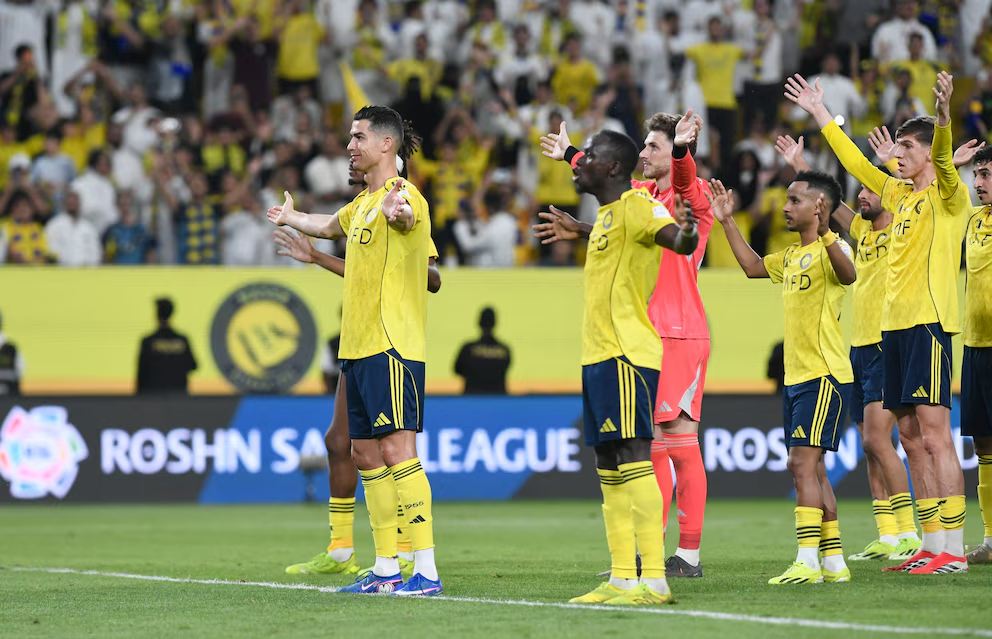
Refereeing controversy has turned points into suspicion.
Jeddah, April 2026
Saudi football has entered a more corrosive stage of title contention after Al Ahli publicly denounced refereeing decisions in its 1–1 draw with Al Fayha, arguing that the match was distorted in ways that ultimately favored Al Nassr, Cristiano Ronaldo’s club and one of its direct rivals in the championship race. What is at stake is no longer only the outcome of one match. The controversy has expanded into a broader argument about credibility, competitive fairness and the institutional image of a league that has spent enormous financial and political capital trying to present itself as one of the sport’s new global centers.
The dispute was fueled by two potential penalty situations that Al Ahli and its supporters believe were mishandled, including one sequence in which a handball was reviewed and the decision was reversed after VAR intervention. That moment ignited immediate anger because the match carried title implications and because every controversial call in the closing stretch of a season is read not in isolation, but through the standings table. Al Ahli saw dropped points. Its fan base saw denied opportunity. Its critics saw the familiar problem of a league whose ambitions outpace the public trust required to sustain them.
That mistrust became explicit in the language used after the game. Former Al Ahli figure Hussein Abdul Ghani called what happened a catastrophe for the club and went as far as to say the team had effectively been robbed of its chance to compete properly. His anger was not only directed at the referee. He also blamed the club’s leadership for not requesting foreign officials for such a decisive match, implying that in a high-pressure environment the domestic refereeing structure no longer carries enough confidence to manage politically sensitive fixtures without suspicion. Once a former club symbol begins speaking in those terms, the issue has already moved beyond routine complaint.
The players themselves deepened the sense of rupture. Ivan Toney, scorer for Al Ahli, reacted publicly with biting sarcasm, suggesting that the foul threshold had become so distorted that even more obvious contact might still not have produced a penalty. That kind of statement matters because it shows that the dispute is not confined to commentators or former stars. It has entered the dressing room, where competitive frustration easily turns into disciplinary risk. Reports around the aftermath indicated that public criticism of officiating could expose him to sanctions under Saudi football regulations, which adds a second layer of pressure: not only must players absorb controversial decisions, they must do so under rules that may punish their response.

The emotional intensity around the match also reflected what coaches and players reportedly heard during the game. Al Ahli coach Matthias Jaissle expressed anger over the atmosphere surrounding the officiating and relayed that the fourth official had told his players to focus on the Asian Championship. Whether interpreted as dismissive or merely clumsy, that remark fed the perception that league priorities were being managed through suggestion rather than neutrality. For a club chasing the title, any such phrase can sound like instruction to accept limitation rather than insist on justice.
The reason the controversy quickly attached itself to Al Nassr is obvious. The standings magnify every refereeing debate when one rival gains indirectly from another’s setback. With six rounds left, the draw left Al Ahli on 66 points, behind Al Hilal on 68 and leader Al Nassr on 70, with Al Nassr also holding a game in hand. In such a compressed race, the line between sporting error and political suspicion narrows dramatically. Supporters are not only counting goals. They are counting perceived favors, denied penalties and momentum shifts that may decide the championship before the decisive direct meeting later this month.
Cristiano Ronaldo’s presence gives the story an even wider symbolic charge, even though the controversy was not about his actions on the pitch. Al Nassr is not just another contender. It is the flagship club of the Saudi league’s international branding effort, and Ronaldo remains the face most associated with that projection. That means any accusation that a rival was harmed to Al Nassr’s benefit immediately exceeds domestic fandom and enters the realm of reputational risk. A league trying to sell itself globally cannot afford title races overshadowed by the idea that its star vehicle is moving under institutional protection, whether true or not.
This is the deeper danger. Modern football leagues do not grow in prestige only by buying talent, building spectacle or attracting celebrities. They also need procedural legitimacy. Fans, broadcasters and international observers must believe that the competition is credible enough to generate drama without conspiracy. Once a title race becomes saturated with allegations of manipulation, every investment in branding begins to look fragile. Stadium lights, transfer fees and global partnerships cannot compensate for a perception that the rules bend under pressure.
That is why calls for investigation have become central to the aftermath. Voices from within Saudi football, including prominent former players, have demanded that the federation’s refereeing commission examine what happened and determine whether the official failed to apply the laws correctly. The issue is not merely retrospective punishment. It is damage control for the league’s institutional standing. If no serious review follows, many will read silence as tolerance. If action does follow, the federation will still have to prove that accountability is structural rather than cosmetic.
The upcoming meeting between Al Ahli and Al Nassr now carries even more weight because it will not be played in a neutral emotional environment. It arrives under the shadow of grievance, suspicion and public rhetoric that has already turned the table into a courtroom of narratives. Saudi football wanted a globally marketable title race. It has certainly achieved global attention. The problem is that attention and legitimacy are not the same thing.
In the end, this controversy is bigger than one referee and one draw. It is a stress test for whether Saudi football can move from spectacle to credibility. Leagues rise when they generate belief. They stall when every decisive moment invites allegations that the script was tilted in advance. Right now, the title race remains open, but the trust around it is narrowing fast.
Detrás de cada dato, hay una intención. Detrás de cada silencio, una estructura.
Behind every data point, there is an intention. Behind every silence, a structure.