

 Phoenix 24
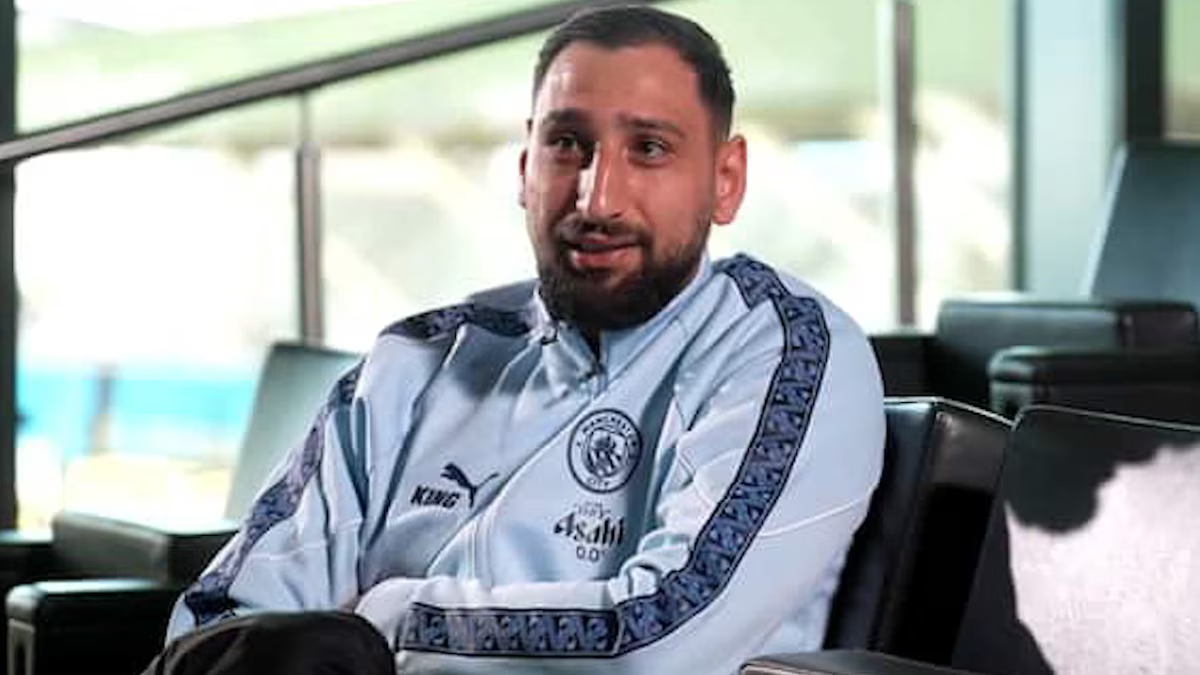
Donnarumma’s tears expose deeper fracture lines.
Rome, April 2026
Italy’s latest World Cup failure is no longer being processed merely as a sporting disappointment. It has entered a more dangerous zone, one where defeat begins to contaminate institutional legitimacy, public trust and the symbolic authority of the national shirt itself. Gianluigi Donnarumma’s emotional remarks after the playoff loss to Bosnia did not simply reveal personal pain. They opened a window into the moral and psychological breakdown surrounding a football power that now finds itself absent from the World Cup for a third consecutive edition. For a country whose modern football identity was built on continuity, resilience and historical weight, this is not just elimination. It is reputational erosion.
Donnarumma’s testimony matters because he is not a peripheral figure. He is the captain, the goalkeeper, the public face forced to speak when the emotional temperature becomes unsustainable. His tears and his language of responsibility signal that the blow has reached the core of the squad. He acknowledged the pain directly, admitted that the burden feels personal and described the days after elimination as exhausting not only for the team but for Italians more broadly. That framing is telling. The national side is still understood in Italy as a civic symbol, not merely a sports project. When it collapses, the damage spreads into the cultural imagination of the country.
The crisis is intensified by the institutional fallout surrounding the defeat. Resignations at the top levels of the Italian football structure, including the federation president, the delegation chief and the coach, suggest that the loss has triggered more than technical review. It has produced a purge-like atmosphere, one in which accountability is no longer abstract. That kind of reaction is understandable in symbolic terms, but it also exposes the fragility of the current system. When a federation responds to failure with leadership fracture, it sends a message that the defeat was not interpreted as a bad night or an unfortunate cycle. It was interpreted as systemic collapse.
What makes this even more severe is the historical context. Italy, four-time world champion and one of football’s defining powers, has now missed Russia 2018, Qatar 2022 and the 2026 tournament in the United States, Canada and Mexico. Its last World Cup appearance remains Brazil 2014, where it failed to escape the group stage. For a minor football nation, repeated absences might be disappointing. For Italy, they are identity-shattering. A team once associated with tactical seriousness, tournament instinct and intergenerational continuity is now becoming a case study in how prestige can evaporate when renewal fails repeatedly.
Donnarumma also addressed one of the most corrosive rumors to emerge after the collapse: the claim that players had requested financial bonuses for qualification. His denial was categorical and emotionally charged. He insisted he had not asked for a single euro from the national team and rejected the idea that the squad had bargained over money while chasing a place at the World Cup. That clarification matters because in moments of national frustration, economic rumors become moral accelerants. The public can forgive failure more easily than it can forgive the perception of entitlement. By refuting the story so forcefully, Donnarumma was not merely protecting his own image. He was trying to defend what remained of the team’s ethical credibility.
Still, the need to issue such a denial tells us how deep the distrust has become. In sports crises, rumors thrive where legitimacy has thinned. Once supporters feel disconnected from the institutional core of a team, every whisper about privilege, ego or indifference gains traction. That is the environment Italy now faces. It is not enough to say the players care. The federation and the squad must now demonstrate, over time, that the project deserves belief again. Emotional interviews may humanize the pain, but they do not by themselves rebuild confidence.
There is also a broader footballing lesson here. Italy’s recent history contains a paradox that may have delayed necessary reform. The country won the European Championship in 2021 and also produced a record streak of consecutive victories, achievements Donnarumma himself cited as reasons not to throw everything away. He is right in one sense. A single collapse should not erase every prior success. Yet the danger lies in allowing those past triumphs to function as camouflage for longer structural weaknesses in scouting, player development, tactical evolution and institutional planning. Prestige can buy time, but it can also disguise decay.
That is why this moment cannot be understood only as grief. It is also a referendum on whether Italian football still knows how to regenerate itself. The emotional register of Donnarumma’s interview reflects a squad that understands the scale of the failure, but the next phase will require something more difficult than sorrow. It will require coherence. Italy must rebuild not only a team, but a chain of credibility linking federation, coaching philosophy, player development and public narrative. Without that reconstruction, every future qualification campaign will carry the psychological residue of the last three failures.
The mention of future targets such as the European Championship and the Nations League is therefore significant, but not sufficient. Time alone will not heal this fracture. Four years until the next World Cup may sound like a long cycle, yet in football terms it can disappear quickly when the underlying model remains unclear. Italy’s problem is not simply that it lost to Bosnia on penalties. Its problem is that the defeat has become believable within a larger story of decline. Once a giant begins to look vulnerable not by accident but by pattern, every setback starts to feel like confirmation.
Donnarumma’s tears, then, are not the story in isolation. They are the visible surface of something deeper: a national team caught between memory and disrepair, between inherited greatness and present confusion. Italy is not facing only a sporting rebuild. It is facing the far harder task of proving that its football identity still possesses enough internal strength to deserve another beginning.
Detrás de cada dato, hay una intención. Detrás de cada silencio, una estructura.
Behind every data point, there is an intention. Behind every silence, a structure.