

 Phoenix 24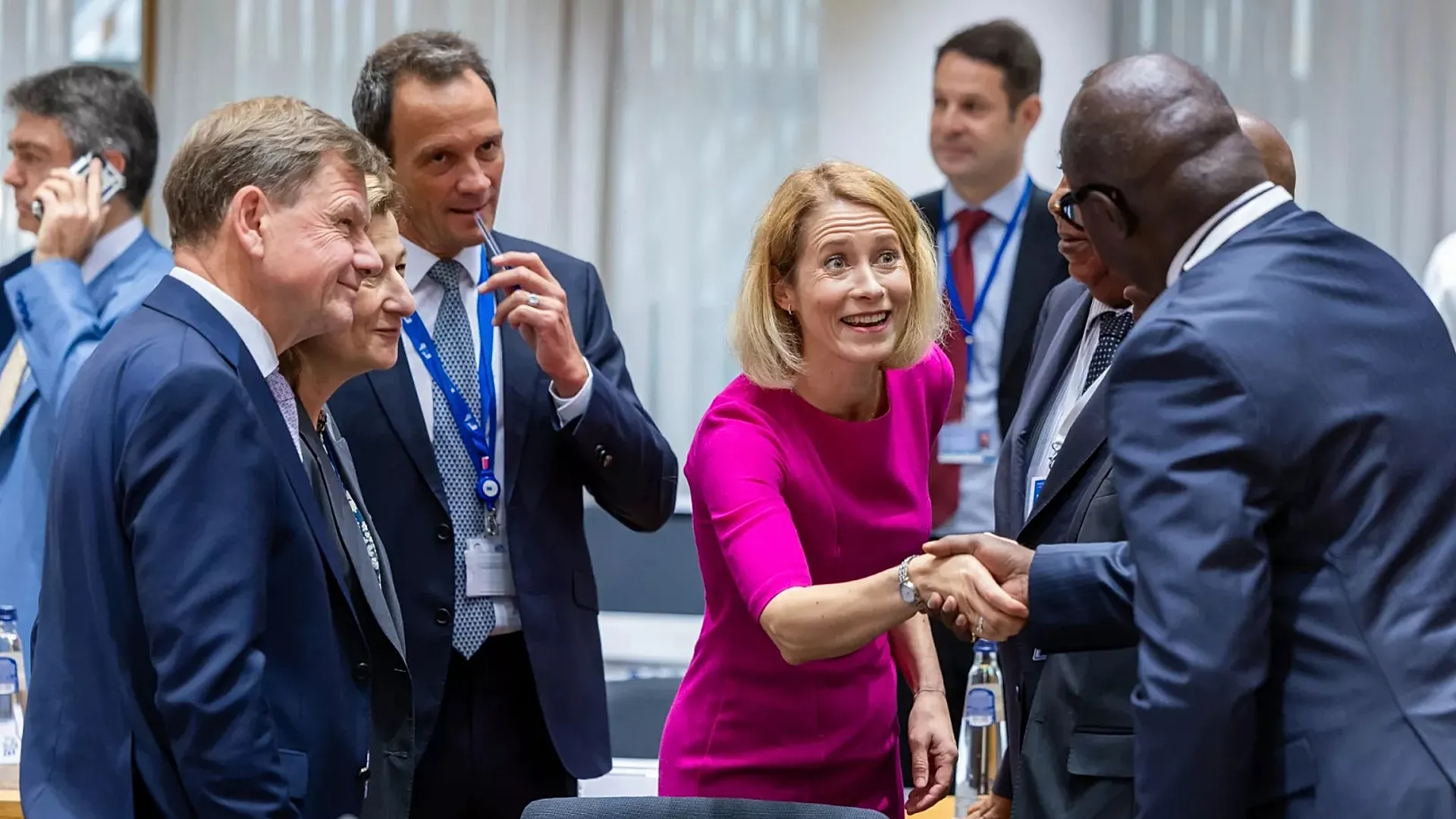
Partnership now speaks the language of interest.
Brussels, April 2026
Europe and Africa are increasingly trying to recast their relationship away from the old grammar of aid and toward a harder language of mutual interest. That shift matters because the older model, however institutionalized, always carried a hierarchy that was difficult to disguise. Europe funded, advised, conditioned, and monitored. Africa received, negotiated, resisted, and adapted. What is now being proposed is something less paternal and more transactional, a framework in which both sides speak more openly about energy, migration, minerals, investment, and geopolitical leverage rather than hiding those priorities behind developmental courtesy.
That change is not purely rhetorical. It reflects a deeper recognition on both continents that the old compact has become strategically insufficient. Europe wants partners in a world shaped by supply insecurity, migration pressure, Chinese expansion, Russian disruption, and the fragility of multilateral norms. African governments, meanwhile, are less willing than before to perform dependency in exchange for selectively delivered assistance. They want industrial participation, infrastructure, market access, and political respect in a system where their bargaining power has grown precisely because more external powers are competing for their cooperation.
This is where the phrase partnership of interests becomes revealing. Interests sound more equal than aid, but they are not automatically more just. They simply make the real negotiation clearer. Europe’s interest is not abstract solidarity. It is stability on its southern flank, managed migration routes, access to raw materials, and reduced exposure to strategic rivals. African states, for their part, want investment that does not permanently trap them in extractive roles, diplomatic room to maneuver, and a relationship with Europe that does not reduce the continent to crisis management. The rhetoric is cleaner now, but the asymmetries have not vanished. They have only become more explicit.
That explicitness may still be an improvement. Relationships built on denied interest often produce the worst forms of hypocrisy. At least a more candid model forces both sides to confront what they are actually asking of each other. Yet candor has its own risks. If Europe approaches Africa mainly as a supplier of strategic insulation and Africa responds mainly through competitive leverage among outside powers, the result may be more realistic but not necessarily more transformative. It could simply replace paternalism with transactional fatigue.
The deeper question is whether this new language can support a relationship that is genuinely political rather than merely functional. Europe still struggles to see Africa as a field of agency rather than as a zone of consequence. Africa, meanwhile, has good reason to distrust every vocabulary of partnership that arrives just as global rivalry intensifies and Europe rediscovers the continent’s relevance. If the new model is to mean anything, it will have to prove that shared interest can survive beyond emergency bargaining and beyond the old reflex of turning Africa into a mirror for European insecurity.
What emerges from this moment is not a settled new compact, but a more honest opening. Europe and Africa are speaking less about benevolence and more about power, routes, capital, sovereignty, and strategic need. That may produce a healthier relationship, or simply a more visible contest over terms. Either way, one illusion is fading. Aid no longer explains the relationship. Interest does, and interest is always a harder language.
Más allá de la noticia, el patrón. / Beyond the news, the pattern.