

 Phoenix 24
Italy is no longer living on nostalgia.
Rome, April 2026
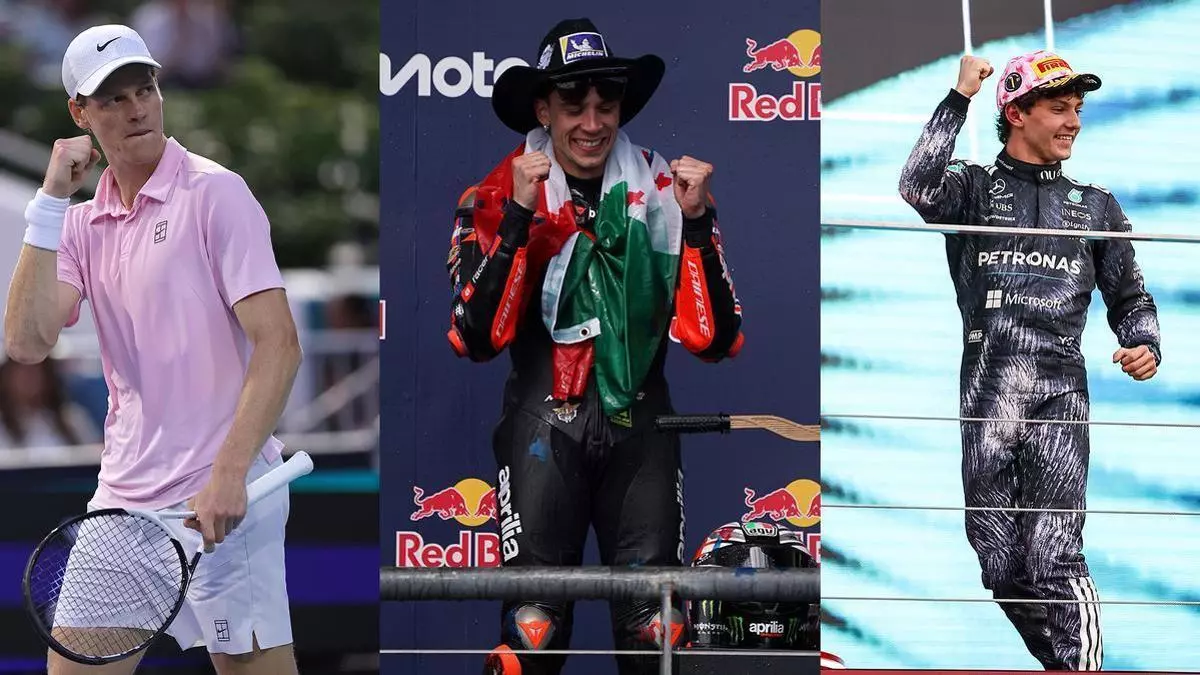
Italy is beginning to look less like a country honoring past sporting greatness and more like one constructing a new era across disciplines at once. The convergence of Jannik Sinner in tennis, Marco Bezzecchi in motorcycling, and Kimi Antonelli in motorsport creates a picture larger than individual success. What emerges is the sense of a national system regaining confidence through young figures who do not carry themselves as heirs to memory alone. They look instead like protagonists of a different Italian moment, one shaped by technical maturity, international ambition, and a calmer relationship with expectation.
That matters because Italian sport has often moved under the shadow of its own mythology. Great names from football, Formula 1, cycling, and tennis established a legacy so powerful that each new generation was judged less on its own terms than on its ability to restore something supposedly lost. That burden can distort development. It turns every promising athlete into a symbolic repair project. What makes the present group different is that they are not simply being read as restorers of glory. They are being recognized as expressions of a broader national renewal in high performance culture.
Sinner represents the clearest version of that shift. His rise has not been built only on talent, but on composure, discipline, and a style of progression that makes elite competition look less theatrical and more inevitable. He gives Italy a figure capable of carrying global expectation without seeming consumed by it. That alone has cultural significance. Nations do not only celebrate winners. They study the temperament of the winners who appear to redefine what their country can expect from itself.
Bezzecchi adds another layer because motorcycle racing speaks to a different Italian sporting instinct, one tied to speed, mechanical sensitivity, and a long tradition of emotional investment in racing identity. If Sinner projects control, Bezzecchi projects edge, movement, and a more exposed form of competitive charisma. The combination matters. It suggests that Italian excellence is not reappearing in a single register. It is spreading across very different performance worlds, each with its own rhythms, dangers, and symbolic audiences.
Antonelli, meanwhile, embodies something even more forward looking. In him, Italy sees not only present promise but projected continuity into the next major cycle of international motorsport. Young talents in this category are always burdened by premature prophecy, yet they also reveal how a country imagines its own future. Antonelli’s visibility matters because it connects Italy to the language of emergence rather than remembrance. He is not important only for what he may win, but for how early he has been inserted into the conversation about what comes next.
Taken together, the three names point to a broader national pattern. Italy is producing athletes who are not simply gifted, but legible at the highest level of global sport. They compete in spaces where style, discipline, media pressure, and institutional support all matter, and they do so in ways that make Italian sport appear structurally alive rather than nostalgically animated. That distinction is crucial. A country truly in renewal does not depend on one savior. It begins to generate simultaneous relevance in multiple arenas.
There is also a representational shift here. For years, Italian sport abroad could seem overly tied to tradition, sentiment, and iconic memory. What this new trio projects instead is modernity. They belong fully to contemporary high performance culture, with its data, international visibility, technical refinement, and relentless scrutiny. Yet they still carry something recognizably Italian in the way they are discussed and received. That blend of national identity and global fluency is part of what makes the moment feel larger than a passing run of form.
The temptation, of course, is to romanticize too quickly. Sports cycles are fragile, and media enthusiasm often turns coincidence into destiny before results have had time to deepen into legacy. But that risk does not erase the signal. When a country begins to place elite names in several major disciplines at once, the pattern deserves attention. It suggests that confidence is no longer isolated. It is circulating.
What Italy may be entering, then, is not merely a fortunate season of individual success. It may be entering a new phase in which the country once again sees itself as a producer of top tier competitive identity across the international sporting map. Sinner, Bezzecchi, and Antonelli do not complete that story yet. They make it believable. And in sport, belief is often the first sign that a national cycle has already begun.
Phoenix24: periodismo sin fronteras. / Phoenix24: journalism without borders.