

 Phoenix 24
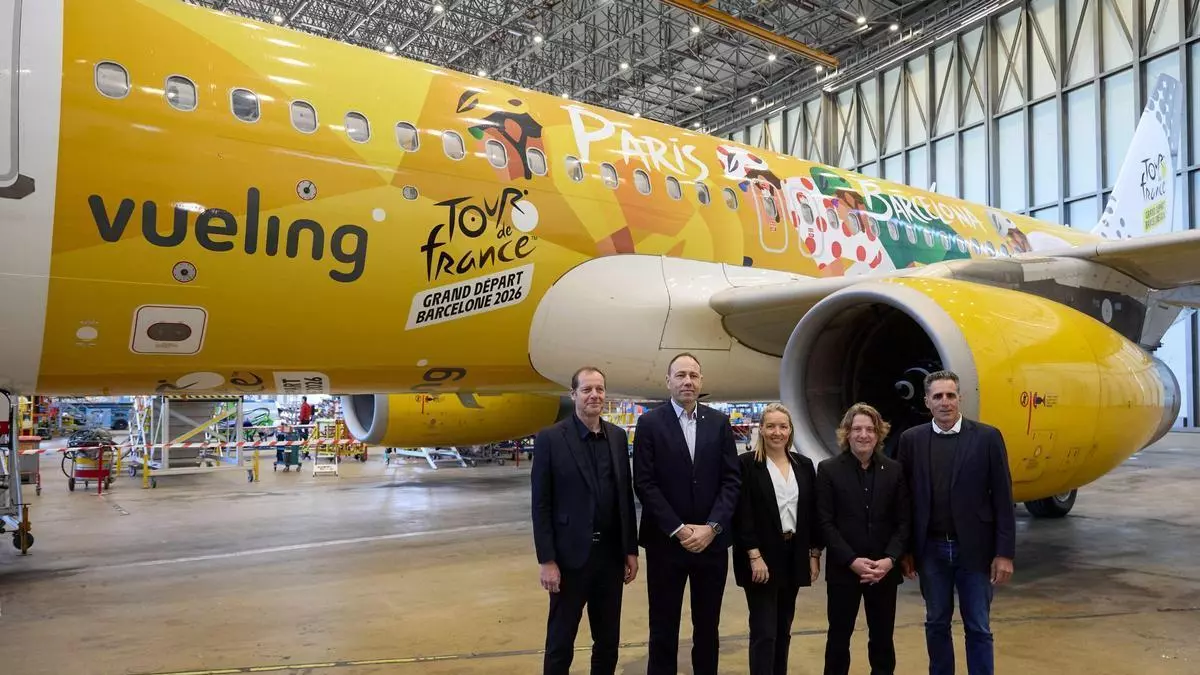
Cycling arrives as spectacle and strategy.
Barcelona, March 2026
Catalonia is not treating the 2026 Tour de France as a passing sporting event. It is staging the Grand Départ as a regional projection platform, one designed to fuse sport, territory, tourism and political visibility into a single international image. The countdown has entered a more public and symbolic phase, with Barcelona and the wider Catalan map presenting the race not merely as competition, but as civic performance. What is being built is larger than a route. It is a narrative of belonging, scale and visibility.
The official structure of the start already explains the magnitude of the operation. Barcelona will host the opening stage on 4 July 2026 with a team time trial, followed by a second stage running from Tarragona to Barcelona on 5 July, while the third stage will depart from Granollers and head toward France on 6 July. That sequence gives Catalonia not just a ceremonial opening, but three consecutive days of territorial exposure before the race fully crosses the border. In strategic terms, it is a showcase distributed across the region rather than concentrated in a single postcard location.
That matters because modern mega-events no longer compete only in stadium terms. They compete in urban branding, broadcast aesthetics and the ability to convert live spectacle into a durable geopolitical and economic message. Catalonia appears to understand this well. The Grand Départ is being framed as proof of organizational capability, international attractiveness and a deep local connection to cycling culture, all at once.
The symbolism is especially strong in Barcelona. The city is presenting the Tour as another chapter in its long sequence of global events, linking it to a broader identity built on sport, architecture, tourism and international visibility. In that reading, the peloton becomes more than an athletic procession. It becomes a moving confirmation that Barcelona still knows how to place itself at the center of a global screen.
There is also a territorial logic beneath the celebration. Official presentations have stressed that around 60 municipalities are involved in the Catalan segment of the Grand Départ, which means the event is being distributed as a shared regional asset rather than monopolized by the capital. That is politically useful and economically intelligent. It allows the Tour to function not only as a Barcelona event, but as a Catalonia-wide demonstration of cohesion, reach and logistical depth.
Cycling is particularly effective for this kind of projection because it turns geography itself into content. Unlike closed-venue sport, it passes through streets, landscapes, coastlines and town centers, transforming territory into narrative scenery for millions of viewers. Catalonia is not just hosting the race. It is effectively curating how the world will look at it for three days. In an era of competitive destination branding, that is a powerful instrument.
The timing also amplifies the effect. The public celebrations around the 100-day countdown show that the event is already being activated as a cultural and civic mobilizer, not just reserved for race week. That pre-event choreography matters because it builds anticipation, local ownership and media density long before the first riders launch from the start ramp. By the time the Tour arrives, the symbolic infrastructure will already have been assembled.
So the real story is not simply that Catalonia is excited for the Tour de France. It is that the region is using the Tour as a strategic mirror in which to reflect modernity, hospitality, mobility and international ambition. Sport here is not ornamental. It is instrumental. And when a territory manages to convert a race into a statement about itself, the event stops being only athletic and starts becoming political, cultural and economic theater on a continental scale.
Detrás de cada dato, hay una intención. Detrás de cada silencio, una estructura.
Behind every datum lies an intention. Behind every silence, a structure.