

 Phoenix 24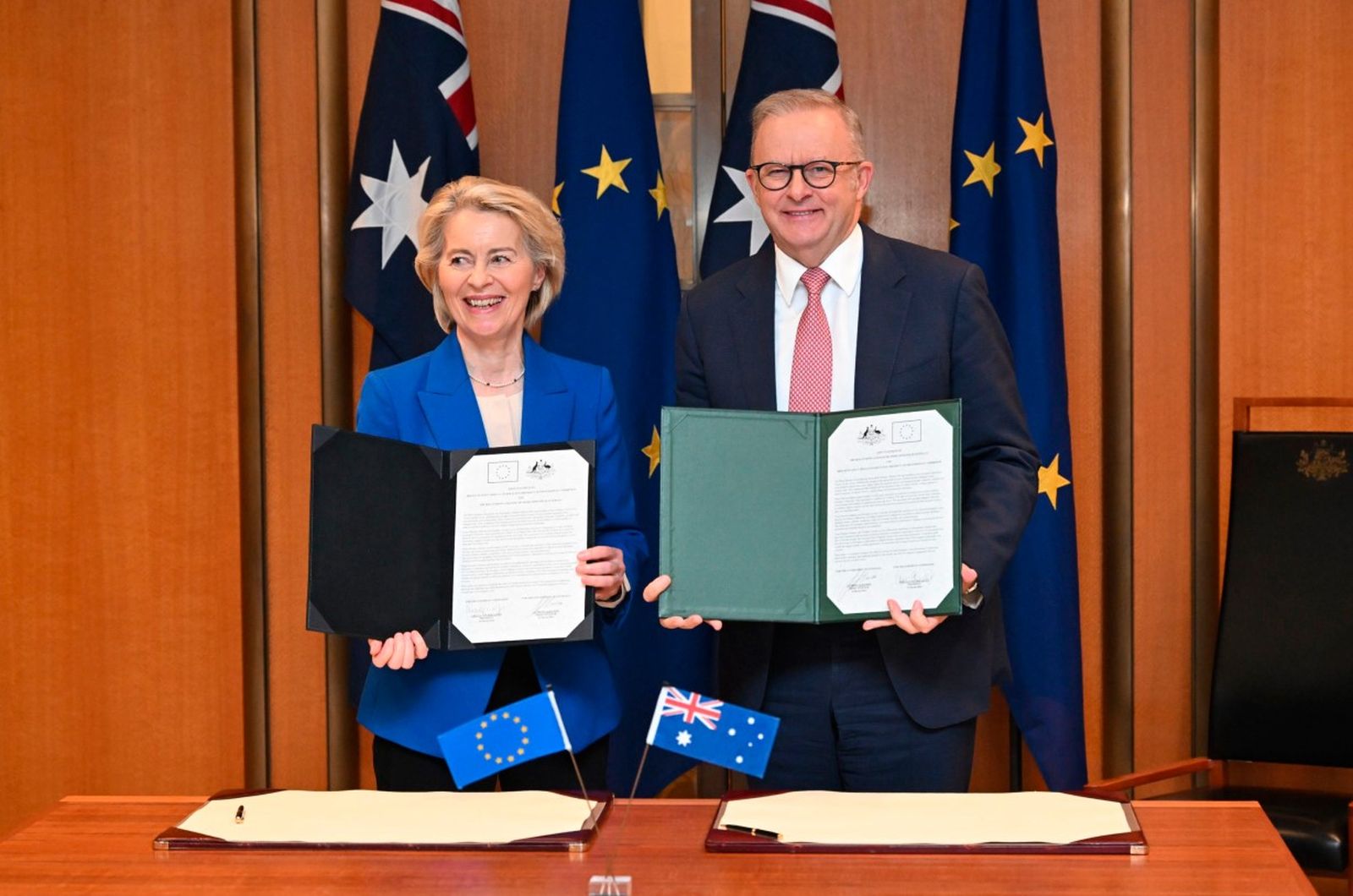
A tariff deal signals deeper geopolitical alignment.
Melbourne, March 2026.
The European Union and Australia have finalized a long anticipated free trade agreement that removes most tariffs, expands market access and strengthens economic ties between two politically aligned partners. While the headline centers on trade liberalization, the agreement carries a broader strategic meaning: both sides are actively reshaping their external economic networks in response to an increasingly fragmented and competitive global order.
For the European Union, the deal represents a calculated effort to secure more reliable access to a stable Indo Pacific partner. The agreement is expected to eliminate more than 99 percent of tariffs on European exports to Australia, reducing costs across sectors such as machinery, automotive, pharmaceuticals, processed foods and wine. This is not only about increasing exports. It is about anchoring supply chains in jurisdictions considered predictable, rules based and geopolitically aligned.
Australia, for its part, gains expanded access to one of the world’s largest consumer markets, with opportunities across agriculture, raw materials and industrial goods. However, the benefits are not uniformly distributed. Certain domestic sectors, particularly in agriculture, have expressed concerns over quotas and the level of market opening achieved. This tension reflects a recurring feature of trade agreements: while they generate macroeconomic gains, they often expose specific industries to intensified competition.
The agreement’s significance extends well beyond tariffs. It includes provisions aimed at strengthening cooperation in critical raw materials, hydrogen energy and strategic supply chains. These areas are increasingly central to global competition, particularly as countries seek to reduce dependency on dominant suppliers and secure inputs essential for energy transition and advanced manufacturing. In this sense, the pact functions as an economic security instrument as much as a commercial one.
Additionally, the agreement is accompanied by closer collaboration in areas linked to defense and resilience, including maritime security and responses to hybrid threats. This convergence of trade and security underscores a structural shift in international relations, where economic agreements are no longer isolated from geopolitical considerations but are instead integrated into broader strategic frameworks.
What emerges from this development is a clear pattern. The global economy is moving toward blocs defined not only by trade flows but by shared political alignment and mutual risk management. The European Union and Australia are positioning themselves within that logic, building a partnership that combines market access with strategic coordination.
This deal does not simply reduce tariffs. It signals a reconfiguration of how economic alliances are formed in an era where supply chains, energy systems and security concerns are increasingly intertwined. The language of trade remains economic, but the intent behind it is unmistakably geopolitical.
Phoenix24: inteligencia para audiencias libres. / Phoenix24: intelligence for free audiences.