

 Phoenix 24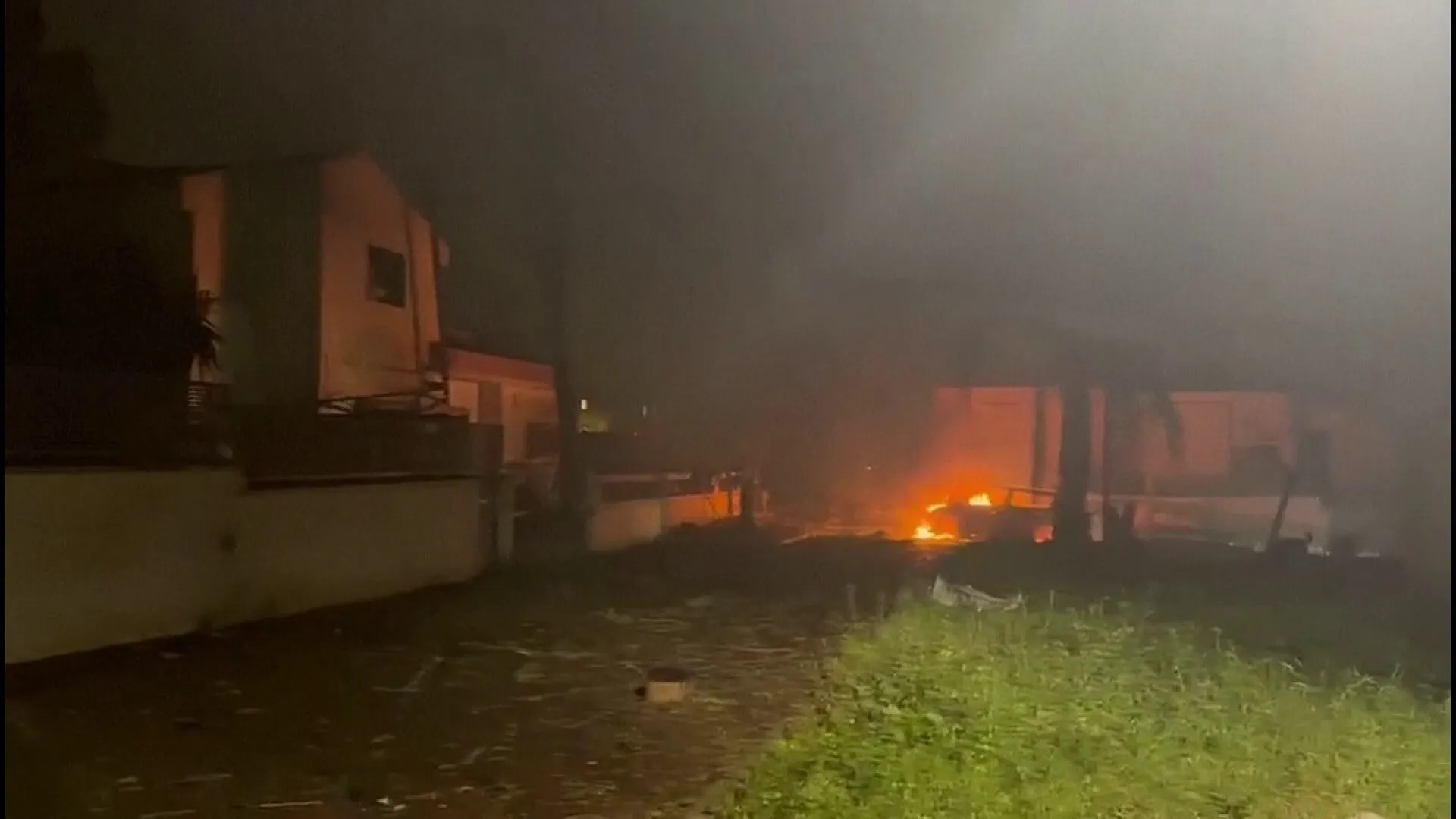
Proximity changes the meaning of impact.
Dimona, March 2026. The Iranian missile strike near Israel’s sensitive nuclear zone in Dimona did more than leave at least 175 people injured. It pushed the war into one of the most symbolically dangerous spaces in the region, where civilian neighborhoods, strategic infrastructure and nuclear anxiety now overlap in a single geography. Even without confirmed damage to the nearby nuclear facility itself, the mere proximity of the attack altered the scale of the event. This was no longer just another missile landing in an urban area. It was a strike that forced the region, and much of the world, to confront how thin the line has become between conventional escalation and catastrophic risk.
That distinction matters. In ordinary wartime logic, an attack on a city is read through casualties, destruction and political intent. In Dimona, the reading changes because the surrounding terrain carries a deeper strategic charge. The city is inseparable from Israel’s long-shadowed nuclear infrastructure, which means every nearby impact generates not only fear of immediate death, but fear of radiological consequence, strategic signaling and future escalation. In such a context, the blast radius is psychological as much as physical.
The human toll remains central. Reports indicate a mass-casualty scene, with large numbers of wounded treated after the strike and serious damage in residential zones. That alone would make the event significant. But what pushes it into a more dangerous category is the way it tests assumptions about deterrence. If a missile can land near one of the most sensitive sites in Israel without crossing into full nuclear disaster, the result is paradoxical. It terrifies precisely because it stops short of the worst case. It shows how close the region can move toward a threshold without technically crossing it.
There is also a military implication that cannot be ignored. A strike of this kind inevitably raises questions about interception failure, air-defense saturation and the limits of systems designed to protect densely populated and strategically vital areas. The issue is not only whether the missile was meant to hit a symbolic target or whether it drifted into a space of amplified consequence. The issue is that a war increasingly defined by precision and message is now producing impacts where symbolism and vulnerability are nearly indistinguishable.
For Israel, the political effect may be the opposite of what such attacks are often meant to achieve. Rather than weakening public resolve, direct strikes on civilians near strategic assets can harden the argument that the war must continue until the threat is more decisively degraded. For Iran, the strike may function as proof of reach, but it also intensifies scrutiny over escalation near nuclear-adjacent terrain, where even a limited success can produce disproportionate global alarm. In that sense, both sides move deeper into a logic where symbolism itself becomes combustible.
The deeper significance of Dimona is not simply that many people were hurt. It is that the geography of the war is changing. The conflict is no longer confined to abstract talk of deterrence, retaliation and strategic balance. It is entering zones where civilian suffering and nuclear proximity coexist in ways that make every strike harder to contain politically, psychologically and diplomatically. Once that happens, the danger is not only what has already been hit. It is what future attacks may begin to normalize.
The visible and the hidden, in context. The visible and the hidden, in context.