

 Phoenix 24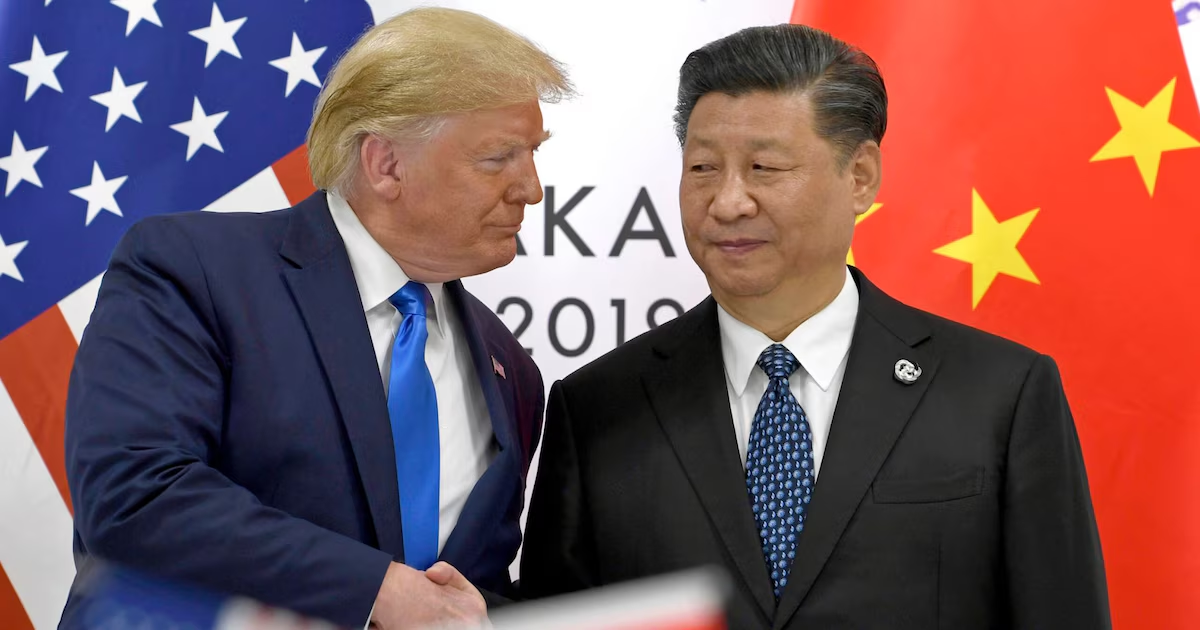
Influence cannot be expelled by late gestures.
Washington, March 2026. The new U.S. push to contain China’s advance in Latin America is producing more visible effects at the level of messaging than at the level of structural reversal. The core problem for Washington is no longer one of access, but one of entrenchment. China did not expand across the region through isolated diplomatic openings or temporary ideological alignments alone. It did so through financing, infrastructure, trade, strategic minerals and long term relationships with political and economic elites. That means the United States is not confronting an emerging presence. It is confronting an architecture that has already taken root.
That is what makes the current moment strategically uncomfortable. Even when Washington scores symbolic victories or regains tactical initiative, the deeper Chinese footprint remains largely intact. Influence built over decades does not dissolve because of one operation, one summit or one show of force. It persists through ports, contracts, supply chains, technology links and the practical logic of dependency. This is why the contest in Latin America now looks less like a race for entry and more like a struggle over who can reshape the region’s long term alignment.
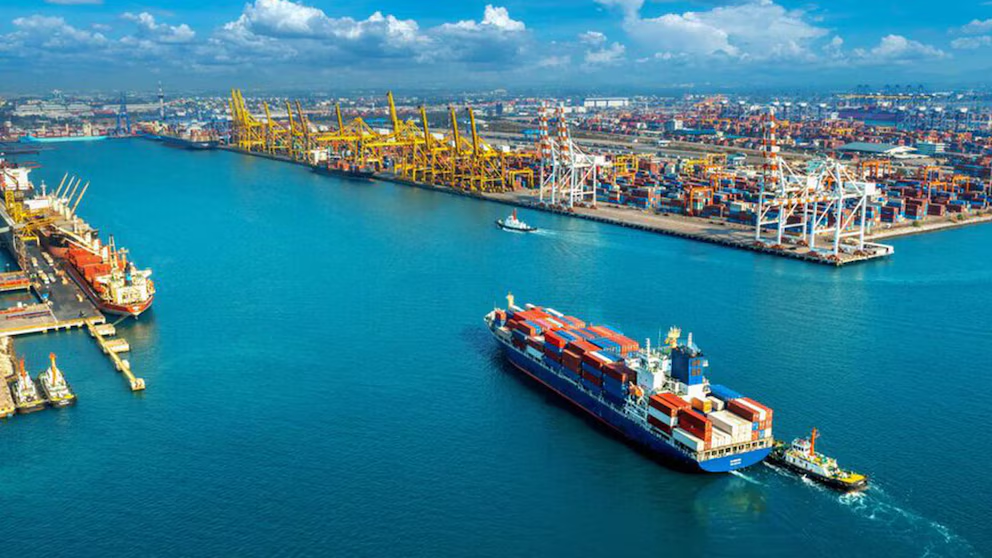
The economic dimension is central to that struggle. Latin America has become increasingly important in the geopolitical contest over critical minerals, industrial relocation and supply chain redesign. As the United States tries to reduce dependence on China in strategic sectors, the region becomes more valuable not only as a diplomatic sphere of influence, but as a material platform for industrial security. Yet that urgency also reveals a weakness. Washington is moving with greater intensity precisely because it understands that Beijing has already gained advantages in extraction, processing, financing and commercial integration across multiple national settings.
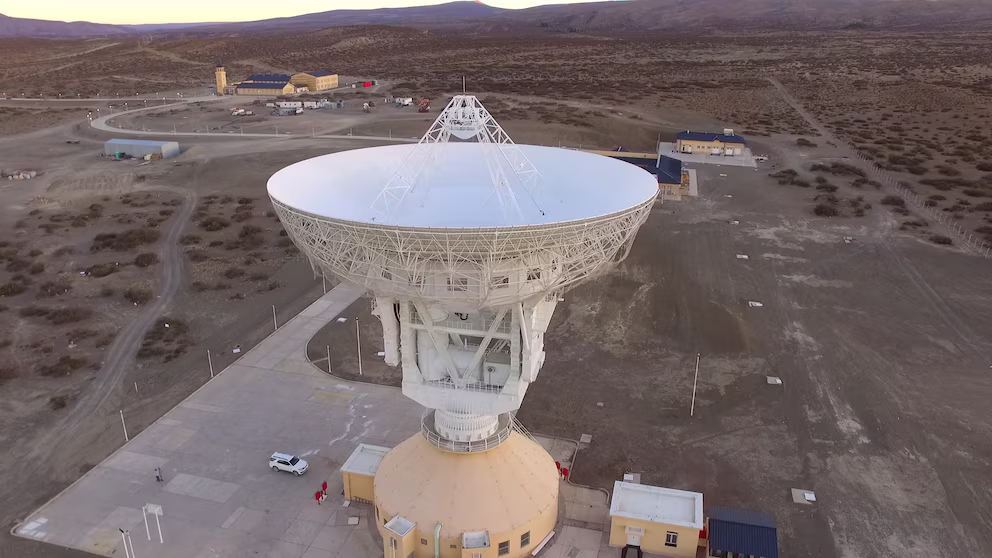
There is also a political and narrative disadvantage embedded in the U.S. response. When Washington returns to the region through the language of pressure, discipline or bloc loyalty, many governments read the gesture less as partnership and more as the return of an old supervisory reflex. That perception complicates any attempt to compete with China, which often presents itself first as investor, buyer and infrastructure partner rather than as an overt political tutor. That image, of course, has its own asymmetries and strategic costs, but it has nevertheless helped Beijing expand influence in spaces where the United States too often appears reactive rather than constructive.
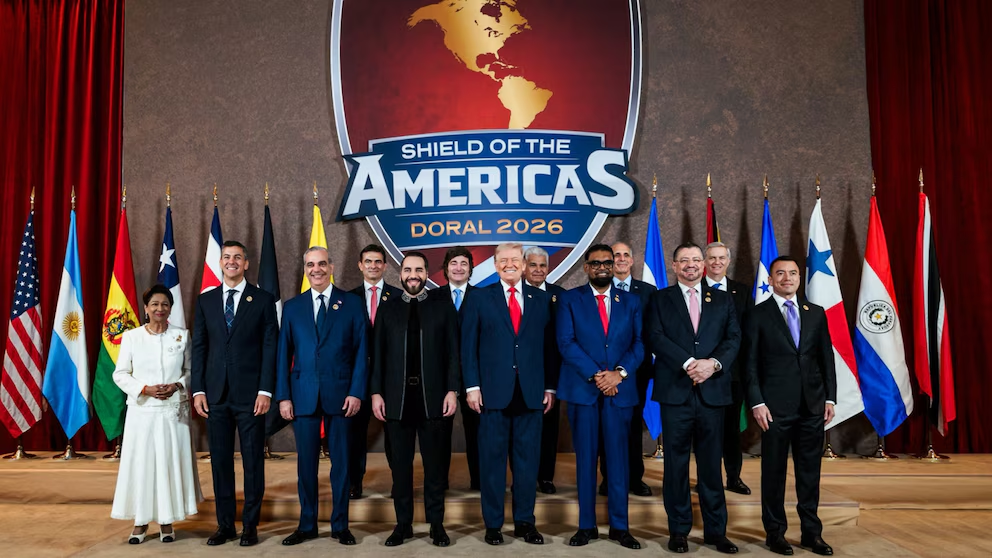
The deeper question, then, is not simply who pressures more effectively or who wins the latest diplomatic confrontation. It is which power can offer Latin America a more credible horizon of development. If the United States wants to slow China’s advance in any meaningful way, symbolic moves will not be enough. It will need continuity, investment, infrastructure, technological partnership and a less episodic reading of the region itself. Otherwise, Washington may continue to collect tactical headlines while losing, more slowly but more profoundly, its historical centrality in the hemisphere.
Behind every datum, there is an intention. Behind every silence, a structure.