

 Phoenix 24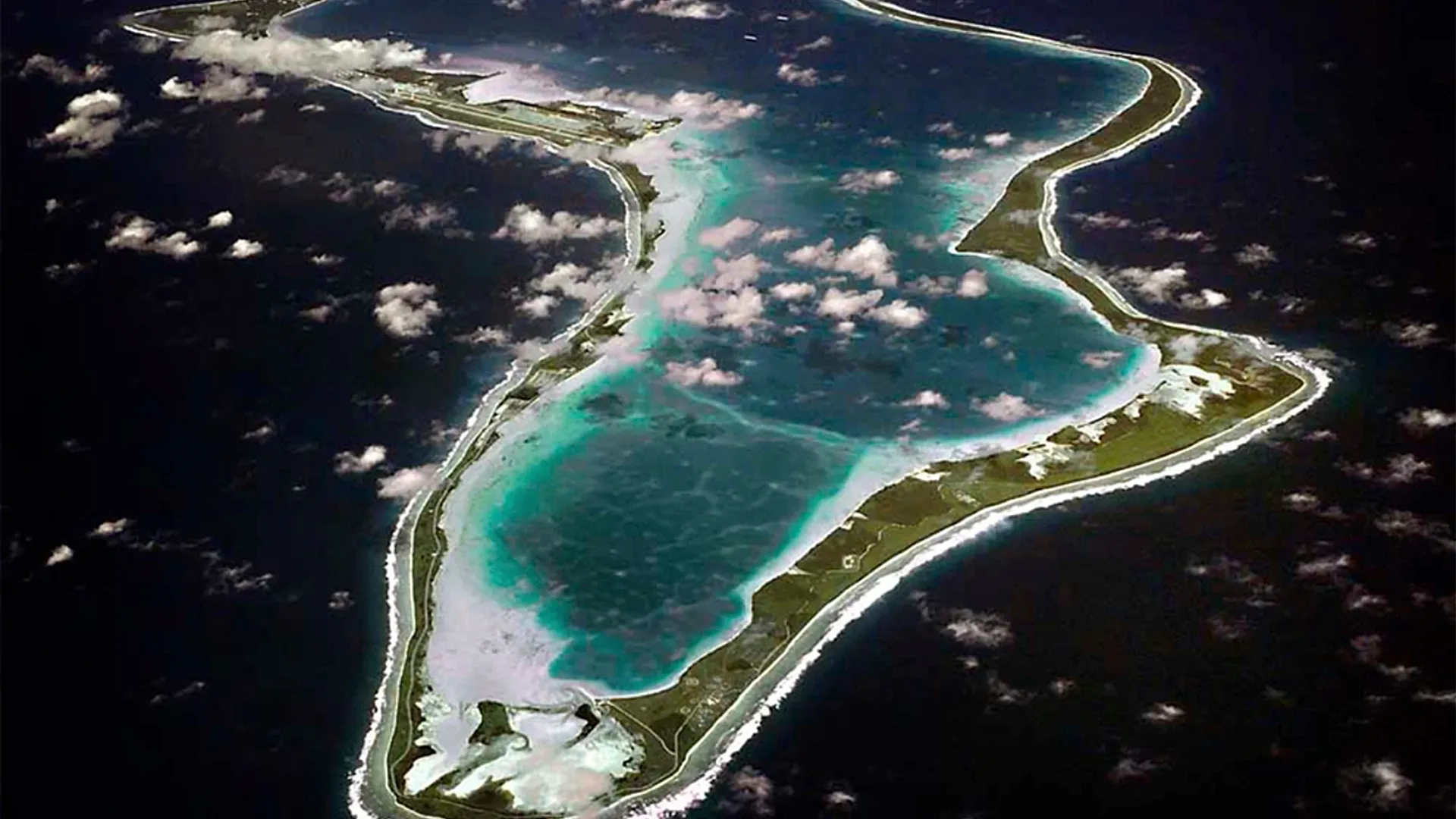
Distance no longer guarantees strategic safety.
Diego Garcia, March 2026. Iran’s reported strike attempt against the joint United States and United Kingdom base on Diego Garcia has turned a remote island in the Indian Ocean into one of the clearest symbols of the war’s expanding radius. Even without confirmed direct impact on the installation, the strategic message is already significant: a site long regarded as protected by geography has now entered the logic of retaliation. In contemporary conflict, that alone changes the map.
Diego Garcia is located in the Chagos Archipelago, deep in the central Indian Ocean, and has long functioned as one of the most important Anglo American military platforms beyond the immediate Middle East. Its value lies not only in its infrastructure, but in its position. Far enough from the region’s most volatile front lines to offer operational depth, yet close enough to support missions across the Middle East, East Africa, and South Asia, the island has served for decades as a hub for logistics, surveillance, long range bomber support, naval coordination, and strategic projection.
That is precisely why the base matters so much. Diego Garcia is not merely a distant installation on a defense map. It is a rear platform designed to make distance militarily useful. From there, allied forces can sustain extended operations, protect supply chains, preposition fuel and matériel, and project force without relying exclusively on more exposed bases closer to the Gulf. For Washington and London, its strategic utility has always rested on the assumption that remoteness provides resilience. That assumption now appears less stable.
The reported Iranian move matters less because of immediate material damage and more because of what it suggests about escalation logic. If Tehran is willing to threaten or symbolically target a facility at such distance, then the conflict is no longer confined to proximate theaters or conventional retaliation zones. It indicates a willingness to stretch the geography of confrontation and to signal that support architecture, not only frontline assets, may be considered part of the target environment.
This has serious implications for Western military planning. A base like Diego Garcia exists to preserve operational continuity when forward spaces become unstable. If even such a location can be drawn into the psychological and strategic reach of an adversary, then the concept of sanctuary begins to erode. The old hierarchy between frontline exposure and rear area safety becomes less reliable. In modern missile warfare, depth still matters, but it no longer guarantees insulation.
There is also a symbolic dimension that should not be underestimated. Diego Garcia has long represented the hidden architecture of Western power projection: distant, fortified, logistically central, and often absent from public attention until moments of crisis. A reported strike toward that base forces it back into visibility. It reminds observers that much of military endurance depends on places rarely discussed in public narratives of war, yet absolutely essential to the conduct of it.
At the same time, the episode revives the island’s broader geopolitical sensitivity. Diego Garcia has never been strategically important in a vacuum. Its history is entangled with imperial legacy, contested sovereignty, and the forced displacement of island populations. That background gives the base a layered political identity. It is not only a military node, but also a site where strategy, law, memory, and power intersect. Any new confrontation involving the island therefore expands beyond defense logistics into wider debates about legitimacy and control.
From a doctrinal perspective, the incident points to a deeper transformation in warfare. Long range strike capabilities, distributed missile systems, and high speed escalation cycles are dissolving the old boundaries between center and periphery. What was once considered secure because it was far away is now secure only conditionally. Geography still shapes strategy, but technology increasingly compresses the protective value of distance.
The broader lesson is difficult to ignore. Diego Garcia matters because it embodies how modern power is sustained: through networks, platforms, staging points, and deep logistical infrastructure. But it matters even more now because its apparent entry into the retaliation equation suggests that no essential node is truly beyond reach. Once a remote island base becomes part of the conflict’s active mental map, escalation is no longer defined simply by intensity, but by how far vulnerability can be projected.
This is what makes Diego Garcia strategically important. Not only where it is, but what it represents: the shrinking margin between distance and exposure in twenty first century war.
Behind every datum, there is an intention. Behind every silence, a structure.