

 Phoenix 24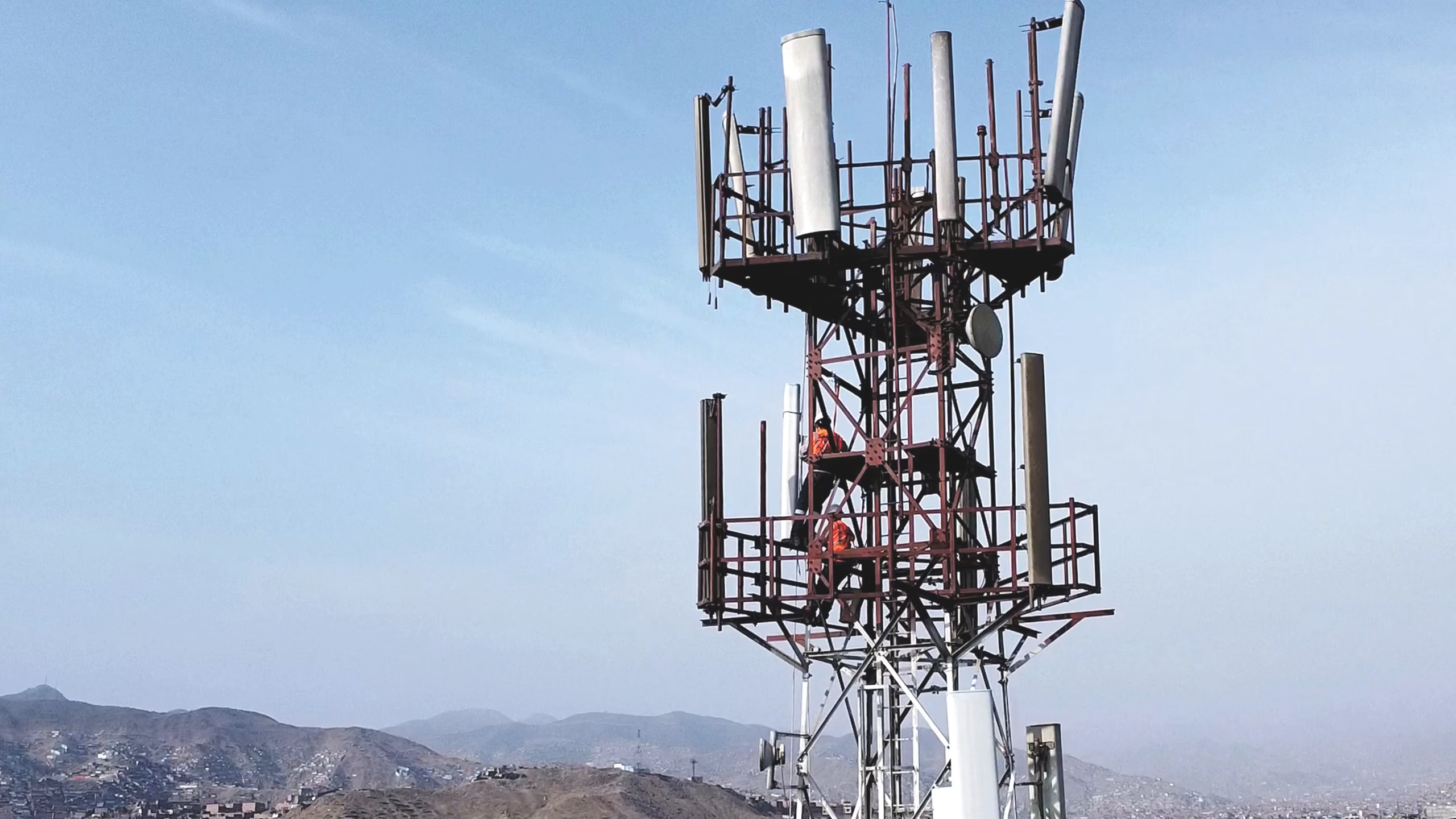
The rollout is moving where demand is strongest.
Lima, March 2026
Movistar has expanded its 5G deployment across key districts in Lima, reinforcing its strategy to strengthen next-generation mobile connectivity in high-traffic areas of the Peruvian capital. The rollout now reaches 13 districts, with priority given to zones of intense data consumption and heavy daily movement, including major avenues, commercial corridors and other high-demand urban points.
The expansion places Lima at the center of Movistar’s current 5G strategy in Peru, where telecom operators are trying to turn network modernization into a clear competitive advantage. The deployment was presented in the context of a broader push to improve infrastructure quality and accelerate digital connectivity in major Latin American cities.
What stands out in this phase is not only the number of districts covered, but the logic behind the selection. The company has focused on areas where mobile traffic is especially dense, including zones near the National Stadium, major roads and large shopping centers. That approach reflects a pattern seen in many early 5G rollouts, where operators prioritize urban corridors capable of generating the most immediate impact in speed, capacity and user experience.
The Lima rollout also fits into a broader effort by Movistar to modernize its network in Peru during 2026. Earlier stages of that strategy included upgrades to thousands of base stations, with 5G expansion framed as part of a larger infrastructure plan rather than a one-off announcement. In that sense, the latest deployment represents another step in a longer process of strengthening network performance in the country’s most connected urban areas.
The competitive context is also important. Peru’s telecom market is entering a more intense phase of 5G positioning, with operators balancing infrastructure spending, regulation and consumer expectations for faster and more stable mobile service. Movistar’s expansion in Lima therefore carries both technical and commercial significance: it improves coverage in strategic zones while also signaling that the company wants to remain visible in the race to define Peru’s next phase of mobile connectivity.
For users, the practical value of this rollout lies in better performance where network stress is highest. In districts with dense traffic and heavy smartphone use, 5G can improve speed, reduce latency and support a greater number of simultaneous connections. That does not mean every user will experience the same improvement immediately, since results still depend on device compatibility, local conditions and network maturity, but it does mark a broader shift toward wider urban availability.
The move also underlines how Lima remains the primary testing ground for large-scale digital infrastructure changes in Peru. Operators typically deploy first in the capital’s busiest corridors before expanding more broadly, using those areas to validate performance and justify additional investment. Movistar’s latest step follows that model and suggests that 2026 is becoming a decisive year for converting network modernization into stronger market presence.
For now, the message is straightforward. Movistar is deepening its 5G presence in Lima not through a symbolic launch, but through targeted deployment in areas where mobile demand is already intense. As Peru’s 5G landscape continues to evolve, the capital is becoming the main arena where operators test not only technology, but also the practical meaning of next-generation connectivity for everyday users.
Phoenix24: clarity in the grey zone. / Phoenix24: clarity in the grey zone.