

 Phoenix 24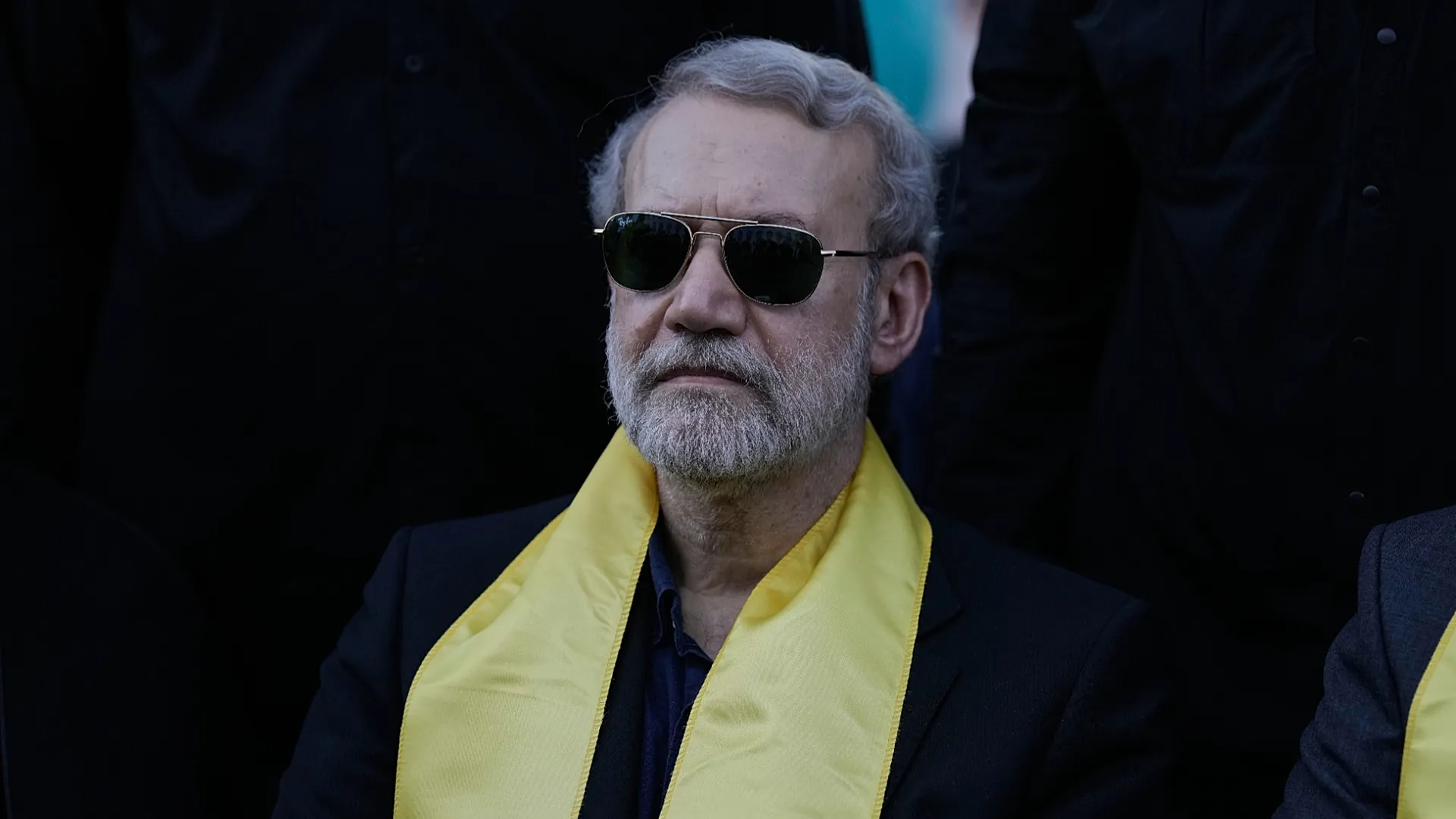
A strike at the operational core.
Tehran, March 2026
The death of Ali Larijani in an attack attributed to Israel does more than disrupt Iran’s immediate chain of power. It exposes a deeper shift in the conflict itself. This is no longer a confrontation limited to military facilities, field commanders, or strategic infrastructure. It has now reached the level where state security, crisis management, and political continuity converge. What matters here is not only who was killed, but what his position represented inside the Iranian system.
Larijani was not a ceremonial official or a secondary figure in the regime’s architecture. He stood at a sensitive intersection of security coordination, intelligence oversight, institutional response, and strategic decision making. In systems built on layered authority and internal discipline, figures like him do not simply administer policy. They help hold together the channels through which power circulates, information is filtered, and risk is contained. When such a figure is removed in the capital itself, the meaning of the event immediately exceeds the tactical plane.
That is why the strike carries broader political weight. Destroying weapons depots or disrupting logistics sends one kind of signal. Penetrating the inner ring of state security sends another entirely. It suggests that the protective shell around the leadership is no longer as impermeable as the regime has long projected. Iran still retains military assets, institutional depth, and regional networks, but this episode weakens something less visible and perhaps more important in moments of escalation: the perception of internal invulnerability.
The setting makes the blow even more consequential. A strike of this nature inside Tehran produces pressure on two fronts at once. Domestically, the regime must demonstrate control, discipline, and continuity at a moment of visible disruption. Externally, it must preserve deterrence and prevent adversaries from concluding that the upper tiers of command are now reachable with precision. That dual burden is not easy to manage. Public confirmation of a loss at this level narrows the space for strategic ambiguity and forces the state to respond not only operationally, but psychologically.
In that sense, the attack is not just about attrition. It is about perception management in wartime. The removal of a senior security figure affects confidence inside the governing structure, trust across agencies, and the cohesion of the command environment. A replacement can be appointed quickly. Titles can be reassigned. Procedures can be activated. Yet administrative substitution does not instantly restore the informal capital accumulated by a figure who sat at the crossroads of power, intelligence, and security judgment. In crisis environments, those intangible losses often matter as much as the physical one.
For Israel, the operation reinforces an image of intelligence reach and operational superiority. It projects the capacity not merely to hit targets, but to identify and penetrate the decision-making environment of its adversary. That has implications beyond the bilateral confrontation. For Iran’s regional partners and aligned networks, the message is more unsettling. If the security core in Tehran can be pierced, then associated nodes elsewhere may also be vulnerable. The attack therefore reverberates far beyond one office, one man, or one night.
Still, it would be simplistic to interpret the episode as evidence of imminent institutional collapse. States with dense security systems usually develop redundancy, replacement channels, and layered command structures precisely to withstand shocks of this kind. Iran is not a fragile actor in the conventional sense. It has experience managing pressure, absorbing losses, and reconstituting parts of its apparatus under strain. But resilience should not be confused with immunity. Even strong states suffer cumulative erosion when symbolic and operational blows begin to converge.
That is where the broader strategic pattern becomes visible. Contemporary conflict is increasingly moving toward operations that combine military precision, intelligence penetration, and psychological disruption at the leadership level. The objective is no longer only to destroy capabilities in the field. It is to interfere with the adversary’s capacity to think, coordinate, and project control. In that model of warfare, targeting the nervous system matters as much as targeting the limbs.
The regional implications are therefore significant. A strike like this raises the risk of retaliation, counter-signaling, and escalation across other arenas. It compresses diplomatic space and hardens internal calculations on both sides. It also intensifies the symbolic struggle that runs alongside conventional confrontation. Regimes such as Iran’s rely not only on coercive capacity, but on the projection of continuity, discipline, and strategic endurance. When that image is punctured in the capital itself, the damage is not merely administrative. It becomes narrative, institutional, and geopolitical all at once.
In the end, Larijani’s death reveals something more serious than a tactical success. It shows that the confrontation has entered a phase in which institutional survival is becoming as important as firepower. Tehran loses a central operator at a moment when cohesion matters more than ever. Israel gains a high-value strategic and symbolic victory, though at the cost of raising the probability of a broader response. In long conflicts, there are deaths that do not simply leave an office empty. They alter the texture of power itself.
Facts that do not bend. / Hechos que no se doblan.