

 Phoenix 24
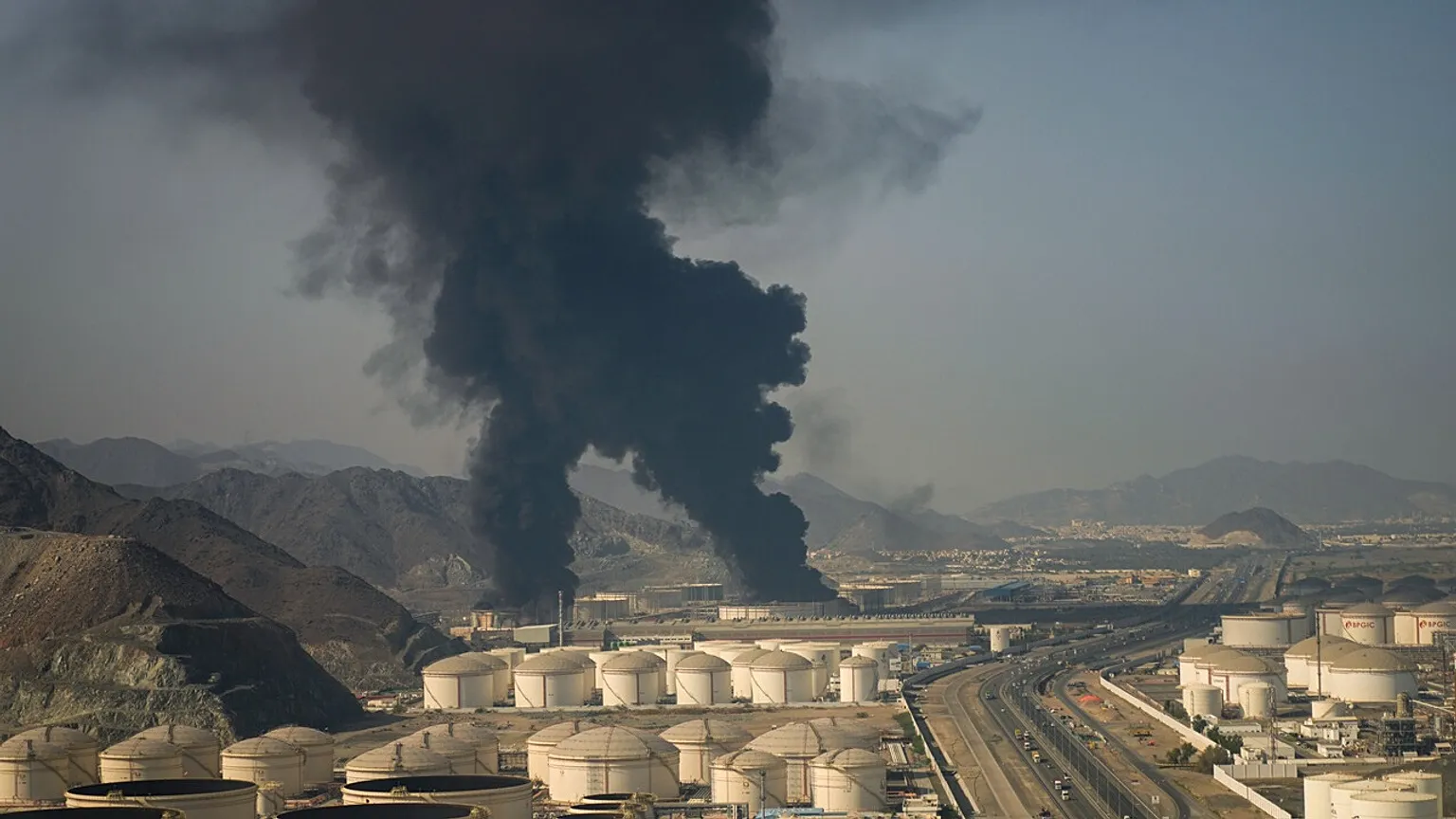
Retaliation spreads across the energy heart of the world.
Dubai, March 2026.
Iran has continued launching attacks across several Gulf states, intensifying regional tensions only a day after U.S. forces struck Iranian infrastructure. The escalation marks one of the most dangerous phases of the current Middle Eastern confrontation, with missile and drone strikes now affecting countries that host strategic oil facilities, maritime trade corridors and Western military installations.
The latest attacks targeted infrastructure and transport hubs across the Gulf region, including energy installations and maritime logistics routes. Fires and structural damage were reported near the Emirati port of Fujairah, a critical hub for global oil storage and tanker operations located outside the Strait of Hormuz. Although port activity resumed shortly after emergency services contained the situation, security officials warned that disruptions could continue if attacks expand toward shipping infrastructure.
Iranian authorities have framed the strikes as retaliation for recent military actions carried out by the United States and Israel against Iranian targets. Analysts suggest Tehran is employing a calibrated escalation strategy intended to increase the economic and strategic costs for its adversaries without triggering an immediate full-scale regional war. By focusing on energy corridors, maritime logistics and infrastructure nodes, Iran is demonstrating its ability to pressure the global economic system while maintaining operational ambiguity.
Several Gulf states have been directly affected by the expanding confrontation. Saudi Arabia reported missile and drone strikes targeting oil infrastructure and military installations connected to its energy sector. Local authorities confirmed casualties and structural damage in areas surrounding these facilities. While the Saudi air defense network intercepted several incoming projectiles, officials acknowledged that some missiles penetrated defensive layers, underscoring the difficulty of neutralizing coordinated drone and missile attacks.
Bahrain also experienced attacks affecting parts of the capital Manama, including areas close to installations associated with the United States Navy’s Fifth Fleet. The strikes caused casualties and damage to nearby buildings, prompting a strong diplomatic response from Gulf governments. Regional officials described the attacks as violations of national sovereignty and warned that continued escalation could destabilize maritime security throughout the Persian Gulf.
Kuwait reported a separate series of drone and missile strikes aimed at logistical infrastructure used by international military forces. Authorities stated that air defense systems intercepted numerous projectiles, although some impacts caused injuries and damage to facilities linked to military supply operations. The incidents have raised concerns about the vulnerability of critical infrastructure across the northern Gulf.
The conflict has also extended beyond the immediate battlefield. Oman reported drone activity targeting industrial zones and port infrastructure connected to international shipping routes. Meanwhile, air defense systems in Jordan intercepted missiles that crossed its airspace during the exchange of fire. These developments illustrate how rapidly the confrontation is expanding across a region that serves as one of the world’s most important energy and trade corridors.
Energy markets have reacted quickly to the deteriorating security environment. Oil prices climbed sharply earlier in the week as traders assessed the risk that attacks on Gulf infrastructure could disrupt production or tanker traffic. The Strait of Hormuz, through which roughly one fifth of global oil supply passes, remains a focal point for international concern. Even limited interruptions in this narrow maritime corridor could have immediate consequences for global energy prices and supply chains.
International organizations monitoring energy and security developments have warned that prolonged instability in the Gulf could ripple through financial markets and global trade networks. Analysts note that the concentration of energy infrastructure, shipping routes and military installations in the region makes it uniquely vulnerable to escalation cycles.
Diplomatic tensions are rising simultaneously. Several Gulf governments have called for urgent discussions within the United Nations Security Council to address the expanding attacks on energy infrastructure and civilian areas. However, geopolitical divisions among major powers have complicated efforts to produce a unified international response to the crisis.
Iranian officials continue to argue that their actions are defensive and linked to earlier strikes against Iranian territory. Tehran has signaled that further retaliation could occur if attacks by the United States or Israel persist. This messaging suggests that the confrontation may enter a prolonged phase characterized by reciprocal strikes and indirect pressure across the region.
For now, Gulf states are reinforcing air defense systems around energy infrastructure, ports and military facilities. Naval forces from several countries have intensified patrols along critical maritime corridors to safeguard commercial shipping and prevent disruptions to global trade routes.
What began as a confrontation centered on Iran and its adversaries is now reshaping the strategic environment of the Gulf. With energy markets reacting, shipping routes under pressure and multiple countries drawn into the confrontation, the region faces a period of heightened uncertainty that could carry consequences far beyond the Middle East.
Phoenix24: journalism without borders. / Phoenix24: journalism without borders.