

 Phoenix 24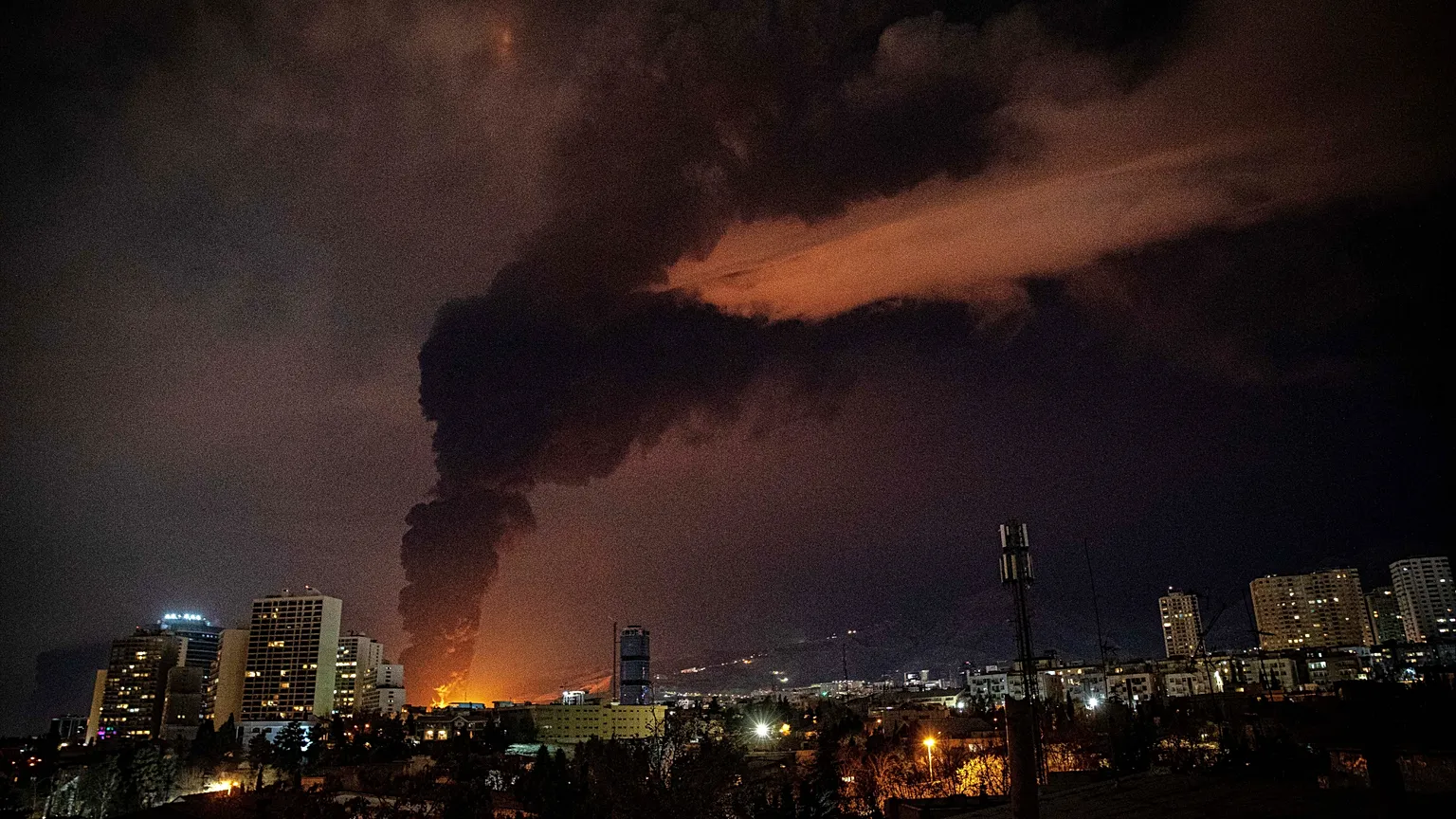
Energy infrastructure is now the war’s pressure valve.
Dubai, March 2026
Iran’s attacks on energy infrastructure in the Gulf have pushed the war into a more dangerous phase, one where the target is no longer only military credibility but the operating heart of the global economy. The reporting describes Iranian strikes and broader disruption affecting Gulf producers just as shipping through the Strait of Hormuz has slowed to near paralysis. The market response was immediate: oil surged toward 120 dollars a barrel, one of the sharpest moves in years, while governments and traders began treating the crisis as a live supply shock rather than a temporary geopolitical scare.
What makes this escalation structurally different is that the pressure is now aimed at the full energy chain. It is not only about whether missiles hit tanks, terminals, or processing points. It is also about whether tankers can move, whether insurers will underwrite voyages, whether producers can keep pumping if exports cannot leave, and whether refiners in Asia and Europe can rely on predictable flows. Gulf producers including Saudi Arabia, Iraq, Kuwait, Qatar, and the UAE have already begun cutting output because blocked shipping routes and storage constraints are making normal export operations harder to sustain. That means the war is no longer just threatening supply in theory. It is already distorting production decisions in practice.
The price surge reflects that shift. Brent moved close to 120 dollars a barrel, one of the largest increases in recent years. These numbers matter not simply because they are high, but because they indicate that the market is pricing in prolonged disruption rather than a short-lived scare. Tanker paralysis through Hormuz has all but stopped normal traffic across a route that carries a large share of the world’s oil. Once markets start treating a chokepoint as unstable by default, price becomes a function of fear as much as physical supply.
The most revealing detail is that there is not yet a classic global oil shortage in the old sense. The system still contains reserves, rerouting capacity, and emergency stock options. But the market is reacting to something arguably more destabilizing than an immediate shortage: uncertainty over whether exports can move safely and continuously. Saudi Arabia has already started redirecting exports through the Red Sea, while major governments and energy agencies are discussing the possible release of strategic reserves to contain the fallout. These are not symbolic gestures. They are emergency-management tools activated because the conflict is beginning to deform the logistics of energy, not just the politics of it.
The consequences spread beyond crude. Refined products such as gasoline, diesel, and especially jet fuel may become the more acute problem if disruption continues, because refinery systems and shipping routes respond unevenly to stress. That means the public may feel the war not first as an abstract oil benchmark, but as more expensive transport, aviation, and consumer goods. The crisis can therefore move from trading desks into household inflation very quickly, especially in import-dependent economies.
For the Gulf states, the political cost is rising alongside the economic one. Energy facilities are not only industrial assets. They are symbols of sovereign control and regime competence. When missiles and drones can reach those systems, even partially, the message to domestic and international audiences is that protection is no longer guaranteed by wealth or geography alone. This is especially sensitive for states that built their global role on reliability as suppliers. Once reliability is questioned, their leverage weakens even if the physical damage remains limited. That is why the attacks matter beyond the blast radius. They challenge the image of the Gulf as an energy zone that can absorb regional war without ceasing to function.
The broader strategic pattern is now visible. Iran is not just retaliating. It is trying to weaponize economic interdependence by making the cost of continued war global rather than local. The United States and its allies may retain military superiority, but Tehran is showing that it can still inject pain into the world economy through infrastructure pressure and maritime disruption. That asymmetry matters because it changes the conversation from who controls the battlefield to who can raise the political price of continuation.
The immediate outlook remains unstable. Governments are scrambling to reassure markets, tap reserves if necessary, and protect shipping, but the underlying problem has not been solved. As long as Gulf energy infrastructure and Hormuz traffic remain exposed, oil will trade not only on supply and demand but on escalation risk. In that environment, every new strike does more than destroy equipment. It rewrites the cost of normality.
Beyond the news, the pattern. / Más allá de la noticia, el patrón.