

 Phoenix 24
Air defense is now a political message.
Nicosia, March 2026
Turkey’s deployment of six F-16 fighter jets and air-defense systems to northern Cyprus is more than a precautionary military move. It is a political declaration that Ankara now sees the eastern Mediterranean war spillover as close enough, and dangerous enough, to justify visible forward positioning on the island. Turkish officials framed the step as protection for the Turkish Cypriot community amid expanding regional tensions, and indicated that additional measures could follow if needed.
The timing matters. The move comes after a period in which Cyprus has already been pulled into the conflict’s outer ring, with alerts, drone threats, and growing European military attention around the island. France and Greece have both reinforced their regional posture in recent days, and Emmanuel Macron has explicitly declared that an attack on Cyprus would mean an attack on Europe. Turkey’s answer is not to join that European framing, but to insert its own deterrent presence into the same geography. In practice, this means Cyprus is no longer just an exposed island near a war zone. It is becoming a layered military signal space where rival security narratives are now physically visible.
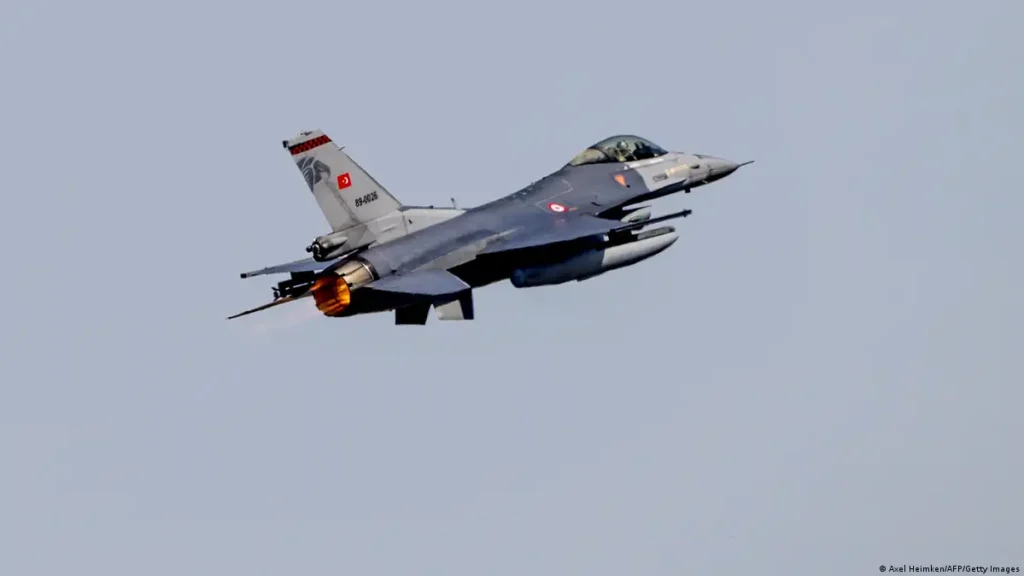
Ankara’s stated rationale is defensive, but the symbolism is unavoidable. Northern Cyprus is recognized only by Turkey, so any new military deployment there carries legal, diplomatic, and historical weight beyond the hardware itself. Sending F-16s and air-defense systems into that space tells several audiences different things at once. To Turkish Cypriots, it says Ankara is prepared to shield them directly. To Greece and the Republic of Cyprus, it says Turkey will not allow the island’s security environment to be defined exclusively by European and French moves. To Iran and other regional actors, it says the island’s northern half is under active Turkish military cover if the conflict widens further.
The regional context helps explain why Ankara moved now rather than later. Turkey has already reported that NATO air defenses intercepted Iranian ballistic missiles near or over its airspace, including one incident in southern Turkey between key military facilities. President Erdogan publicly condemned Iran’s actions as provocative while stopping short of invoking NATO’s Article 4 consultation mechanism. That balancing act is important. Turkey wants to show deterrence and readiness without appearing eager to be dragged deeper into the war. Deploying aircraft to northern Cyprus fits that posture: it is forceful enough to signal resolve, but still short of a formal alliance escalation process.
This also reveals something deeper about Turkey’s strategic habit. Ankara often prefers moves that create leverage without immediately closing diplomatic options. Forward deployment is part of that repertoire. It changes the map, hardens Turkey’s relevance, and forces others to calculate around Turkish presence, while leaving room for Ankara to continue speaking the language of regional stability. In that sense, the F-16 deployment is not just military insurance. It is bargaining position built with hardware.
For Cyprus itself, the consequence is uncomfortable. The island is increasingly becoming a contact zone where multiple powers are projecting different versions of “protection.” France treats Cyprus as a European frontier under threat. Greece reinforces that interpretation through allied solidarity. Turkey now overlays a separate security architecture in the occupied north. The result is not stability in the traditional sense. It is militarized reassurance from competing centers of power, all operating in close proximity under wartime pressure. That kind of reassurance can deter, but it can also raise miscalculation risk if the conflict worsens.
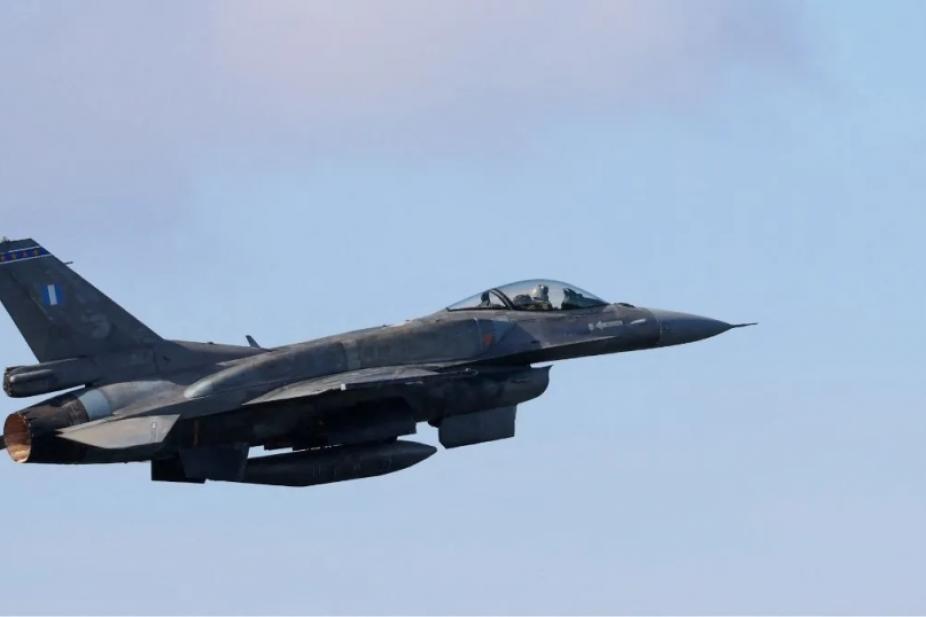
What changes on the wider board is the role of Cyprus in the Mediterranean crisis. It is no longer merely adjacent to war. It is being actively absorbed into the strategic geometry of the war. Turkey’s deployment confirms that point. The island is now part of a live deterrence contest, and every new asset sent there carries not just defensive value, but narrative weight. In volatile theaters, narrative weight is often what turns a precaution into a red line.
Every silence speaks. / Cada silencio habla.