

 Phoenix 24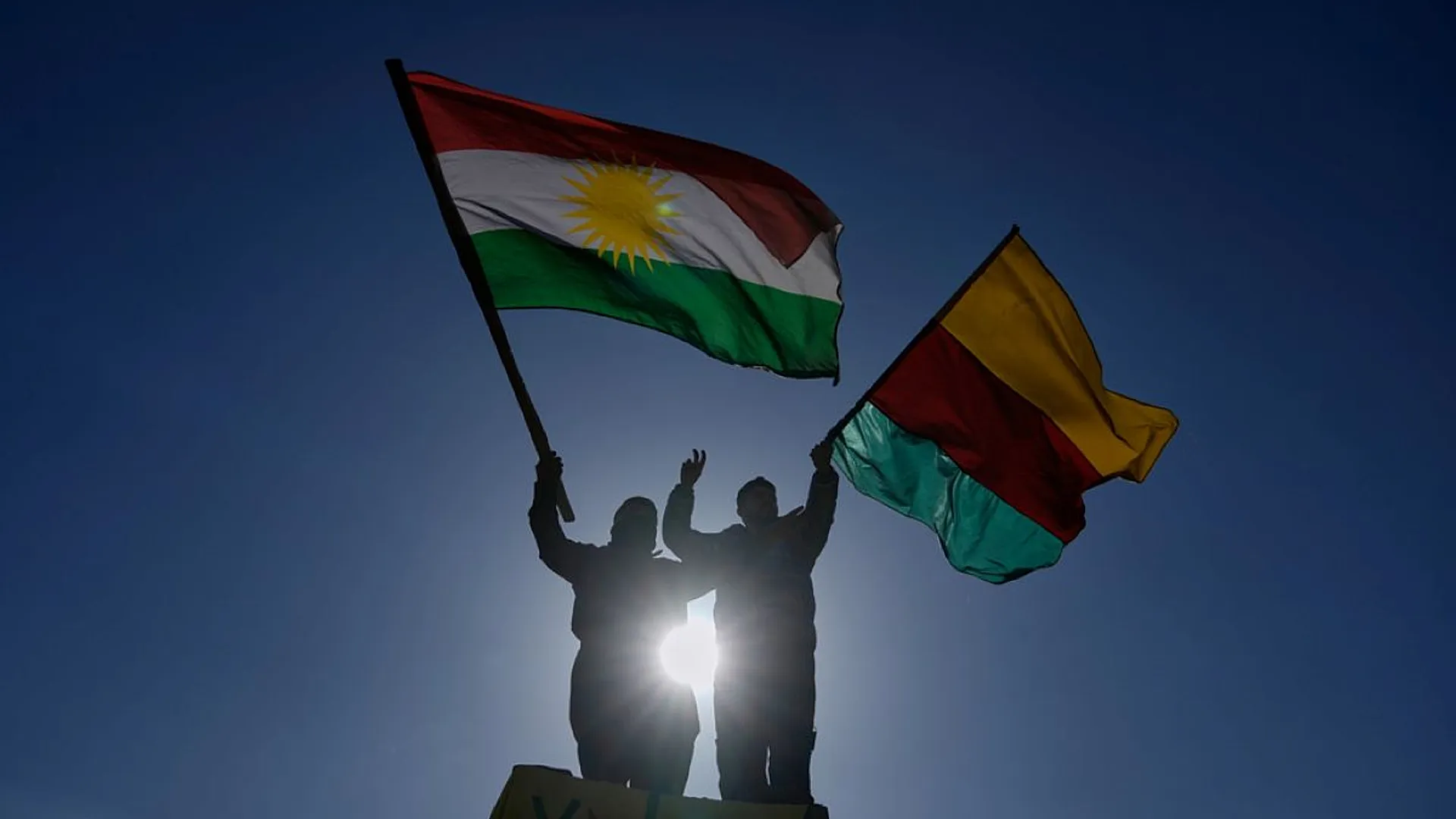
Pressure on Tehran can detonate regionwide.
Ankara, March 2026
As the U.S.–Israel war against Iran expands, one of Washington’s most controversial ideas has resurfaced in daylight: using armed groups inside Iran as a lever to weaken Tehran from within. Euronews reports that President Donald Trump publicly voiced support for Iranian Kurdish fighters based in Iraq to attack Iran, reviving a long-running strategic temptation in both Washington and Tel Aviv. The appeal is obvious on paper. External strikes can degrade infrastructure, but they rarely produce decisive political collapse on their own, especially in a state built for internal security. A domestic front, even a limited one, looks like a shortcut. Yet the Kurdish front is not a clean tool. It is a destabilizing variable with second- and third-order consequences that do not stop at Iran’s borders.
The Kurdish factor sits inside a complex demographic and political map. Iran is a multi-ethnic state of roughly 90 million, with Persians as the majority and large minorities including Azeris, Kurds, Arabs, Turkmen, and Baloch. Unlike Iraq or Afghanistan, Iran has historically maintained a stronger state core and has not experienced the same degree of permanent fragmentation. That is why playing the “ethnic card” is so dangerous. It can generate localized pressure, but it can also trigger nationalist consolidation, a rally-around-the-flag dynamic in which Tehran reframes the conflict as an existential fight against foreign-backed disintegration. A tactic designed to weaken the regime can, under the wrong conditions, strengthen it socially.
Still, the operational logic behind the Kurdish option is real. Reuters has reported that Israeli officials and interlocutors have held conversations with Iranian Kurdish insurgent groups based in Iraqi Kurdistan for more than a year, and that some Kurdish factions have explored plans to seize towns near Iran’s western border if the regime’s grip loosens. The groups most often cited in this ecosystem include the Kurdistan Democratic Party of Iran, Komala-linked currents, PJAK, and the Kurdistan Freedom Party, among others, with combined forces often described as numbering in the low thousands. Their light arms and fragmented command structures mean they are not a conventional invasion force. Their value, if any, would come from acting as auxiliary ground pressure, intelligence nodes, and local disruptors while air power reshapes the battlefield above them.
This is where the analogy that Euronews highlights becomes tempting and misleading at the same time. Some analysts evoke Afghanistan in 2001 and the Northern Alliance model: local forces providing ground presence while external air power breaks the regime’s coercive infrastructure. The resemblance is superficial. Iran is not Afghanistan, and Kurdish factions are not a unified alliance with nationwide reach. More importantly, the political aftermath is not a detail. A successful ground foothold would immediately raise the question of what kind of Iran follows: centralized restoration, federalization, autonomy arrangements, or a contested patchwork of power. That is precisely why monarchist circles around Reza Pahlavi have reacted harshly to Kurdish coalition statements about self-determination, insisting Iran’s territorial integrity is a red line. The post-regime map is already a battlefield, and the war has not even reached its endpoint.
Tehran is treating the Kurdish theater as part of the war, not as a side issue. Euronews notes Iranian strikes against Iranian Kurdish groups positioned in mountainous areas of northern Iraq, near the border, and cites Kurdish sources reporting fatalities in these camps. This pattern aligns with broader reporting that Iran views cross-border Kurdish militancy as an extension of Western and Israeli strategy. It also puts Iraqi Kurdistan in an impossible position. Axios has reported that Iraqi Kurdish authorities face pressure from multiple directions, including Tehran’s warnings and the risk that their territory becomes a launchpad and therefore a target. For the Kurdistan Regional Government, neutrality is not just diplomacy. It is survival logic, because being seen as enabling attacks could invite Iranian retaliation and destabilize an already fragile northern Iraq.
Turkey is the other hinge, and it is the reason this story is not confined to Iran’s internal politics. Ankara has fought a decades-long conflict with Kurdish armed networks and treats any surge in Kurdish militarization across borders as a direct national security threat. Euronews captures this fear explicitly: Turkish officials worry that opening a Kurdish front in Iran could reactivate transnational armed networks and alter the regional balance of the Kurdish question. In practical terms, a Kurdish insurgent surge in western Iran can spill into Iraq and Syria, tighten the PKK-linked ecosystem, and expand recruitment narratives. Even if Ankara is not a direct actor in the Iran war, it will be forced to respond to Kurdish momentum that threatens its internal stability. That creates a new escalation ladder, one that runs through the Kurdish geography connecting Iran, Iraq, Syria, and Turkey.
There is also a credibility problem on the Kurdish side, rooted in history. Kurdish leaders remember being used as tactical partners and then abandoned when geopolitics shifted. That memory is not ideological. It is operational. If Kurdish factions move aggressively and the external campaign shifts objectives or ends without securing political guarantees, Kurdish communities could be exposed to severe retaliation. This is why some Kurdish actors speak in the language of federalism and autonomy rather than outright secession: they are trying to make their demands negotiable enough to survive an eventual settlement. Yet even federalism can be framed by Iranian hardliners as partition by another name. The political space is narrow, and the cost of miscalculation is high.
The most dangerous aspect of the Kurdish card is that it introduces a civil-war logic into a war that is already destabilizing the region’s core corridors. If Kurdish groups become meaningful battlefield actors, the conflict stops being only a contest between states and becomes a contest over internal sovereignty. That transformation is hard to reverse. It changes how communities arm, how elites hedge, and how neighboring states intervene. It also changes how the war ends, because ending a state-to-state war can be negotiated, but ending internal fragmentation often cannot.
The strategic question is therefore not whether Kurdish pressure can inconvenience Tehran. It can. The question is whether the pressure is worth the secondary fires it can ignite across the region. Washington and Tel Aviv may see Kurdish forces as a way to avoid deploying their own troops while creating “presence on the ground.” Ankara sees it as a trigger for regional Kurdish militancy. Tehran sees it as proof of foreign attempts to fracture the state. Iraqi Kurdistan sees it as a magnet for retaliation. And Kurdish factions themselves see opportunity mixed with existential risk.
This is why the Kurdish front is best understood as a weapon with shrapnel. It can wound Tehran, but it can also wound the regional system that contains the conflict. In a war already pushing borders, airspace, and supply routes into crisis mode, adding an ethnic-insurgency layer may produce pressure, but it may also produce a new instability that outlives the war itself.
Every silence speaks. / Cada silencio habla.