

 Phoenix 24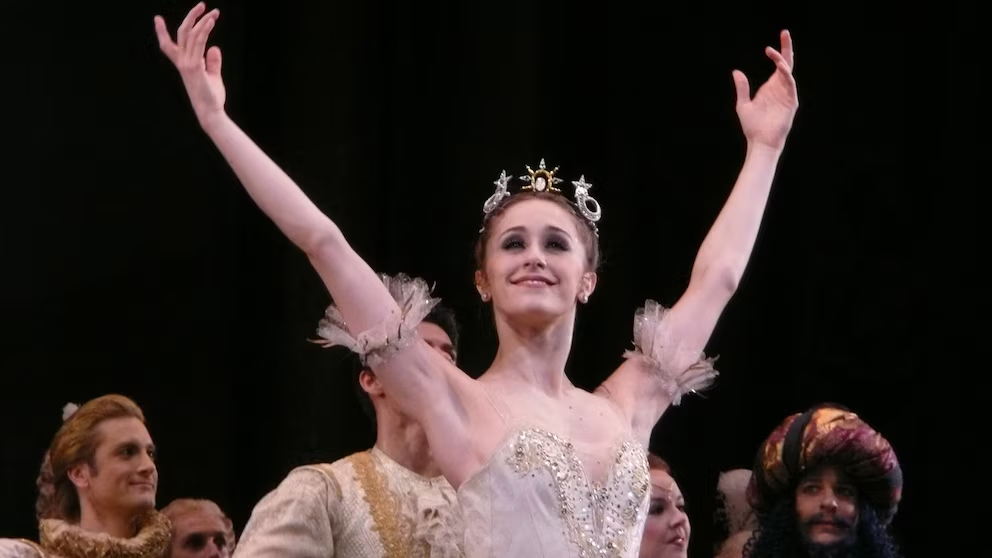
A classic survives by being re-claimed.
Buenos Aires, March 2026
When the Ballet Estable of the Teatro Colón stages Swan Lake, it is not simply programming a repertory pillar. It is testing whether a city’s cultural institution can still generate the kind of collective attention that modern entertainment ecosystems routinely fragment. The decision to place Marianela Núñez as the central attraction makes that test more explicit. Núñez is not only a celebrated Argentine dancer with global stature. She is also a living bridge between local cultural identity and the international prestige circuit that validates it. In that sense, this production functions as more than a ballet run. It reads like a cultural reset: the Colón asserting its authority through one of the most recognizable works in the canon, anchored by a star whose presence carries both technical expectation and emotional symbolism.
Swan Lake is often described as inevitable, yet its inevitability is precisely why it matters. Institutions return to it when they want certainty of meaning: a story and a score that audiences already recognize as “major,” and choreography that allows a company to display its collective strength without depending on novelty. But inevitability can also become a trap if the production feels like museum routine. The Colón’s strategy, as described in current cultural coverage, is to avoid that trap by making the event feel like an occasion, not a repetition. Núñez’s participation does that instantly. Star dancers do not only raise performance level. They recalibrate audience attention. People come not only to see the ballet. They come to see her inside the ballet, and that distinction changes the atmosphere.
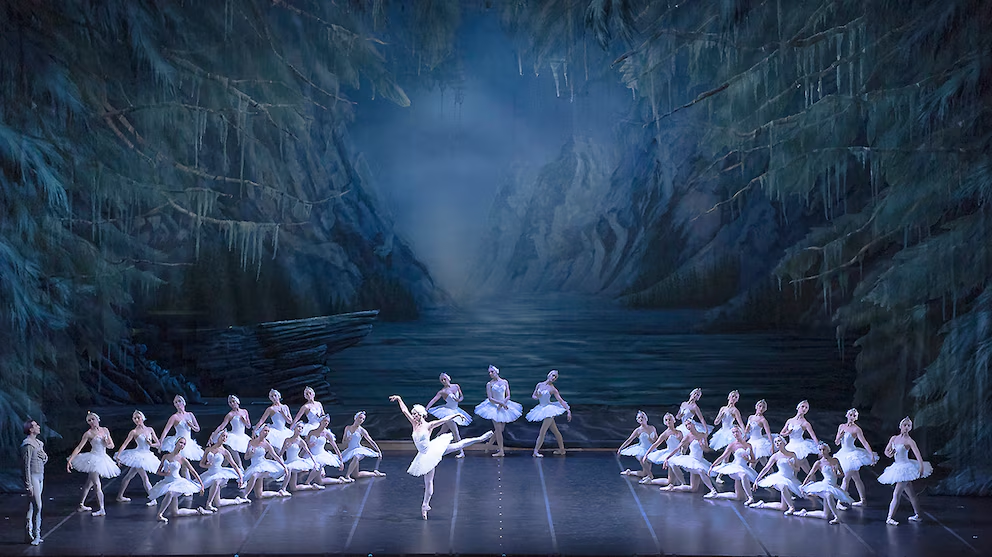
The Teatro Colón’s Ballet Estable also enters this production with institutional stakes. Swan Lake demands more than principal brilliance. It demands an entire system: corps de ballet discipline, synchronized musicality, consistency across long scenes, and a company-level understanding of style that cannot be improvised. In practical terms, the White Acts are not won by soloists alone. They are won by the collective ability to create an illusion of one organism moving as many bodies. This is where flagship repertory reveals the truth of a company’s culture. If the corps is strong, Swan Lake becomes transcendent. If it is uneven, the work exposes gaps brutally.
Núñez’s presence intensifies that exposure in a productive way. A principal of her stature raises the performance ceiling, but she also raises the contrast sensitivity of the room. Everything around her is seen more clearly. That can be demanding for partners and for the ensemble, yet it can also sharpen the entire production because the company tends to tighten when it knows it is sharing the stage with a dancer who is both technically authoritative and internationally recognized. The star becomes a tuning fork. The question becomes whether the company resonates or drifts.
There is also a broader cultural dimension that makes this run significant. In Buenos Aires, the Colón is not simply a venue. It is a symbol of cultural continuity, and continuity is under pressure in many societies where public institutions compete with global streaming, economic stress, and changing patterns of consumption. A large-scale classical production with a major returning figure like Núñez functions as a reminder that some forms of culture still rely on physical presence. You cannot “catch up later” on a live performance in the same way you binge a series. The event exists in time, and that temporality is part of its power. It turns attendance into participation rather than consumption.
Swan Lake also carries a specific symbolic charge because it sits at the intersection of beauty and discipline, fragility and strength, romance and control. Those tensions mirror the reality of ballet itself: the appearance of effortless grace built on hard physical labor. In 2026, when cultural conversations often revolve around authenticity and the hidden costs behind spectacle, Swan Lake can still function as a mirror. It shows how much is required to make elegance appear inevitable. Núñez, known for her musical intelligence and emotional clarity, is a compelling focal point for that mirror, because her artistry tends to make technique feel like meaning rather than display.
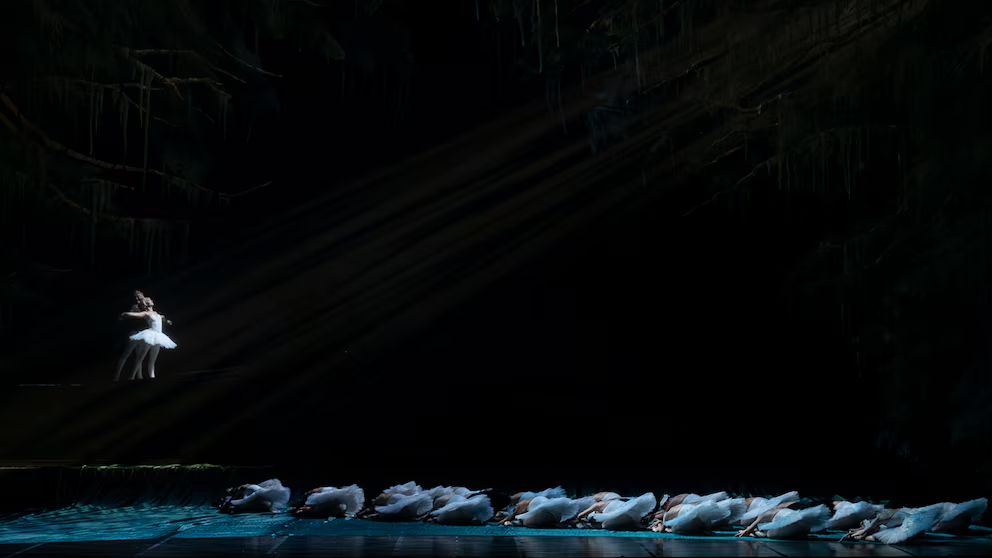
The production’s audience impact is likely to be amplified by the return narrative itself. A dancer with a global career coming back to perform in a national institution is inevitably read as a gesture of belonging. It can be interpreted as gratitude, homecoming, or cultural loyalty. Institutions understand the value of that interpretation, and they often build programming around it because it strengthens civic attachment. Yet the strongest version of this narrative avoids sentimentality and insists on the real substance: performance quality. The Colón is not only celebrating Núñez. It is asking her to anchor a demanding classic and, by doing so, to help reassert the theater’s international standard in front of its own public.
What changes on the wider board is not the ballet canon, but the energy around it. Swan Lake is a work that can feel over-familiar in a global circuit saturated with it. In Buenos Aires with Núñez at the center, it becomes something else: a statement that the classic is still capable of generating collective focus, and that the Colón can still function as a prestige engine rather than a nostalgic museum. When those two conditions hold, the result is not simply a good run of performances. It is a reminder that cultural institutions remain powerful when they treat tradition as a living instrument, not as inherited furniture.
Phoenix24: journalism without borders. / Phoenix24: periodismo sin fronteras.