

 Phoenix 24
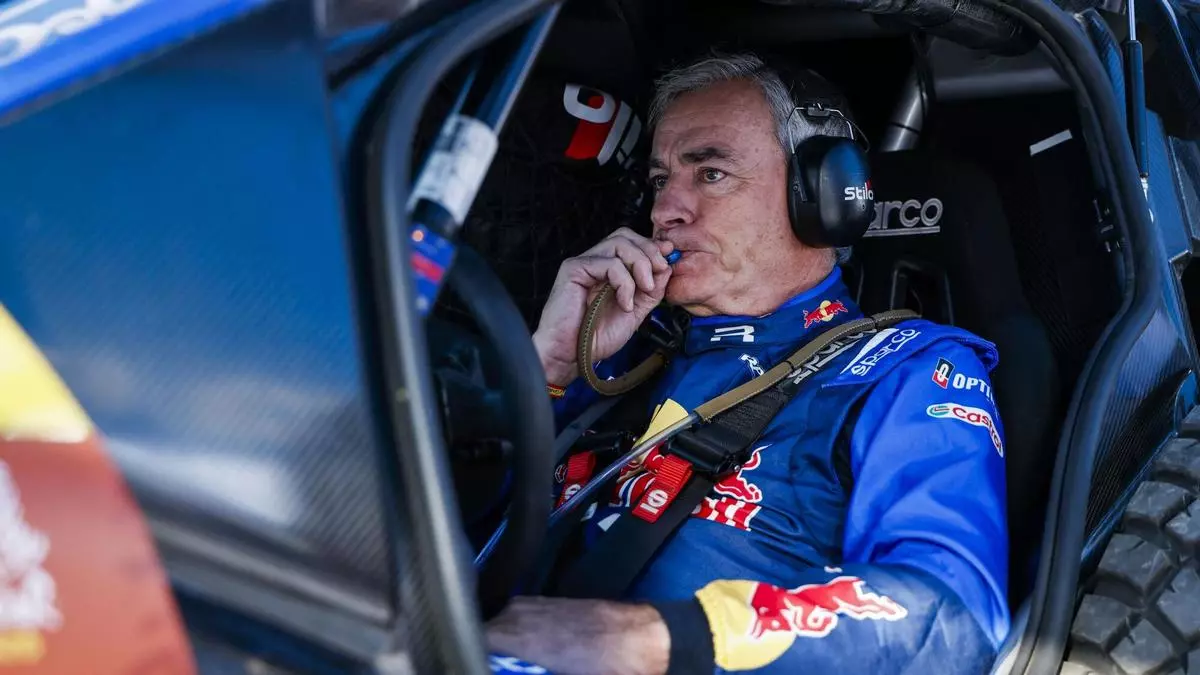
Preparation starts long before the desert.
Madrid, March 2026
Carlos Sainz is not announcing retirement. He is doing something more disruptive for the rally raid field: rebuilding his competitive route toward another Dakar with a new co driver and a renewed Ford platform commitment. The latest reporting around the Rally of Portugal, the next round of the World Rally Raid Championship, points to Sainz returning with Dani Oliveras in the right seat of the Ford Raptor, a move that confirms continuity at the highest level while also opening a new tactical phase in his campaign. In a discipline where rhythm, trust and navigation chemistry decide outcomes as much as raw speed, this is not a minor personnel change. It is the start of a new operational pairing.
The significance of the move becomes clearer when placed against the recent separation between Sainz and Lucas Cruz after a long and highly successful partnership. That split could have been read as a closing signal, especially given Sainz’s age, status and four Dakar victories. Instead, the sequence now suggests the opposite. The separation was not a retreat from elite competition, but a reconfiguration of the project around a new cockpit dynamic while preserving the central objective: returning to Dakar with a machine and team structure capable of winning. In competitive terms, that changes how rivals interpret Ford’s lineup and how they assess the depth of Sainz’s intent.
Ford’s role here is more than symbolic backing. The decision to continue with two Raptors in Portugal, including one for Sainz and another for Mattias Ekstrom, indicates that the manufacturer is maintaining a serious world championship rhythm rather than treating Dakar as a standalone media event. That matters because rally raid success is increasingly built through iterative development under race conditions, not only through pre event testing. Every round becomes a data gathering environment for reliability, setup tuning, navigation workflow and crew adaptation. For Sainz, Portugal is therefore both competition and laboratory, which is exactly the kind of environment a veteran champion uses to convert experience into marginal advantage.
The Oliveras addition adds a second layer of interest. He arrives with his own trajectory, including experience in raids and a background that gives him practical versatility, but his challenge now is different in scale and visibility. Co driving for Sainz is not only about reading notes and managing navigation. It is about integrating into a decision cycle shaped by one of the most demanding and detail driven competitors in motorsport. The transition can create immediate gains if chemistry forms quickly, but it can also expose timing gaps under pressure. That is why this pairing will be watched less for headline pace in one stage and more for how cleanly they build procedural trust over consecutive race days.
This development also reshapes the competitive map around Ford’s broader Dakar planning. Reporting around the team environment suggests that Sainz’s continuity influences market movement among other elite names who could have entered the Ford conversation if a top seat had opened. In practical terms, keeping Sainz active stabilizes one side of Ford’s program while narrowing options elsewhere in the driver market. That kind of effect is common in top tier motorsport but especially visible in rally raid, where proven winners are scarce and manufacturer projects are built around a small number of highly strategic pairings. One veteran’s decision to continue can alter multiple trajectories at once.
There is a deeper sporting pattern here as well. Sainz’s case challenges a simplistic narrative about longevity in high risk endurance disciplines. His continued presence is not only the result of reputation or past achievements. It reflects a model of elite aging built on adaptation, technical feedback quality and selective project alignment. In other words, he remains relevant because he still contributes to vehicle development, race execution and team credibility in ways that go beyond stage times. That is a competitive asset for Ford, and it explains why continuity with him remains strategically rational even as the field evolves.
For the World Rally Raid Championship, the Portugal round now carries more weight than a standard early season checkpoint. It becomes the first public test of a new Sainz Oliveras pairing under real competitive stress, with implications for Dakar preparation, Ford development and rival planning. Observers will look at results, but the more important signals may come from consistency, communication and adaptation speed. In rally raid, winning narratives are often built months before the desert start line, through races that look transitional until they suddenly explain everything.
What Sainz has done, then, is reopen the timeline. Instead of allowing speculation about an ending to define his next chapter, he has turned the conversation back toward preparation, partnership and unfinished business. That alone changes the psychology of the field. In a category where experience can still defeat momentum, a champion choosing reconfiguration over farewell is not a nostalgic story. It is a warning that the next Dakar may begin with a familiar name, but not with a familiar formula.
Hechos que no se doblan. / Facts that do not bend.