

 Phoenix 24
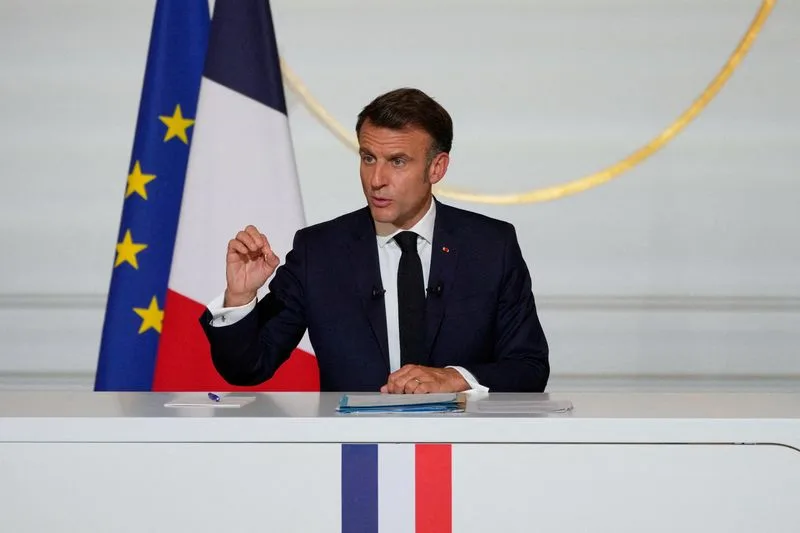
Deterrence is becoming a language of alliance anxiety.
Paris, February 2026.
Emmanuel Macron’s move to publicly outline France’s nuclear deterrence doctrine from the submarine base at Île Longue is not just a defense speech. It is a strategic signal aimed at a Europe increasingly uncertain about the durability of the American nuclear umbrella under Donald Trump. Euronews reported that the Élysée framed the upcoming address as a major moment of Macron’s presidency and hinted at meaningful doctrinal developments, while insisting that any French nuclear offer would not compete with NATO. That framing matters because it suggests Paris is trying to expand reassurance without formally rewriting the alliance architecture.
What is changing is not France’s status as a nuclear power, which has long been established, but the political function of how that deterrent is communicated. France is now the only nuclear armed member of the European Union, and Macron’s speech arrives at a moment when several European governments are openly reassessing hard security assumptions that once seemed stable. Associated Press reporting emphasizes that anxiety over Russia’s war posture and doubts about U.S. reliability have pushed France’s force de frappe back into the center of continental strategic debate. In that environment, doctrine becomes more than military theory. It becomes a tool for alliance management, psychological reassurance, and geopolitical positioning.
The choice of location reinforces the message. Île Longue is not a symbolic conference venue but the operational core of France’s sea based nuclear deterrent, hosting the country’s nuclear armed submarines. Delivering a doctrine speech there projects continuity, credibility, and readiness at the same time. It also allows Macron to speak simultaneously to allies and adversaries: to allies, by signaling that France is willing to think in European terms; to adversaries, by reminding them that France’s deterrent remains anchored in survivable second strike capability rather than rhetorical theater. The setting therefore does part of the strategic work before a single policy line is formally announced.
Still, this is a narrow corridor to navigate. French officials have been careful to stress that any evolution in doctrine is not intended to replace NATO, and that caution reflects a real structural constraint. If Paris pushes too far rhetorically, some allies may interpret it as an attempt to build a parallel deterrence framework. If it says too little, the speech risks looking like symbolism at a time when European capitals want concrete reassurance. Macron’s challenge is to enlarge the perceived protective value of French deterrence without triggering institutional friction inside the alliance or creating false expectations among partners that France has not operationally committed to meet.
A deeper issue sits underneath the immediate headlines. Europe is confronting a strategic credibility gap, not only a weapons gap. The question many governments are now testing is whether deterrence in Europe can remain politically coherent if the continent no longer assumes automatic American constancy at the highest level of nuclear signaling. Macron’s intervention enters precisely that vacuum. It does not solve it, because no single national speech can settle alliance doctrine, force integration, burden sharing, or escalation control across multiple capitals. But it can shape the terms of the debate by making French deterrence more legible to partners who increasingly want to know what, exactly, France is willing to imply when it speaks about European security.
There is also a timing factor that gives this speech extra weight. The broader European security conversation is already under pressure from simultaneous shocks, including Russia’s ongoing war against Ukraine, intensified military signaling in northern Europe, and recurrent disinformation around nuclear themes. Euronews has recently tracked false or unsupported narratives involving alleged nuclear transfers and strategic manipulation in the European theater, which means Macron is speaking in an environment where deterrence doctrine is not only a military topic but also an information warfare target. That raises the cost of ambiguity: too much opacity invites distortion, while too much specificity can narrow strategic flexibility.
For European audiences, the speech is likely to be read through different national lenses. Frontline and northern states may look for evidence that France is ready to project stronger strategic guarantees on behalf of the continent. More cautious governments may prioritize reassurance that Paris is not improvising a destabilizing doctrine shift. Meanwhile, defense analysts will watch for smaller but consequential signals in language, especially around vital interests, strategic solidarity, and the relationship between national sovereignty and European protection. In deterrence politics, wording itself can alter expectations, and altered expectations can affect alliance behavior long before force posture changes on paper.
The broader pattern is clear. Europe is entering a phase in which strategic autonomy is no longer discussed only in industrial, trade, or regulatory terms. It is being tested at the highest level of coercive credibility, where nuclear doctrine, alliance trust, and political leadership intersect. Macron’s initiative reflects that shift. Whether it becomes a durable turning point will depend less on the speech’s headline phrases than on what follows: how allies interpret it, how France operationalizes any implied commitments, and how NATO absorbs the message without fragmentation. For now, the significance of the moment lies in this: France is not simply defending its deterrent doctrine, it is repositioning it inside a continental crisis of confidence.
Phoenix24: clarity in the grey zone. / Phoenix24: clarity in the grey zone.