

 Phoenix 24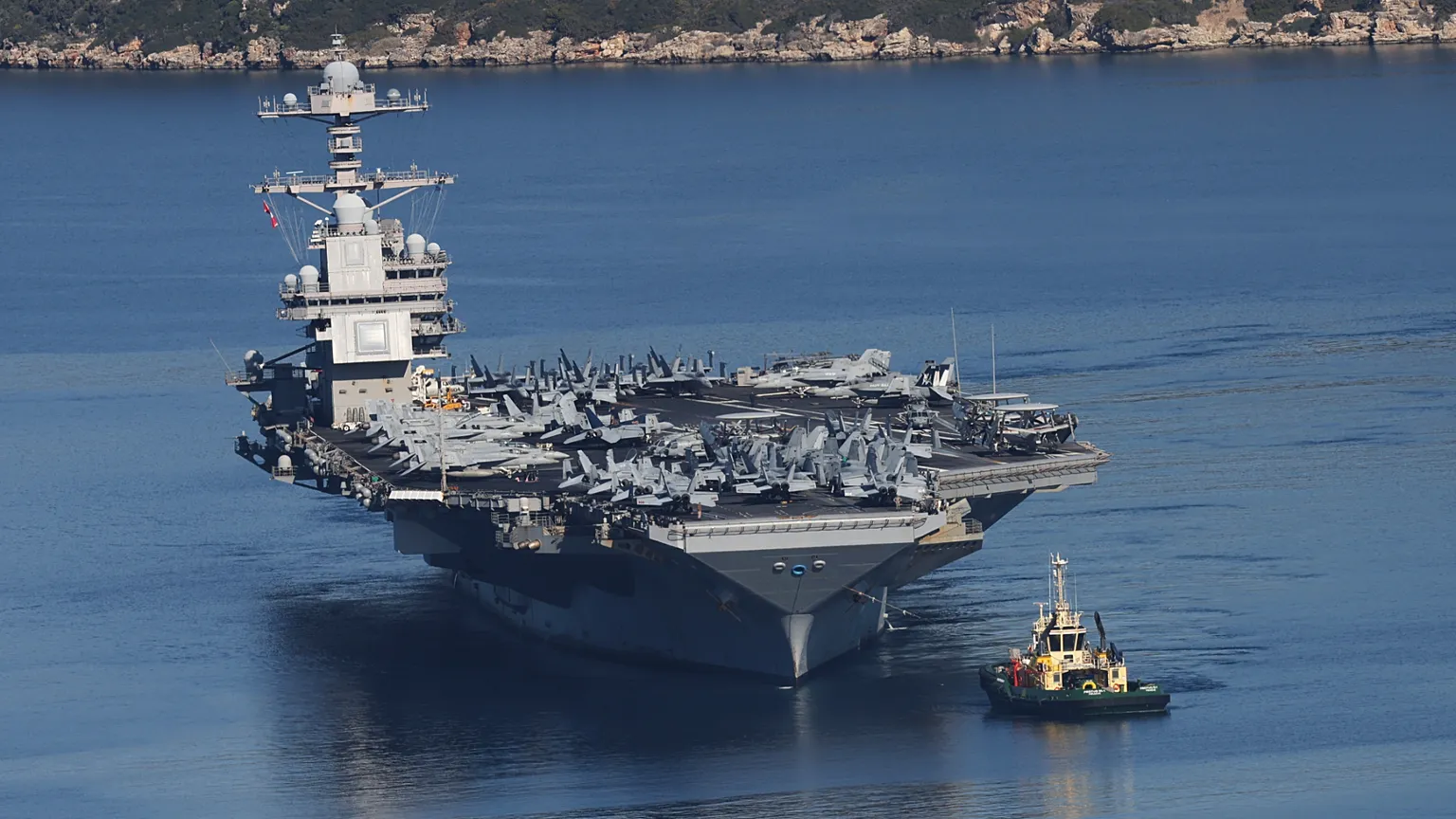
Warships now speak before negotiators do.
Souda Bay, February 2026
The departure of the USS Gerald R. Ford from Crete toward the eastern Mediterranean, with an expected stop near Israel, is not just a routine naval movement. It is a strategic signal timed to coincide with a volatile diplomatic window around Iran. In periods of high tension, carrier deployments are designed to do more than move aircraft and personnel. They shape perceptions, alter calculations, and communicate political intent before any formal statement is issued. That is why this sailing matters far beyond the optics of a flagship leaving port.
At the surface level, Washington can frame the move as deterrence, contingency positioning, and reassurance for allies in a region where escalation risks remain high. Yet the deeper function is coercive diplomacy. The message is calibrated rather than improvised: negotiations may continue, but military options remain visible, mobile, and close enough to influence the psychology of all actors involved. In this kind of signaling environment, geography becomes language. Crete is not only a logistical waypoint. It is a staging zone between alliance infrastructure and a conflict theater where every deployment is read for intent.
The Ford’s movement also reflects a broader pattern in contemporary crisis management. States increasingly run diplomacy and force posture in parallel, not sequentially. Talks are opened, but deterrent assets are surged. Public messaging stresses de escalation, while military positioning quietly expands. This dual track strategy is meant to strengthen bargaining leverage, but it also carries a built in contradiction. The same deployment that reassures allies can be interpreted by adversaries as preparation for action, which narrows trust and raises the risk of misreading tactical maneuvers as strategic decisions.
That risk is especially acute in the current Iran centered environment, where military signaling, nuclear diplomacy, and regional alliances are tightly interwoven. A carrier group moving toward Israel while negotiations continue sends a layered message to multiple audiences at once. To Tehran, it signals capacity and readiness. To Israel, it signals commitment and operational proximity. To Gulf partners and European allies, it signals that Washington is managing escalation through visible force projection rather than distant rhetoric. The challenge is that each audience interprets the same movement through a different threat model, and those interpretations can diverge quickly under stress.
For Israel, the symbolism is immediate. A U.S. carrier approaching the region reinforces a familiar strategic architecture in which American naval power functions as both shield and warning. But this is not only about alliance reassurance. It is also about deterrence choreography. The closer a high value naval asset moves to a contested zone, the more it becomes part of the political theater of crisis management. Presence itself becomes policy. That can stabilize a moment if all actors read the signal as restraint backed by strength. It can destabilize it if one actor reads proximity as countdown rather than caution.
There is also an operational reality beneath the symbolism. Aircraft carriers are floating ecosystems of command, surveillance, strike capacity, and coordination. Their deployment changes the regional security equation even before a single aircraft is launched. It affects intelligence flows, air defense calculations, and contingency planning across allied militaries. In other words, the Ford is not simply moving through the Mediterranean. It is shifting the decision environment for everyone watching, including actors who may never be named in official briefings but are central to the regional balance.
From a European perspective, the Crete departure underscores the strategic importance of Mediterranean nodes that often appear in headlines only as transit points. Bases and ports in southern Europe are increasingly functioning as pressure valves in crises that connect NATO infrastructure, Middle Eastern security, and global energy routes. This is one reason naval movements in the eastern Mediterranean now carry more geopolitical weight than in earlier phases of post Cold War stability. They sit at the intersection of alliance logistics, deterrence signaling, and diplomatic brinkmanship.
What happens next depends less on the ship itself than on the political choreography surrounding it. If negotiations with Iran gain traction, the deployment can be recoded as prudent leverage that helped sustain deterrence while diplomacy advanced. If talks fail or regional actors escalate, the same movement will be reinterpreted as part of a pre crisis military buildup. That is the nature of strategic signaling in high tension theaters. Meaning is not fixed at departure. It is assigned by outcomes.
The Ford’s eastward movement, then, is best understood as a test of strategic ambiguity under pressure. Washington is trying to preserve freedom of action while maintaining diplomatic space, and that requires a careful balance between visibility and provocation. Carrier diplomacy has always depended on that balance. In this case, the stakes are higher because the region is already saturated with mistrust, competing narratives, and thin margins for error. A warship can project strength, but it cannot control interpretation. In moments like this, interpretation is often where escalation begins.
Phoenix24: clarity in the grey zone. / Phoenix24: clarity in the grey zone.