

 Phoenix 24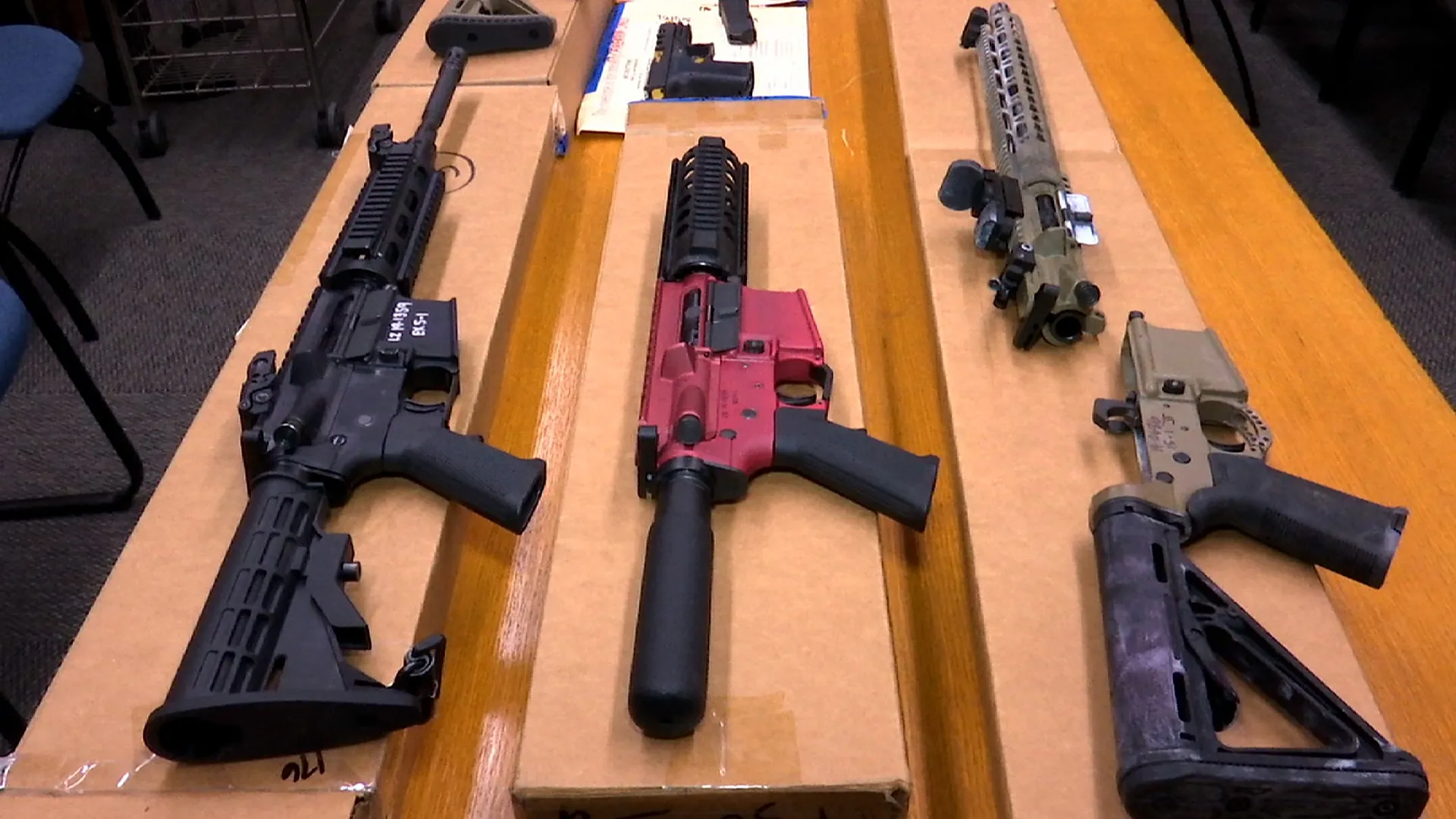
Loopholes travel faster than legislation.
Brussels, February 2026
The European Commission is moving to narrow one of the most exploitable gaps in the Union’s internal security architecture: the uneven criminal treatment of illicit firearms offences across member states. The new proposal seeks to harmonize how key gun related crimes are defined and punished, including offences tied to trafficking, illegal possession, manufacturing, and the circulation of blueprints for 3D printed weapons. At first glance, this looks like a technical legal update. In reality, it is a strategic response to a changing threat environment in which organized crime, wartime spillover, and digital fabrication are converging faster than national criminal codes can adapt.
What Brussels is trying to do is not create a single EU criminal code, which remains politically and legally unrealistic, but impose a common floor for penalties and legal definitions in areas where fragmentation creates operational blind spots. Under the proposal, the possession, manufacture, and trafficking of illicit firearms would face prison terms that are more closely aligned across the bloc, while offences linked to 3D printed firearm blueprints would also enter a clearer punitive framework. The logic is straightforward: criminal networks do not respect borders, but legal asymmetries often reward them. If one jurisdiction treats a conduct as minor or vaguely defined while another treats it as a serious offence, enforcement cooperation becomes slower, prosecutions become weaker, and deterrence becomes inconsistent.
The timing is not accidental. European institutions have been warning that the security fallout of regional conflicts, illicit trafficking routes, and technological diffusion could produce a fresh wave of illegal weapons circulation inside the Union. The Commission has pointed to hundreds of thousands of firearms that are lost or stolen across Europe, as well as the annual death toll linked to firearms violence, to justify the urgency of the directive. Those figures are not just a public safety argument. They are also a policy signal that Brussels wants to reposition firearms crime as a cross border governance problem, not merely a domestic policing issue delegated to national capitals.
The inclusion of 3D printed weapons and digital blueprints is especially significant because it marks a shift in how European law is beginning to conceptualize weaponization in the digital age. A generation ago, gun control policy focused mainly on physical weapons, ammunition chains, and border seizures. Today, the threat landscape includes downloadable designs, modular parts, and decentralized production capacities that can bypass traditional procurement channels. By targeting the creation, acquisition, possession, or dissemination of firearm blueprints, the EU is effectively acknowledging that code and files can function as force multipliers in illicit arms ecosystems. That move is legally delicate, because it intersects with questions of evidence, intent, and proportionality, but strategically it reflects a broader trend: security law is moving upstream, toward enabling tools rather than only finished weapons.
Still, harmonization will not eliminate the structural tension at the heart of EU criminal policy. Member states remain highly protective of their legal traditions, sentencing cultures, and prosecutorial discretion. For some governments, a common sentencing floor will be welcomed as overdue modernization. For others, it may appear as another increment of Brussels driven intrusion into sovereign criminal justice systems. That political friction is likely to shape negotiations, especially around how offences are defined, what aggravating circumstances are recognized, and how digital dissemination is interpreted in court. The proposal may be framed as common sense security coordination, but its passage will depend on whether member states perceive the directive as a practical shield against organized crime or a precedent for broader centralization.
There is also a geopolitical layer that gives this initiative more weight than a standard law and order reform. Europe is operating in a period of elevated strategic anxiety, with war on the continent’s edge, black market disruptions, and growing concern over hybrid threats. In that environment, firearms trafficking is no longer discussed only in relation to gang violence or criminal profit. It is increasingly tied to resilience, border governance, and internal stability. The Commission’s effort to standardize penalties reflects that shift in mindset. It suggests that illicit weapons are now being treated as part of the Union’s broader security metabolism, where legal incoherence is itself a vulnerability.
For law enforcement cooperation, the practical impact could be substantial if the directive survives political negotiation with meaningful scope intact. More aligned legal definitions can improve mutual legal assistance, evidence sharing, extradition coordination, and joint investigations, particularly in cases that move through multiple jurisdictions. That does not guarantee cleaner prosecutions or immediate deterrence, but it reduces one of the classic problems in cross border crime fighting: the fragmentation of legal language. Criminal groups thrive when states describe the same conduct differently. Brussels is trying to shrink that advantage.
The deeper issue, however, is not only about guns. It is about whether the European Union can still build common legal responses at the speed required by technological and criminal adaptation. This proposal is a test of that capacity. If Europe can align on penalties for illicit firearms and 3D weapon related offences, it will signal that the bloc remains capable of strategic legal coordination under pressure. If the effort is diluted into symbolic language and uneven implementation, the message will be equally clear to criminal networks. In security policy, ambiguity is not neutral. It becomes usable space.
Phoenix24: clarity in the grey zone. / Phoenix24: clarity in the grey zone.