

 Phoenix 24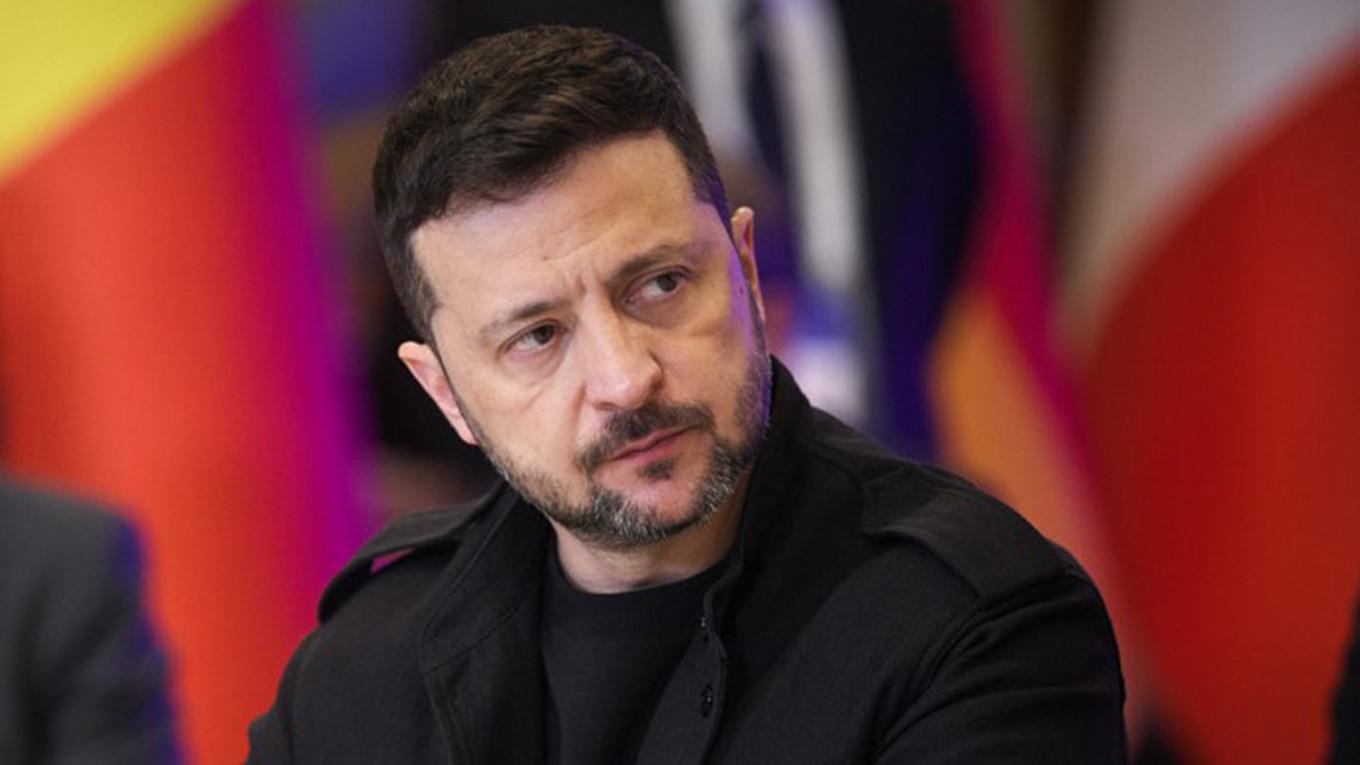
Resistance is no longer a slogan, it is state maintenance.
Kyiv, February 2026.
Volodymyr Zelensky’s message on the fourth anniversary of Russia’s full-scale invasion was simple and politically precise: Putin has not won. Euronews framed it as a sovereignty statement under pressure, and that framing matters because the speech was not only aimed at Ukrainians. It was also directed at European governments, Washington, and any audience tempted to confuse prolonged war with Russian success. The statement rejects a narrative that has grown louder in recent months, that duration itself is proof of victory.
The immediate context makes the line more than symbolic. Ukraine enters its fifth year of full-scale war under continued Russian military pressure while depending on external financing, weapons deliveries, and energy support to keep the state functioning. Euronews notes that this anniversary comes with EU backing but also with political mediation pressures linked to Donald Trump, which adds a second battlefield to the military one: the negotiation arena. In that setting, saying “Putin has not won” is also a way of narrowing the diplomatic frame before others define it as inevitability.
Zelensky’s statement also lands on a day when European leaders visibly rallied in Kyiv and tied their presence to material commitments, including the contested €90 billion EU loan package that Ursula von der Leyen said would go ahead “one way or another.” That pairing of rhetoric and financing is central. Ukrainian morale messaging without budget support is fragile. Budget support without political clarity invites fatalism. Together, they form a signal that Europe is trying to project continuity even while internal veto politics, especially from Hungary, continue to test the bloc’s cohesion.
The deeper strategic point in Zelensky’s wording is that war outcomes are not measured only by territorial control at a given moment. They are measured by whether the attacked state remains sovereign in decision-making, governance, and identity. Russia has inflicted immense destruction and still exerts military pressure, but Ukraine continues to function as a state, maintain international alliances, and shape the political narrative of the war. Zelensky’s line therefore redefines “winning” away from short-term battlefield maps and toward political endurance. That is a deliberate move because endurance is the category where Ukraine can still claim agency in front of uncertain allies.
This is also a response to information warfare. In long wars, adversaries often seek to convert exhaustion into legitimacy, pushing the idea that resistance is futile and that compromise is simply realism. Zelensky’s anniversary message rejects that framing before it hardens, especially at a moment when international audiences are more susceptible to “war fatigue” arguments. The line is not that Ukraine is winning cleanly. The line is that Russia has failed to achieve the decisive political collapse it sought.
For Europe, the speech functions as a test of whether support remains strategic or becomes ceremonial. Commemorations are easy. Sustained funding, air defense support, energy stabilization, and political unity are harder, especially when domestic elections and economic pressures pull attention elsewhere. Zelensky’s formulation places pressure on partners by implication: if Putin has not won, then the outcome is still open, and if the outcome is still open, external support remains consequential rather than symbolic.
For Washington, the message intersects with a more volatile political environment. Euronews references Trump’s mediation role and the broader uncertainty around U.S. positioning, which makes Zelensky’s language partly preventive. He is trying to keep the war framed as resistance to aggression, not as a fatigue-management problem to be solved by pressuring Ukraine into concessions. In practical terms, that means holding the moral and legal baseline while military realities remain difficult.
The anniversary message should therefore be read as strategic narrative maintenance, not just commemorative rhetoric. Zelensky is defending the meaning of the war at a moment when military pressure, internal EU friction, and shifting U.S. signals could all blur it. Saying Putin has not won is not merely defiance. It is a claim about sovereignty, coalition discipline, and the political value of time in a war where both sides are trying to make duration work in their favor.
La narrativa también es poder. / Narrative is power too.