

 Phoenix 24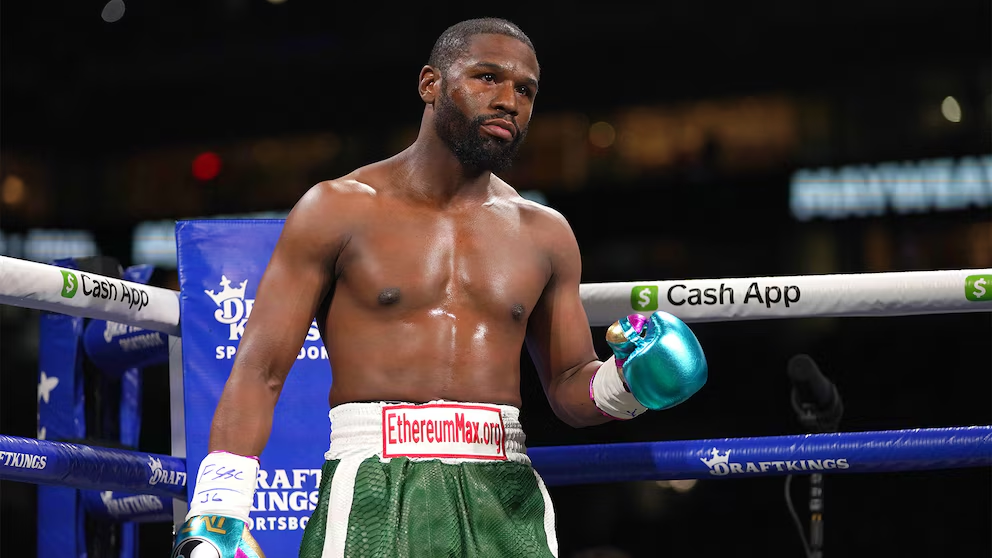
A comeback is also a business signal.
Las Vegas, February 2026.
Floyd Mayweather Jr. has announced a two-step return that blends spectacle with a promise of competitive intent: first an exhibition against Mike Tyson, then a comeback to professional boxing later in 2026. The sequence is not accidental, it is a way to warm the market before asking it to pay again for a sanctioned bout. Reuters framed the plan as an official unretirement and noted that the professional opponent has not yet been named, which is a crucial detail because uncertainty is often the only honest part of a comeback narrative. Infobae, echoing the same announcement, presented it as a double reveal designed to surprise and to dominate the conversation cycle.
The exhibition is where the symbolism concentrates. Multiple outlets have reported that the matchup is being discussed for late April in the Democratic Republic of the Congo, a location choice that carries deliberate historical resonance because it invites comparisons with the most mythologized chapters of heavyweight boxing. Other reporting has cautioned that details are still in flux, including venue confirmation, which matters because exhibition events are often negotiated as much with local governments and broadcasters as with athletic commissions. The uncertainty does not weaken the signal, it strengthens it: the event is being sold as scale and spectacle first, sport second. In this format, the story is less about who wins and more about whether the world watches.
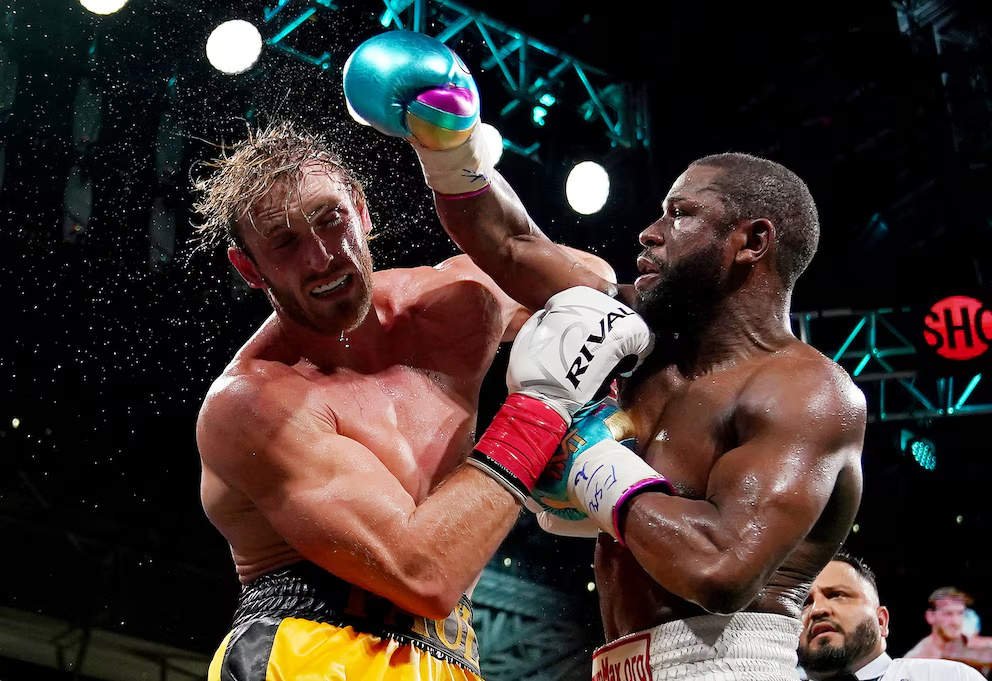
The professional return is the sharper blade. Mayweather retired from official competition in 2017 after reaching 50-0, with his last sanctioned bout coming against Conor McGregor in a crossover event that functioned as a revenue benchmark for an era. Since then, he has stayed visible through exhibitions that protected his record while keeping him monetizable. That distinction matters because it explains why a return to professional boxing is a reputational escalation, it invites risk to the record, scrutiny of form, and the possibility of a loss that no exhibition can fully contain. A perfect record is not only a sporting statistic, it is a pricing mechanism.
The business infrastructure behind the announcement is unusually explicit. Reports tie the plan to a promotional arrangement with CSI Sports and Fight Sports, suggesting an effort to formalize a global events pipeline rather than operate through one-off deals. In practical terms, this looks like a reconfiguration of distribution and marketing control, the same logic that has driven major combat sports figures to build or attach themselves to promotional machinery. It also signals that Mayweather is still trading on the same asset he always had: the ability to convert controversy and attention into gate revenue and broadcast leverage. The claim he can “break records” again is less a prediction than an attempt to set the negotiating baseline.
Tyson’s presence performs a specific function in that baseline. An exhibition with Tyson does not need a belt to feel historic, and it does not need competitive parity to feel dangerous to casual audiences. The size and age narrative, the mythology of Tyson’s persona, and the built-in generational contrast create a storyline that sells even to people who do not follow boxing week to week. For Mayweather, it is a controlled way to generate global headlines without immediately stepping into the unforgiving logic of sanctioned rankings. For promoters, it is the cleanest bridge between the exhibition economy and a professional comeback that would otherwise feel abrupt.
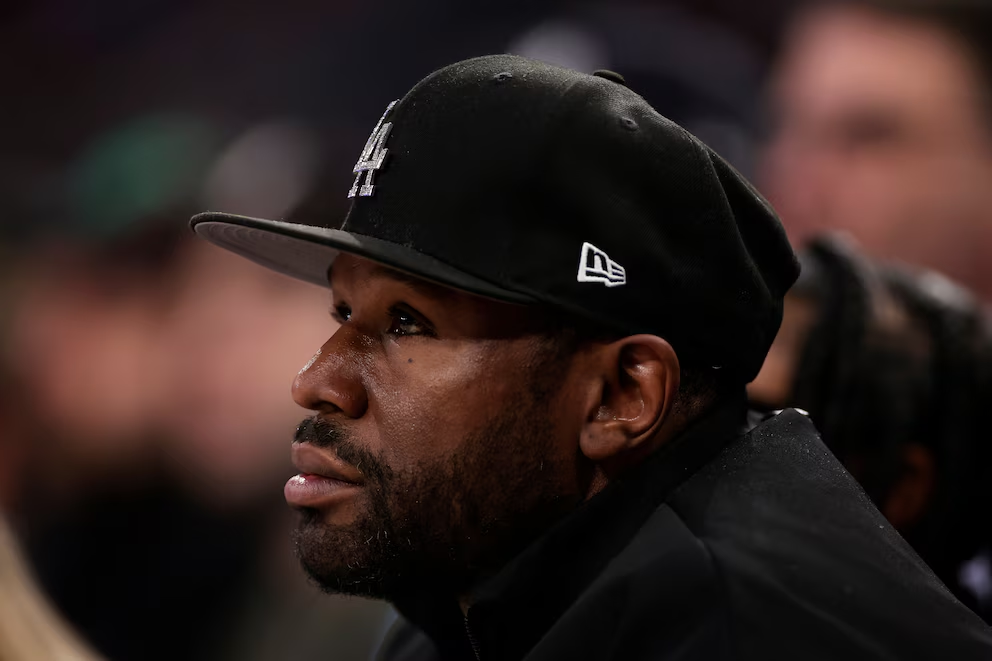
The deeper pattern is how boxing has been reorganized around attention rather than titles. Exhibitions and crossover fights have taught audiences to pay for an event even when sporting stakes are blurred, and they have taught promoters that nostalgia is a renewable resource. That does not mean merit has disappeared, but it means merit is no longer the only engine. When a legend returns, the first product is memory, the second product is the hope of relevance, and the third product is the fear that time will finally win. Mayweather’s announcement is designed to monetize all three stages.
There is also a regulatory and reputational tension embedded in the plan. Exhibitions typically run under customized rules, shorter rounds, heavier gloves, and formats engineered to reduce risk while maintaining drama. That safety framing is necessary, but it can also backfire if audiences feel the event is too scripted or too gentle. A professional return, meanwhile, raises questions about opponent selection, sanctioning alignment, and whether the bout will be meaningfully competitive or carefully curated. This is why the unnamed opponent is not a small omission, it is the lever that will determine whether the return is read as sport or as theater.
Internationally, the reported choice of an African venue for the exhibition hints at a wider competition for mega-events, where governments and investors pursue global visibility through hosted spectacles. The Middle East has used this model for years across multiple sports, and parts of Africa are increasingly testing similar strategies to capture attention and capital. In that context, a Mayweather-Tyson event is not only a fight, it is a branding instrument for a host narrative about modernity, capacity, and global relevance. The risk is obvious: if logistics fail or politics intrude, the spectacle becomes a story about fragility instead of ambition. High visibility is never neutral.
What comes next will be defined by one decision that has not been made public: who Mayweather fights when the bell counts for real. If the opponent is a credible active professional, the comeback becomes a sporting question and the market will price risk accordingly. If the opponent feels manufactured, the comeback becomes an entertainment product and the market will demand a different kind of drama to justify the purchase. Either way, the announcement has already accomplished its first objective, it repositioned Mayweather at the center of boxing’s attention economy before any punch is thrown. In 2026, that is often the hardest fight to win.
Más allá de la noticia, el patrón. / Beyond the news, the pattern.