

 Phoenix 24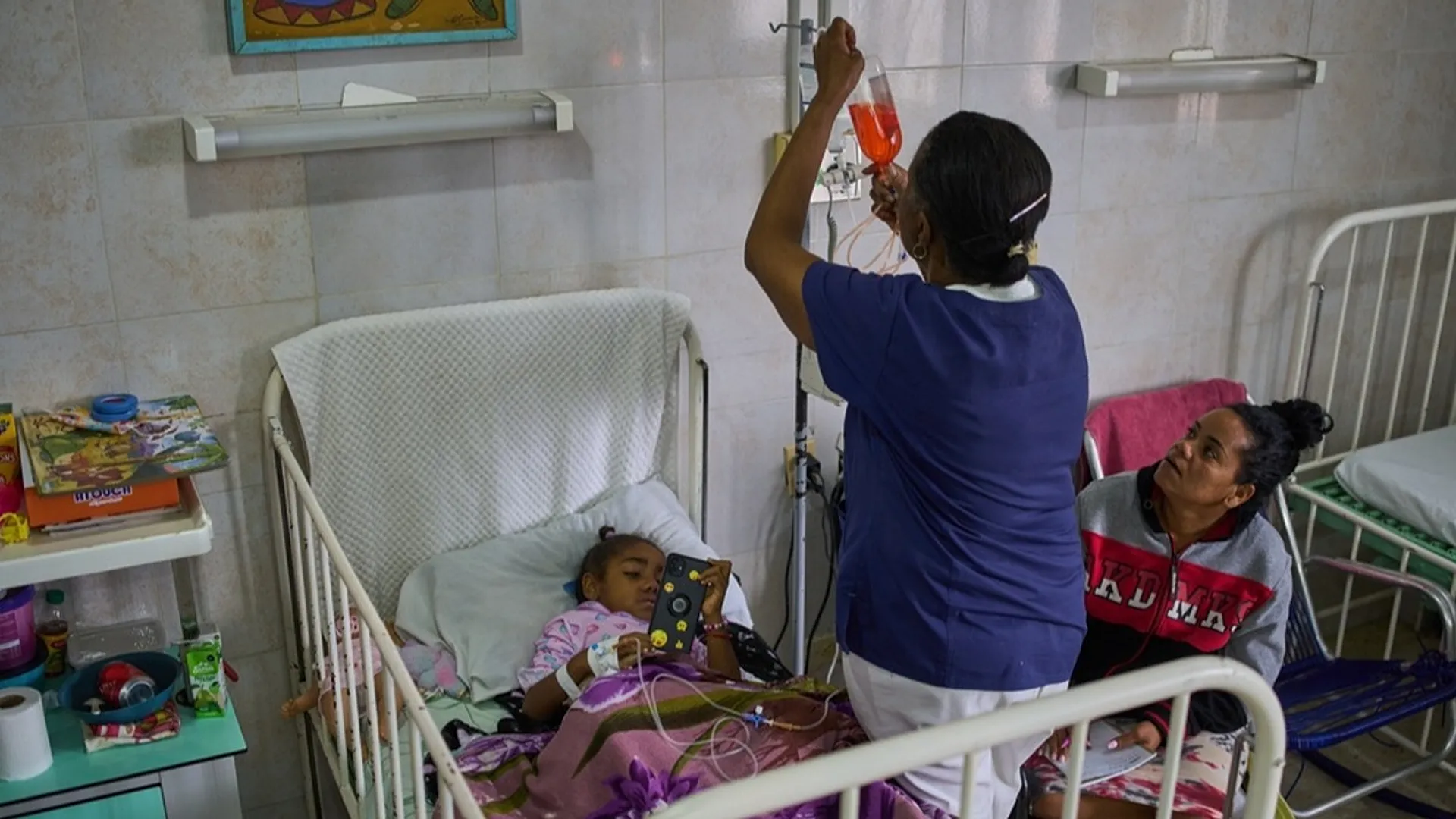
Fuel decides what medicine can even mean.
Havana, February 2026.
Cuba’s public health leadership is describing a crisis that no longer fits the familiar language of “shortages” alone. The claim being pushed internationally is that tighter constraints on energy and fuel flows, tied to United States sanctions enforcement, are now choking hospital operations at the level of daily functionality. When diesel becomes scarce, ambulances stop behaving like emergency infrastructure and start behaving like rationed assets, dispatched only when the system judges a life to be worth the burn. Even basic continuity of care begins to look like an exception rather than a baseline.
The most important detail is that this is an energy problem masquerading as a medical problem. Hospitals can survive a delayed shipment if their cold chain holds, their generators are fed, and staff can reach the facility; when fuel collapses, all three fail together. Electricity instability hits refrigeration for vaccines and temperature-sensitive drugs, transport limits referrals and supplies, and generators become symbolic without reliable input. In that environment, the “availability” of medicine becomes less relevant than the ability to deliver and administer it consistently.
Cuban officials frame the situation as a humanitarian squeeze with explicit political authorship, using language that signals external constraint rather than domestic mismanagement. They argue that the health system is being pushed toward the brink because the country cannot reliably import or move the energy needed to keep modern healthcare running. This framing is designed for multilateral audiences because it turns the debate into one about access and harm, not ideology. It also seeks to reposition the conflict from a bilateral dispute to a global reputational issue.
The counterargument, and the one many observers will raise immediately, is that Cuba’s medical decline has internal drivers that predate any single enforcement cycle. Aging infrastructure, macroeconomic contraction, and the erosion of basic supply chains have been visible for years, and healthcare cannot remain insulated when the broader economy is shrinking. Workforce migration also matters, because training a doctor or a specialized nurse takes far longer than importing a box of supplies. Once staffing capacity thins, even a restored inventory does not automatically restore clinical throughput.
Sanctions complexity adds another layer that is often invisible to the public but decisive in practice. Even when humanitarian transactions are technically permitted under United States rules, banks, shippers, and insurers may refuse involvement to avoid perceived legal and compliance risk. This is de-risking: the system protects itself by declining any transaction that looks complicated, even if it is lawful. The result is a paradox that health administrators experience as reality, permission exists on paper, but throughput disappears in the intermediaries.
Fuel scarcity is the accelerant because it synchronizes failures that might otherwise be staggered. A hospital can improvise around a missing part for a week, but it cannot improvise around unstable electricity and unavailable transport indefinitely. Oncology, dialysis, and cardiology care depend on predictable schedules, clean power, and functioning logistics, not on heroic one-off rescues. When predictability breaks, outcomes worsen quietly, through delays, missed monitoring, and treatment interruptions that do not always produce immediate headlines.
International bodies have already documented how the wider crisis is translating into medication scarcity, equipment degradation, and stressed service delivery. They also note that the health system’s resilience is being tested not only by what cannot be imported, but by what cannot be maintained. Maintenance is the unglamorous center of modern healthcare, and it fails first when spare parts, stable power, and trained technicians are missing. In a prolonged crisis, the system becomes less about standards and more about improvisation, which is where inequality grows.
The political battlefield around Cuba’s embargo dispute provides symbolic reinforcement but limited operational relief. Annual votes at the United Nations tend to isolate Washington diplomatically on the embargo question, yet those resolutions do not move fuel into generators or stabilize hospital inventories. Cuban messaging uses that gap strategically, arguing that moral legitimacy is already established and what is missing is practical change. The United States, meanwhile, defends sanctions as a tool aimed at governance and rights, while insisting that humanitarian channels exist, a distinction that may hold legally but often collapses under logistical friction.
The deeper pattern is that Cuba’s health crisis is being reframed as a systems collapse where energy, finance, logistics, and staffing converge into a single bottleneck. If fuel is the choke point, then every other policy debate becomes secondary because nothing moves, nothing refrigerates, and nothing scales. In that scenario, the most dangerous outcome is not a dramatic one-time failure, but the normalization of permanent emergency medicine as the country’s default mode of care. Once a health system runs on improvisation for too long, the hardest thing to restore is not electricity, it is trust in the idea that care will be there when it is needed.
Contra la propaganda, memoria. / Against propaganda, memory.