

 Phoenix 24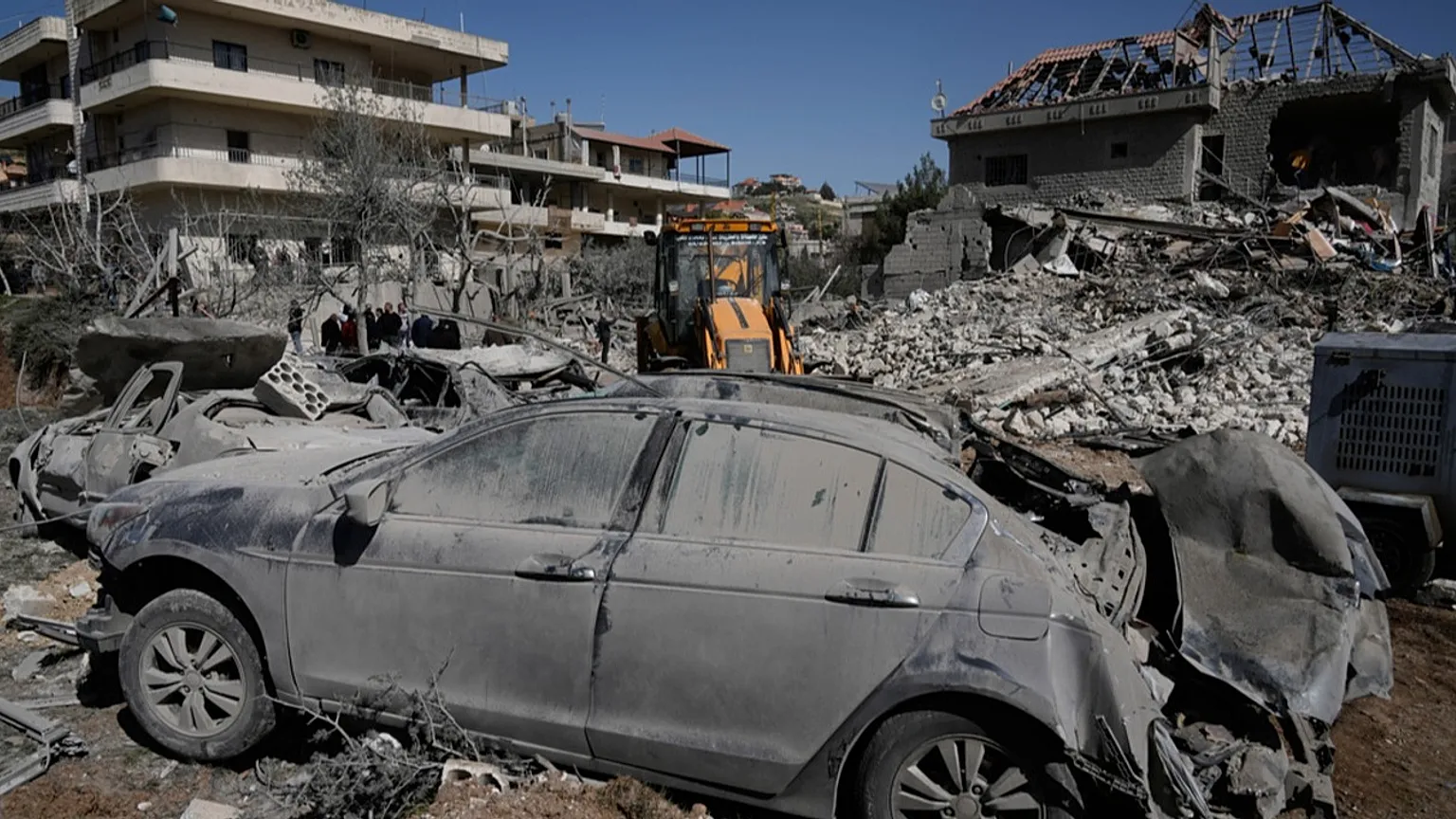
Depth strikes turn Lebanon’s east into front.
Beirut, February 2026.
Hezbollah said Israeli airstrikes in eastern Lebanon killed eight of its members, a figure meant to communicate both damage and resolve. The strikes, reported around the Rayak area and the broader Baalbek zone, push the confrontation away from the usual border corridor and into depth territory. Israel’s military described the targets as Hezbollah personnel tied to missile units and said the operation focused on operatives preparing activity against Israel. The geography is the message: when the Bekaa becomes target space, deterrence is no longer measured only along the Blue Line.
Lebanon’s Health Ministry provided a broader toll that did not separate combatants from civilians, reporting additional fatalities and dozens of injuries from the same wave of strikes. Officials cited children among the wounded and said foreign nationals were also affected, underscoring how quickly a targeted narrative can collide with a societal one. That divergence in counting is not a technical footnote, it is part of the conflict’s political grammar, because each side uses numbers to define legitimacy. Hezbollah stresses losses among its ranks, while state institutions emphasize the cost borne by the public and the erosion of sovereignty.
On the ground, imagery from eastern towns showed heavy damage to residential structures, the kind of impact that turns a strike into a local event even when the stated target is military. The Associated Press reported that three local Hezbollah commanders were among those killed, a detail that suggests the operation aimed at more than anonymous personnel. Reports also described funerals held in nearby communities, which often become the next arena of signaling in Lebanon’s cycle of escalation and restraint. When casualties are domesticated through public mourning, retaliation pressure tends to rise, even if leadership prefers calibrated responses.
Israel’s operational logic is consistent with a campaign that treats missile capability as the critical node, not the border itself. Strikes in the Baalbek area implicitly target the infrastructure that sustains launch capacity, training, and movement, rather than only the points of contact where rockets might be fired. From Israel’s perspective, depth is where supply chains and command layers can be disrupted before they become immediate threats. From Hezbollah’s perspective, depth strikes are framed as proof that Lebanon is being treated as an open arena, not a neighboring state with meaningful boundaries. Those competing frames are built for different audiences: Israeli domestic legitimacy, Hezbollah’s mobilized base, and foreign capitals weighing the language of preemption versus violation.
The timing lands on a regional fault line where multiple pressure tracks are already active, and Lebanon remains structurally exposed. Separate reporting described additional Israeli strikes elsewhere in the country, including an incident connected to a Palestinian camp in the south that Israel linked to Hamas, a claim contested by Palestinian factions. The result is a layered battlefield where Hezbollah, Hamas-linked networks, and Lebanese state institutions all occupy the same map but not the same chain of command. That fragmentation is precisely why escalation in Lebanon tends to be contagious, because retaliatory logic can migrate across actors even when a government wants containment. In practice, Lebanon’s political center can document harm and condemn violations, but it cannot reliably monopolize the armed response.
UNIFIL has repeatedly warned that violations near the Blue Line increase the risk of miscalculation, and it has emphasized obligations to respect the line and protect peacekeepers. Those statements matter because they describe the conflict as a system prone to accidental escalation, not merely deliberate escalation, and accidents are often what break informal rules. Even when a strike is planned, the chain reaction can be triggered by what follows, funerals, localized outrage, small-arms incidents, or a single misread movement. Depth strikes expand the number of communities that feel directly exposed, which increases the probability of uncontrolled responses. In Lebanon, distance from the frontier has never guaranteed immunity, but it has shaped public tolerance, and tolerance is a political resource.
A previous ceasefire brokered by the United States reduced the tempo of cross-border fire, yet it did not end Israel’s strikes against Hezbollah-linked targets, according to international reporting. What emerges is a managed conflict architecture where “calm” means fewer headline days, not an agreed end state. In that architecture, each deep strike functions like a stress test: it checks Hezbollah’s discipline, measures Lebanon’s domestic cohesion, and signals to regional actors that the battlefield can widen. It also increases reputational stakes, because restraint can be portrayed as weakness in a media environment that rewards performative strength. The more the conflict becomes a contest of reach, the harder it is to restore earlier boundaries.
Information warfare runs parallel to the kinetic track, and it is visible in how targets are labeled. Descriptions such as missile operatives preparing attacks are designed to justify urgency and narrow the moral frame, while references to destroyed buildings and civilian injuries widen the frame toward collective harm. Lebanese leaders have condemned the strikes as sovereignty violations, a posture that aims to mobilize international pressure rather than enforce deterrence with force. That reliance is not ideological, it is structural, because Lebanon’s leverage is largely diplomatic and reputational. When the state must appeal outward for restraint, it signals that escalation management is being set by actors who can absorb the next step.
For readers tracking the pattern rather than the headline, the key shift is spatial. Once the east is treated as a permissible strike zone, the conflict’s “front line” becomes a flexible concept that can be redrawn by operational needs and political messaging. That flexibility increases uncertainty for civilians and raises decision costs for Hezbollah, because depth assets that once felt insulated now require protection and redundancy. It also narrows Lebanon’s room to present the conflict as contained, since the impact is distributed across regions and communities. In this environment, the most dangerous variable is less the intent stated in press releases and more the cumulative logic that makes further escalation feel normal.
Lo visible y lo oculto, en contexto. / The visible and the hidden, in context.