

 Phoenix 24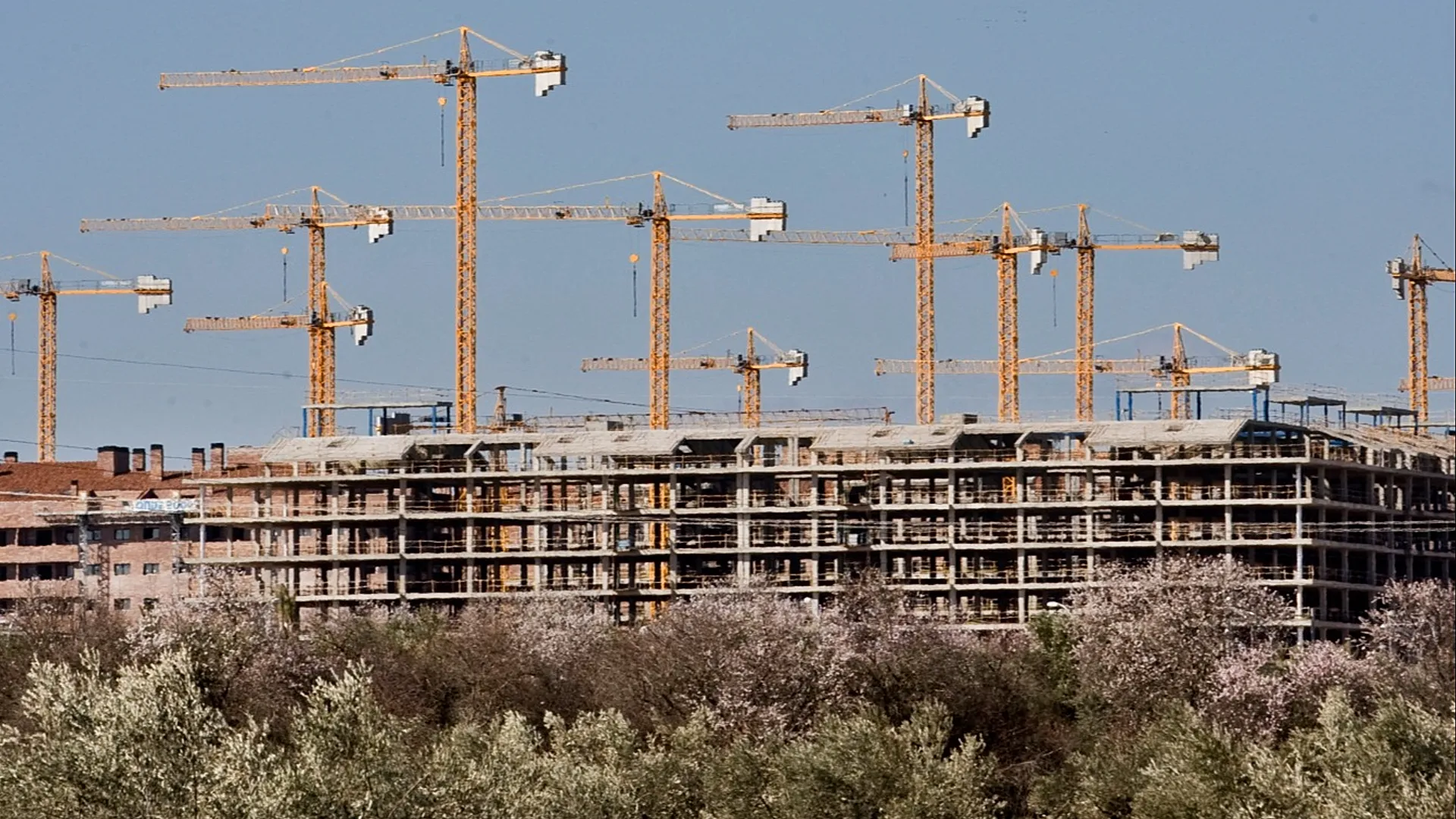
Demand is outrunning supply, again.
Madrid, February 2026.
Spain closed 2025 with its strongest home sales volume since the pre crisis boom, reaching 714,237 transactions, an annual increase of 11.5 percent. The figure is not just a cyclical uptick, it is a structural signal about how demand, credit conditions, and supply scarcity are interacting. Existing homes dominated the market, accounting for roughly 78 percent of sales, while new build transactions rose faster from a smaller base. The result is a market that is liquid and active, yet increasingly defined by affordability stress and inventory constraints.
The headline number matters because it narrows the psychological distance between today’s market and the last era of peak exuberance. Spain has not simply recovered from a past crash, it is now generating transaction volumes that resemble the old high watermark. The question is what drives the volume this time, and what the system can absorb without destabilizing effects. The Instituto Nacional de Estadística attributes the annual rise to broad based demand, with both new and used segments growing. When sales accelerate across segments, it usually indicates that buyers are reacting to financing conditions and scarcity rather than chasing purely speculative gains.
The composition of sales is especially revealing. Second hand transactions climbed to 558,327 units, up about 10.3 percent, making resale the primary engine of market activity. New home sales rose about 16.1 percent to 155,910 units, the highest since 2011, yet still a minority of total transactions. That imbalance is the story: demand is expanding faster than fresh supply can be delivered, so the market clears through existing stock. In practical terms, households are competing for a limited pool of homes already in circulation, which tends to intensify price pressure in attractive regions.
Price signals reinforce the same diagnosis. Spain’s Ministry of Housing reported average housing values reaching around 2,230 euros per square meter in 2025, a rise of about 13.1 percent and the highest level in the series. Rising transactions alongside strong price growth typically indicate that the market is not clearing through discounts, but through buyer urgency. That urgency can come from multiple sources, including demographic concentration in job rich cities, lifestyle driven relocation, and international interest in coastal and metropolitan markets. The effect is uneven, because liquidity does not distribute evenly across geography, even when national totals look strong.
Credit conditions sit quietly behind the numbers, but they shape the tempo. As the European Central Bank began easing from earlier tightening, mortgage pricing and household expectations started to adjust, even before full pass through reached every borrower segment. In markets where supply is rigid, lower financing friction tends to translate into higher prices rather than higher construction. The Bank for International Settlements has long warned that housing cycles become dangerous when credit expansion meets supply bottlenecks, because the adjustment mechanism becomes price inflation rather than unit expansion. Spain’s data suggests the bottleneck remains the dominant feature.
Affordability pressure is therefore not an incidental social issue, it is the market’s binding constraint. Younger buyers face a double squeeze: higher prices and limited inventory, alongside wage growth that rarely matches property appreciation in the most demanded areas. The political system can promise subsidies, guarantees, or tax tweaks, yet those measures often increase purchasing capacity without expanding supply, which risks pushing prices further. The International Monetary Fund has repeatedly noted that when housing supply is inelastic, demand side support can backfire by capitalizing into prices. That warning is not abstract in Spain’s case, because transaction momentum is already strong.
Another layer is the internationalization of demand. Spain remains attractive to foreign buyers and second home purchasers, and those flows can amplify local scarcity in specific hotspots. When international demand concentrates, it can create two markets inside one country: a domestically priced segment and an externally supported segment. This is not inherently negative, but it changes the distributional politics because local residents compete with buyers whose purchasing power is not anchored to local wages. The result is tension between a housing market as a social infrastructure and a housing market as an asset class.
Supply, in contrast, moves with institutional friction. Land availability, permitting timelines, construction labor, and financing for developers all limit speed, while zoning and local politics often restrict density where demand is highest. In this context, strong sales of new homes may signal pipeline constraint rather than abundance, because buyers are competing for a limited set of deliveries. If supply cannot expand meaningfully, the market will keep clearing at higher prices, and transaction volume can remain elevated as long as credit remains available. That dynamic is stable until it is not, because the trigger tends to be macro conditions, not housing sentiment.
Spain’s 2025 surge therefore reads as a broader European pattern: high demand colliding with structural scarcity, with price growth doing the work that construction cannot. The difference between a healthy market and a fragile one is not whether prices rise, but whether the system creates enough new stock to prevent housing from becoming a permanent affordability crisis. Spain’s data suggests the system is still struggling to do that. In that sense, the record is not a celebration, it is a diagnosis delivered in numbers.
Más allá de la noticia, el patrón. / Beyond the news, the pattern.