

 Phoenix 24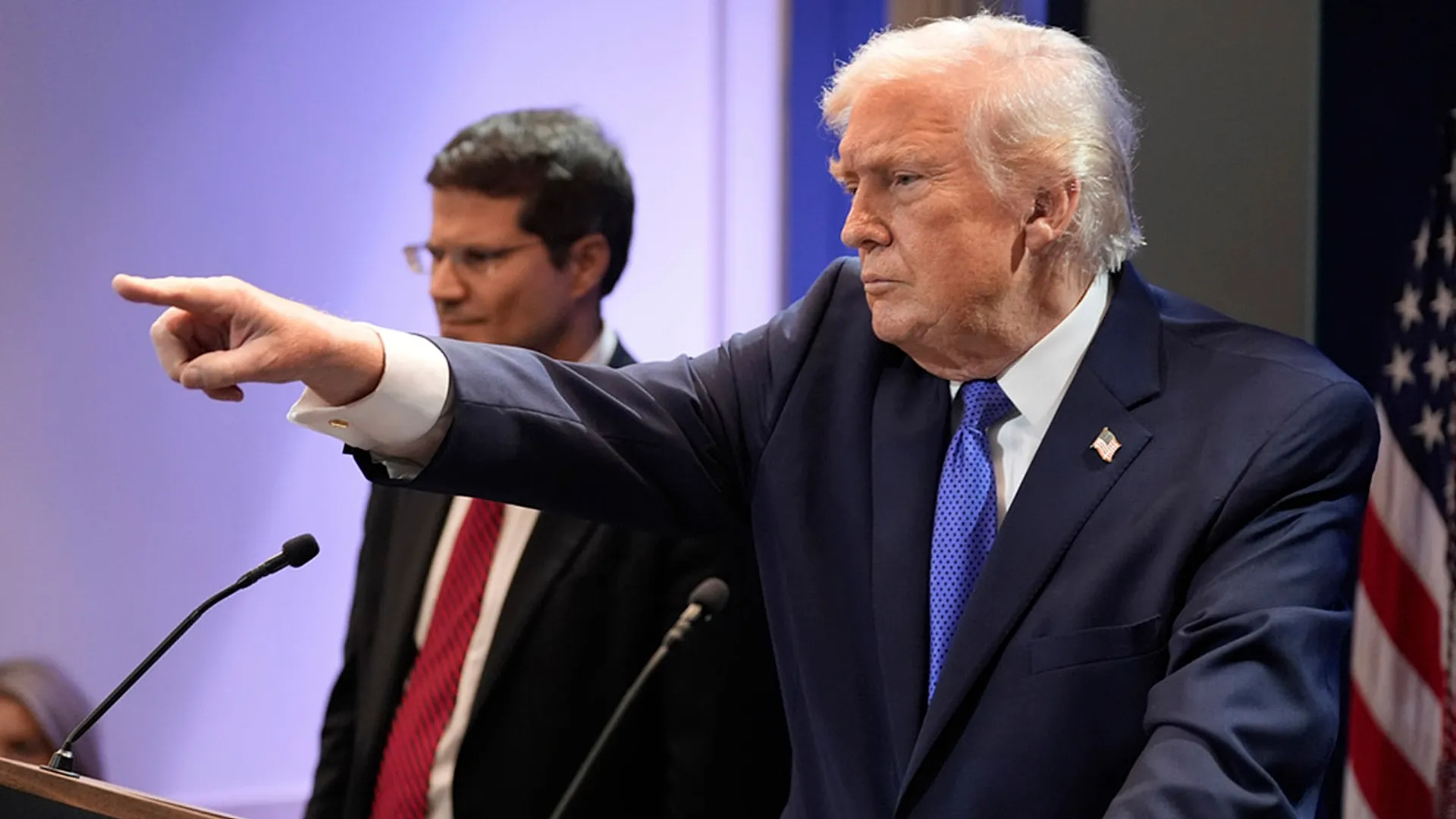
He lost the tool, not the impulse.
Washington, February 2026.
A Supreme Court ruling did not end the tariff project, it only forced it to change legal clothing. Hours after the justices struck down his sweeping import duties, President Donald Trump announced a new baseline: a 10 percent global tariff surcharge. The move is designed to look like continuity, but it is really a pivot from maximal executive reach to a narrower authority with clearer constraints. The White House is trying to preserve the leverage of tariffs while reducing the legal exposure that just detonated in court.
The Court’s decision, by a 6–3 margin, treated the earlier tariff architecture as an overextension of emergency economic powers. In the majority’s view, the statute invoked to justify the prior duties was never meant to function as a blank check for broad based import taxation. That framing matters because it recasts tariffs as a constitutional issue of taxing power, not merely a dispute about trade strategy. What the ruling effectively says is that an emergency label cannot be used to manufacture a parallel tariff regime outside the normal gravitational pull of Congress.
Trump’s new announcement aims to keep the pressure, while stepping onto a different statutory platform. He said the 10 percent surcharge would be imposed under Section 122, a mechanism that allows temporary import restrictions but limits their duration to 150 days. The time cap is not a footnote; it forces the tariff to behave like a burst weapon rather than a permanent wall. If the administration wants the policy to outlive that window, it will need either an extension through other authorities, a new investigation based path, or legislation.
This is where the power structure becomes the real story. Tariffs are not only about revenue or industrial protection, they are a bargaining currency in diplomacy and a signal to domestic constituencies that disruption is a feature, not a bug. By moving from emergency powers to Section 122, the administration is tacitly acknowledging that courts will not tolerate boundless elasticity in executive interpretation. Yet the strategy still tries to maximize uncertainty for counterparties, because uncertainty itself is leverage. A temporary tariff can be as coercive as a permanent one if businesses believe it can be renewed, reshaped, or replaced quickly.
Markets responded with a kind of cautious relief that reveals how investors are reading the institutional environment. A court imposed limit reduces the probability of sudden, indefinite tariff escalation through emergency language. At the same time, a fresh 10 percent global surcharge keeps volatility in the system and reminds firms that cost structures remain politically exposed. The reaction is therefore split: less fear of a runaway executive instrument, more attention to the next legal workaround. Capital tends to dislike surprises more than it dislikes tariffs, and Washington is still manufacturing surprises.
For Europe, the ruling and the immediate tariff reboot create a diplomatic problem dressed as a legal update. The European Commission said it was analyzing the decision and seeking clarity on what steps the United States intends to take next. That phrase, clarity, is a signal that the problem is predictability, not ideology. A transatlantic relationship can absorb friction, but it struggles when the baseline shifts faster than contracts can be rewritten. Even allies that understand tariff politics as domestic theater still must price the risk into investment, procurement, and supply chain strategy.
The broader business community read the moment as a warning about governing by improvisation. The International Chamber of Commerce has repeatedly emphasized that trade depends on legal certainty, because cross border commerce is built on long dated commitments. When tariffs appear, disappear, then reappear under a different authority, the private sector does not see a coherent industrial plan. It sees a regulatory environment where compliance and pricing are hostage to litigation calendars and press conferences. That perception is itself an economic cost, because it raises the premium firms demand before committing capital.
A second layer is fiscal and administrative, and it may become the next battlefield. If earlier tariffs are deemed unlawful, importers will push for refunds and for a formal acknowledgment of overcollection. This is not merely a technical dispute; it can become a struggle over who eats the cost of a policy that was charged at the border but distributed across consumers and businesses. A refund wave would also collide with bureaucratic capacity, because unwinding large scale duties is slower than imposing them. Even the justices who dissented warned that the aftermath could be messy, and that mess is exactly where politics and law start feeding each other.
Internationally, the episode exposes a pattern that goes beyond one administration. Trade is increasingly treated as a rapid response instrument, a way to punish, deter, or bargain without the delay of treaties and legislatures. The International Monetary Fund has warned in broad terms that policy fragmentation and abrupt trade measures weigh on growth by degrading certainty and increasing transaction costs. Trump’s pivot fits that environment: it is a move that keeps coercive capacity alive while adapting to a court imposed boundary. The tariff is no longer presented as a long term architecture, it is presented as a repeatable tactic.
The question now is not whether tariffs are back, they never left, it is whether institutions can force a durable decision process. A 150 day window creates a clock that Congress cannot ignore forever if the White House keeps returning to the same lever. For trading partners, the risk is that negotiations become less about tariffs in the abstract and more about managing Washington’s internal legal constraints. For businesses, the lesson is harsher: the price of access to the world’s largest consumer market is being renegotiated in real time, through courts, statutes, and political will.
La narrativa también es poder. / Narrative is power too.